![Text logo reads Simpli [house emoji][heart emoji] Painted. Preferred for a reason. The house and heart emojis replace the word love. Black text on a white background.](https://simplipainted.com/wp-content/uploads/2026/08/cropped-IMG_3593.jpg.webp)

5 Cabinet Color Trends Charlotte Homeowners Are Loving Right Now
Color Changes Everything
Cabinet color trends- Of all the decisions involved in a cabinet painting project, color is the one homeowners agonize over most — and for good reason. The color of your cabinets sets the entire tone of your kitchen, and it’s what you’ll look at every single day. Get it right and it elevates the whole house. Get it slightly wrong and it nags at you every morning over coffee.
The good news is that right now there are some genuinely beautiful directions homeowners in the Charlotte and Waxhaw area are taking their kitchens — and most of them are far more timeless than they are trendy.
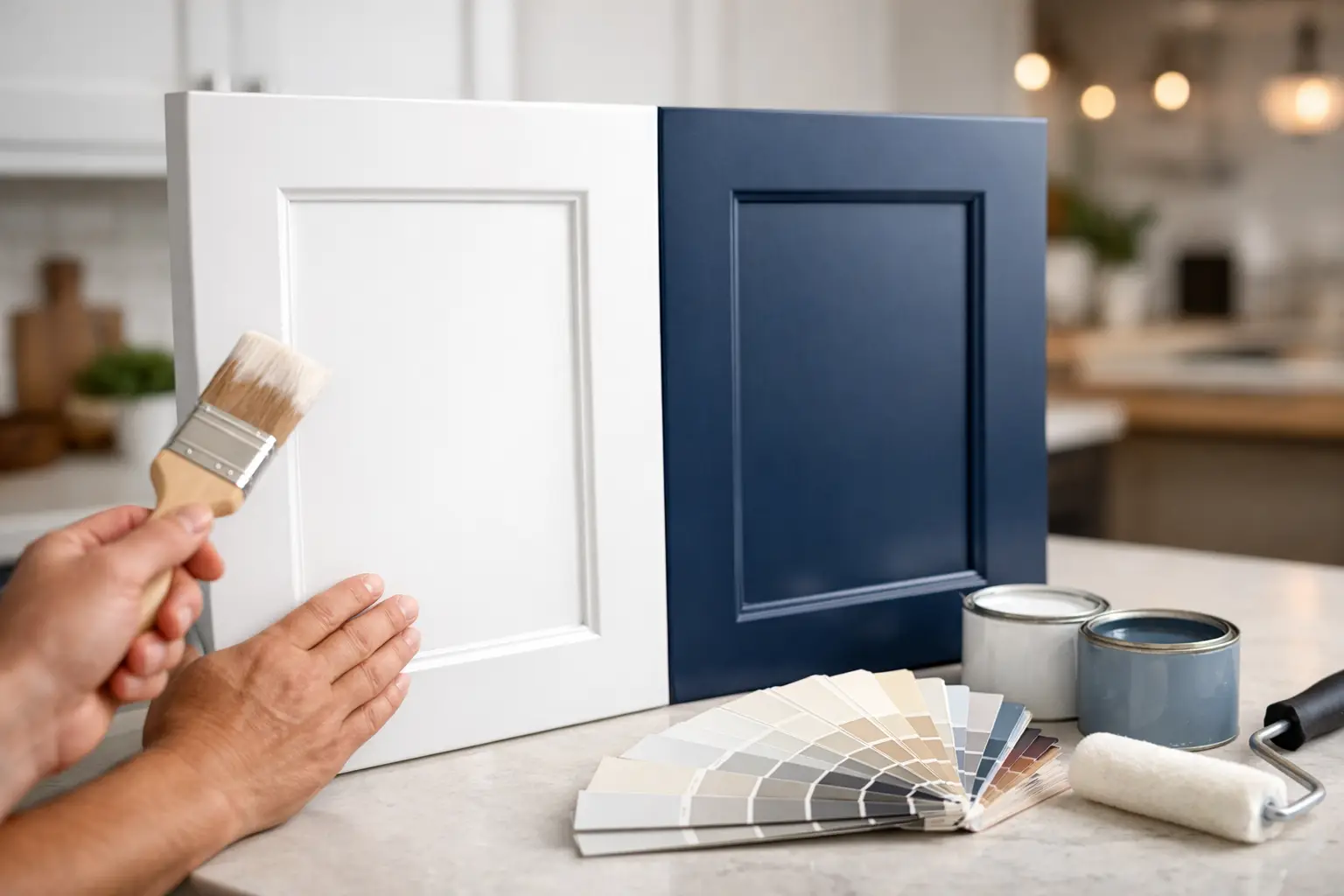
1. Cabinet Color Trends-Soft Sage & Earthy Greens
Green has arrived in the kitchen and it’s not going anywhere. Soft sage tones, muted olive greens, and deeper forest shades are showing up on kitchen islands and lower cabinets across the Charlotte area — and they work beautifully against white upper cabinets for a sophisticated two-tone look. These greens feel simultaneously fresh and classic, which is exactly why they’re resonating with homeowners who want something with personality that won’t feel dated in three years.
Colors to explore: Sherwin-Williams Evergreen Fog, Benjamin Moore Salamander, Farrow & Ball Mizzle.
2. Cabinet Color Trends-Warm White with Visible Wood Accents
The all-white kitchen is evolving. Rather than every surface being painted, more homeowners are choosing warm white cabinets paired with a natural wood floating shelf, a wood-toned hood, or an unpainted island base. The contrast between painted white and natural wood grain adds warmth and visual interest that an all-white kitchen can sometimes lack. It’s a look that photographs exceptionally well and feels genuinely welcoming.
Textures are becoming just as important as color in kitchen design, with homeowners incorporating mixed materials to create a layered aesthetic. Metal accents, such as brass hardware or copper fixtures, bring an additional dimension to the warm white and wood combination.
Open shelving is also making a comeback, allowing for decorative displays that showcase personal style while maintaining functionality. This blend of elements not only enhances the kitchen’s appeal but also invites a sense of individuality that reflects the homeowner’s taste.
3. Cabinet Color Trends-Deep Navy & Inky Blues
Navy cabinets have been popular for several years now — and they continue to hold their appeal because they age so gracefully. A well-executed deep navy kitchen feels luxurious and confident without being trendy. It works especially well for kitchen islands where you want a dramatic focal point, and it pairs beautifully with brass or gold hardware for a high-end result.
Colors to explore: Benjamin Moore Hale Navy, Sherwin-Williams Naval, Farrow & Ball Hague Blue.
4. Cabinet Color Trends-Warm Greige & Soft Taupes
For homeowners who want something other than white but aren’t ready to commit to a bold color, warm greige — the blend of gray and beige — is having a strong moment. These shades bring warmth and sophistication without the visual weight of a dark cabinet, and they complement almost any countertop or flooring combination. They’re also exceptionally forgiving in kitchens with mixed or transitional design styles.
Additionally, soft taupes can create a calming and inviting atmosphere, making the kitchen a welcoming space for family and guests. Pairing these neutral tones with natural wood accents can enhance the rustic charm of the kitchen. Opting for matte finishes can add depth and texture, further elevating the overall aesthetic.
Ultimately, these colors provide versatility, allowing homeowners to personalize their kitchens while maintaining a timeless appeal. Incorporating metallic hardware, such as brushed gold or matte black, can add a touch of elegance to the warm greige palette. Furthermore, subtle contrasts can be achieved by using darker shades on an island or as an accent wall. Plants and greenery can also breathe life into the space, creating a vibrant contrast against the neutral tones. Finally, thoughtful lighting choices, such as pendant lights or under-cabinet illumination, can highlight these beautiful colors and enhance the kitchen’s overall ambiance.
Colors to explore: Sherwin-Williams Accessible Beige, Benjamin Moore Revere Pewter, Benjamin Moore Pale Oak.
5. Cabinet Color Trends-Two-Tone Kitchens Done Right
The two-tone kitchen — upper and lower cabinets in different colors — is one of the most requested looks Simpli works on right now, and it’s easy to understand why. Done well, it adds architectural depth and visual interest that a single-color kitchen simply can’t achieve. The most successful combinations pair a lighter upper cabinet with a deeper or more saturated lower cabinet or island — white uppers with navy or green lowers being the most popular combination in the area right now.
Experimenting with additional colors, such as deep reds or muted charcoals, can also create a striking contrast. Incorporating creative hardware choices can enhance the two-tone effect, making the space feel more cohesive. Open shelving in a matching hue can tie the design together while providing a practical display for glassware or cookbooks. Lighting plays a crucial role as well; under-cabinet lighting can highlight the textures and finishes of both cabinet colors. Overall, the two-tone kitchen trend offers endless possibilities for personalization and style.
Ronald’s tip: Whatever direction you choose, consider how the color will look in ten years, not just today. The most satisfying cabinet painting projects are ones where the homeowner chooses a color they genuinely love rather than one they feel they should choose because it’s trending.
Cabinet color trends- Ready to explore color options for your kitchen? Ronald is happy to share what’s working beautifully in homes just like yours — simplipainted.com
Thinking about your own cabinets?
Simpli Painted refinishes existing cabinets in North and South Carolina. Doors and drawer fronts are sprayed in our shop, the boxes are finished in place, and every job carries a 2-year warranty against peeling, blistering and yellowing. 4,000+ kitchens, backed by five-star Google reviews.
Send 3–4 photos of your kitchen and we’ll quote it.


