Can You Paint Thermofoil Cabinets Successfully?
A thermofoil cabinet door can look perfectly solid from across the kitchen, yet show its age at the corners first: a lifted edge near the dishwasher, a bubble beside the oven, or a yellowed white finish that no longer suits the room. Homeowners often ask whether they can paint thermofoil cabinets rather than make a larger, more disruptive change. The answer is yes, but only when the cabinet surfaces are evaluated honestly and prepared with the same care as the finish itself.
Thermofoil is not wood, but it gets the same full prep as every cabinet we paint: degreasing, repairs, sanding and a bonding primer. A durable, factory-quality result depends on the condition of the vinyl surface, the stability of the door material beneath it, and a refinishing process built around adhesion. When those details are handled correctly, existing cabinetry can take on a refined new color and a dramatically more current appearance.
What Makes Thermofoil Cabinets Different?
Thermofoil cabinets typically have a thin vinyl layer heat-bonded over an engineered wood door or drawer front. The smooth, uniform finish made thermofoil popular in many kitchens and bathrooms, especially in white, cream, honey oak, and wood-look styles.
That smoothness is also the challenge. Thermofoil is nonporous, which means paint does not naturally grip it the way it grips properly sanded wood. Kitchen grease, cleaning-product residue, hand oils, and silicone-based polishes can make adhesion even more difficult. Simply applying paint over a cleaned door may look acceptable at first, but it leaves the finish vulnerable to scratching, peeling, or chipping around frequently touched areas.
The goal is not just to change the color. It is to create a finish system that bonds to the surface and stands up to daily use at doors, drawer fronts, and bathroom vanities.
Can You Paint Thermofoil Cabinets in Any Condition?
Condition is the deciding factor. Thermofoil that remains firmly bonded across the face, edges, and routed details can often be refinished successfully. Minor surface wear, faded color, small cosmetic scratches, and an outdated finish do not automatically rule out painting.
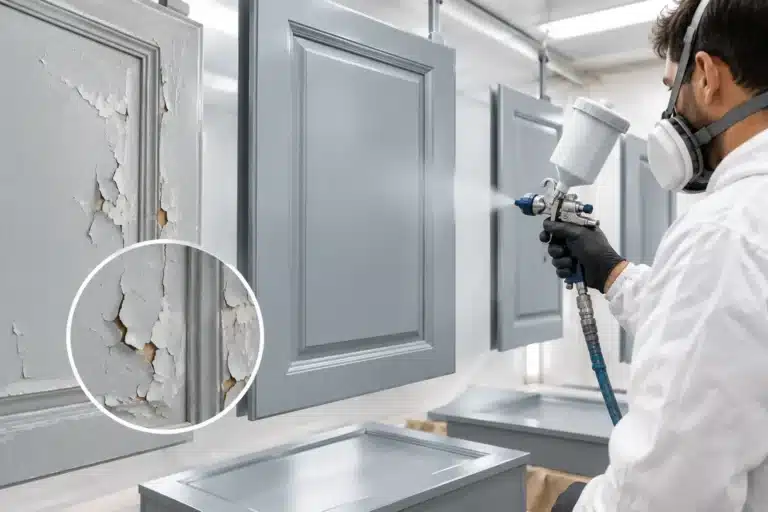
Peeling thermofoil is different. If the vinyl is lifting, curling, blistering, or separating from the door, paint cannot glue it back into place or stop the failure underneath. Those doors need careful assessment before refinishing begins. In some cases, loose material can be addressed and the underlying surface prepared. In others, widespread delamination, swelling, or damage to the engineered wood beneath the film may make refinishing a poor long-term investment.
Heat and moisture deserve special attention. Cabinets near dishwashers, ovens, sinks, and coffee stations often show the earliest signs of thermofoil failure. A specialist should look closely at these areas before you commit to painting.
Signs a cabinet is a strong candidate
A sound thermofoil cabinet has tight edges, no broad areas of lifting film, and a stable door or drawer front beneath the finish. The surface may be dated, glossy, or lightly worn, but it is still intact. Structurally sound cabinetry with these characteristics is often an excellent candidate for a color transformation.
Signs to pause before painting
Visible swelling at corners, soft or crumbling substrate, extensive peeling, and repeated heat-related bubbling call for a more careful conversation. Refinishing is intended to improve a stable cabinet surface. It is not a shortcut around material failure. An accurate evaluation protects both the appearance of the project and the lifespan of the new finish.
The Preparation Behind a Lasting Finish
The difference between a quick paint job and professional cabinet refinishing is most apparent before the color is sprayed. Thermofoil requires meticulous preparation because every contaminant and every weak edge can affect the final bond.
The process begins with thorough cleaning and degreasing. Kitchen cabinetry collects more than visible grime. Cooking oils settle into profiles and corners, while residues from furniture polish, cabinet cleaners, and everyday handling remain on smooth surfaces. These contaminants must be removed completely so the coating system can adhere as designed.
Next comes controlled sanding or abrasion. The purpose is not to aggressively grind through the door face. It is to create a uniform profile that gives the primer a surface to grip, while preserving the clean lines and routed details of the cabinetry. Areas with damaged or removed thermofoil may require additional leveling and repair to create a visually consistent foundation.
A high-quality bonding primer is then essential. This is not an optional step for a surface with thermofoil characteristics. The correct primer bridges the prepared substrate and the finish coats, supporting adhesion and helping the final color build evenly.
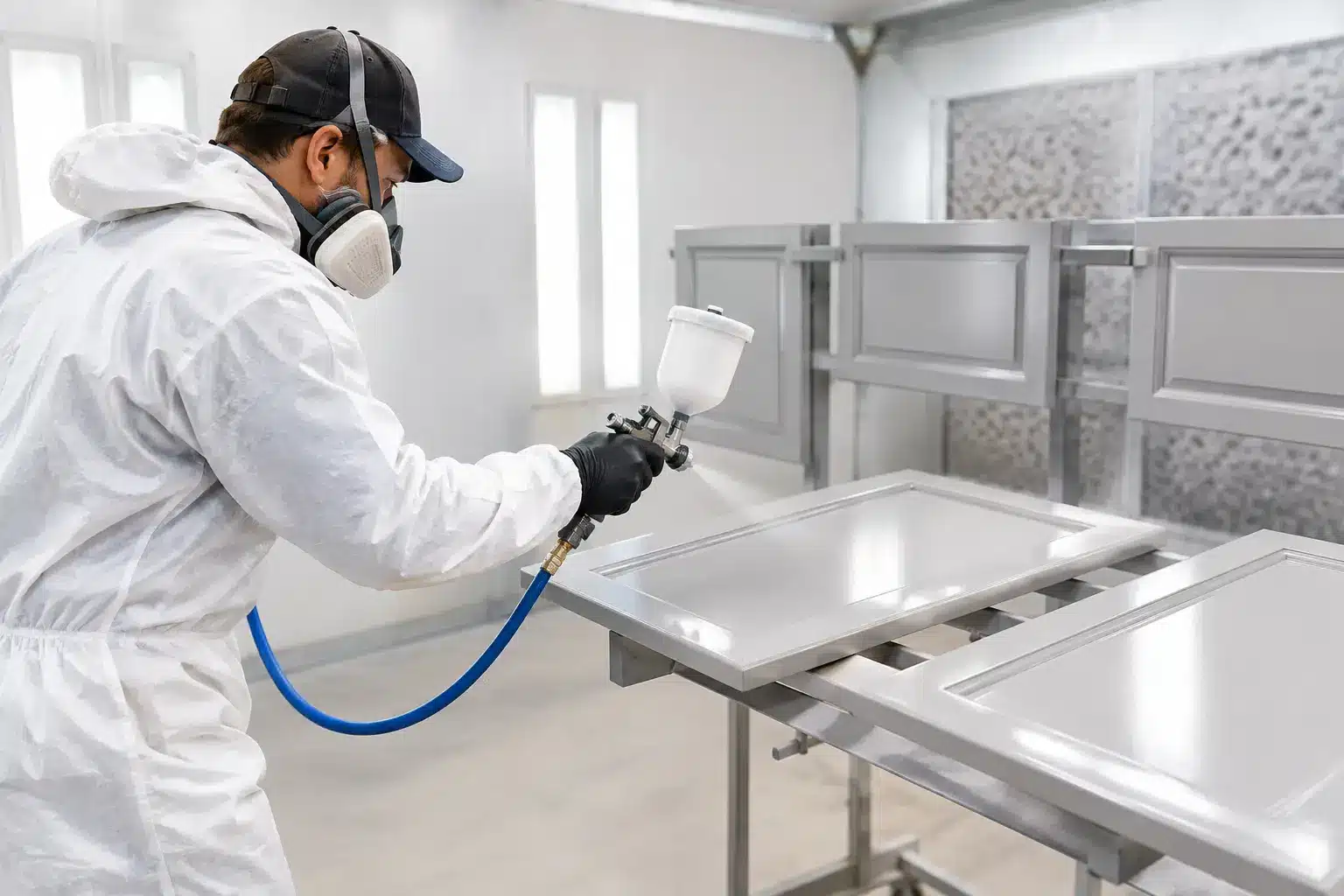
After priming, cabinet surfaces are inspected again. Any imperfections are addressed before the final finish is applied. Doors and drawer fronts benefit from controlled-environment spraying, which produces a smoother, more even appearance than a brush-and-roller approach. The result is the refined, factory-finish look homeowners expect from a premium cabinet transformation.
Why DIY Thermofoil Painting Often Falls Short
DIY painting can be tempting because the visible portion of the job seems straightforward. Remove the doors, clean them, apply a coating, and wait for a new kitchen. The risks become clear over time, particularly on thermofoil.
Many consumer paints are not formulated for long-term adhesion on slick cabinet surfaces. Even a product labeled for cabinets can fail if the substrate was not properly degreased, dulled, primed, and allowed to cure under appropriate conditions. Brush marks, roller texture, dust in the finish, and inconsistent sheen can also diminish the clean, tailored look homeowners want from painted cabinetry.
There is also the issue of durability. Cabinet doors are opened repeatedly, drawer fronts are bumped, and vanity surfaces are exposed to moisture and personal-care products. A finish that looks good on day one must be able to perform through ordinary household use. That requires compatible materials, disciplined preparation, and a controlled application process – not just a fresh can of paint.
Choosing a Color That Works With Thermofoil Cabinetry
Once the surface is confirmed as a good candidate, color becomes the enjoyable part of the project. Painting gives homeowners the opportunity to move beyond the original thermofoil finish without discarding cabinetry that still functions well.
Soft whites remain a classic choice, but the undertone matters. A warm white can feel inviting alongside creamy surrounding finishes, while a cleaner white can create a more tailored, contemporary impression. Greige, mushroom, muted green, charcoal, and deep navy can also give existing cabinetry stronger visual definition. The right choice depends on the room’s natural light, fixed finishes, and the overall feeling you want the space to have.
Sheen deserves equal consideration. Higher sheen can emphasize light and cleanability, but it also reveals surface imperfections more readily. A lower sheen can look sophisticated and forgiving, though it still needs to be durable enough for cabinetry. A cabinet refinishing specialist can help balance appearance with everyday performance rather than selecting a sheen based on a paint chip alone.
What to Expect From Professional Cabinet Refinishing
A professional process begins with an onsite assessment, not a promise that every thermofoil door should be painted. The best recommendation may depend on where the thermofoil is intact, whether damaged areas can be properly prepared, and how the cabinetry is used.
For homeowners in the Charlotte area, Simpli Painted approaches cabinet refinishing as a specialized finish service. That means careful evaluation, the same thorough degreasing, sanding and bonding primer every cabinet gets, doors and drawer fronts sprayed in our shop, and cabinet boxes masked and sprayed in place. Every project carries a 2-year warranty covering peeling, blistering and yellowing. The work is designed to preserve the cabinets you already own while giving them a polished, durable appearance that feels intentional rather than improvised.
Timing matters as well. Cabinet coatings need appropriate drying and curing conditions, and homeowners should follow post-project care guidance to protect the finish during its early life. Gentle cleaning and avoiding harsh abrasives help maintain the smooth appearance for years to come.
A Better Question Than “Can They Be Painted?”
Instead of asking only whether thermofoil can accept paint, ask whether your specific cabinets offer a stable foundation for refinishing. That question leads to better decisions, more realistic expectations, and a finish that looks as good up close as it does from across the room.
When the cabinet structure is sound and the thermofoil is properly evaluated, painting can be a high-impact way to replace an outdated color with a finish that feels carefully made for your home.