![Text logo reads Simpli [house emoji][heart emoji] Painted. Preferred for a reason. The house and heart emojis replace the word love. Black text on a white background.](https://simplipainted.com/wp-content/uploads/2026/08/cropped-IMG_3593.jpg.webp)

How to Choose the Right Cabinet Paint Sheen
A cabinet color can look entirely different once the light hits it. In a bright Lake Norman kitchen, a sheen that looked soft and elegant on a sample board may suddenly reflect every pendant light, window, and fingerprint. That is why cabinet paint sheen deserves the same consideration as color. It affects how cabinetry feels in the room, how easily it cleans, and how well it disguises the small imperfections that naturally exist in older doors and drawer fronts.

For most Charlotte-area homeowners, satin is the strongest all-around choice. But the right finish depends on the cabinet style, the condition of the wood, the amount of natural light, and how hard the kitchen or bathroom works every day.
Why Cabinet Paint Sheen Matters
Paint sheen refers to the amount of light a finished surface reflects. The higher the sheen, the more reflective and typically more washable the surface becomes. A lower sheen absorbs more light, creating a softer appearance but offering less forgiveness when the finish is cleaned repeatedly or exposed to moisture.
On walls, sheen is often a simple design preference. On cabinets, it is also a performance decision. Cabinet doors are touched constantly. They collect cooking residue near the range, water spots around the sink, handprints on frequently used drawers, and the occasional bump from a chair, pet, or grocery bag.
A professionally applied cabinet coating is designed to handle that use, but sheen still shapes the final result. The goal is not simply choosing the shiniest option. It is selecting a finish that looks refined while supporting the way the room is used.
Satin Cabinet Paint Sheen: The Most Versatile Choice
Satin has a soft, low-luster appearance that gives painted cabinetry a polished, contemporary look without appearing glossy. It reflects enough light to make a kitchen feel fresh and finished, yet it does not create the mirror-like effect associated with high-gloss surfaces.
For many homes in South Charlotte, Matthews, Waxhaw, Cornelius, and surrounding communities, satin provides the best balance of beauty and practicality. It works especially well on white, warm white, greige, mushroom, navy, and muted green cabinets. These colors retain their depth while the subtle sheen helps the finish feel clean and intentional.
Satin is also reasonably forgiving. Even carefully maintained cabinetry has minor grain patterns, seams, or slight variations in older wood doors. A satin finish is less likely than semi-gloss to call attention to those details. It is durable enough for active kitchens and bathroom vanities, provided the correct cabinet-grade coating and preparation process are used.
The trade-off is that satin may not be the best fit for homeowners who want a distinctly reflective, traditional lacquered appearance. It cleans well, but it will not have quite the hard visual shine of semi-gloss.
Semi-Gloss Cabinet Paint Sheen: Crisp and Highly Cleanable
Semi-gloss creates a more noticeable reflection and a sharper visual finish. It has long been a familiar choice for trim, doors, and cabinetry because it offers excellent cleanability and a classic, tailored appearance.
In the right kitchen, semi-gloss can be beautiful. It suits more formal spaces, traditional cabinet profiles, detailed millwork, and homeowners who prefer a brighter, more polished look. A semi-gloss white cabinet, for example, can make a darker kitchen feel lighter by bouncing daylight and fixture light around the room.
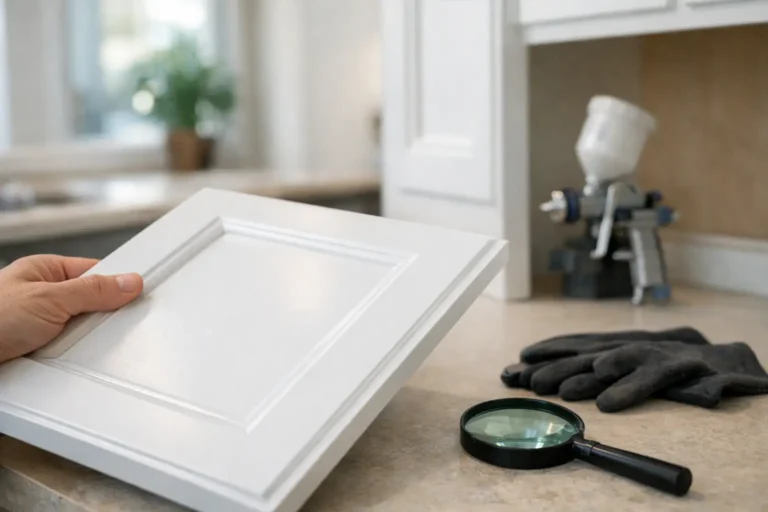
The consideration is surface visibility. Higher sheen reveals more. Small dings, open grain, uneven repairs, and minor texture can become more apparent under sunlight or recessed lighting. This does not mean semi-gloss is a poor choice for existing cabinets. It means the preparation and spray application must be exceptionally thorough.
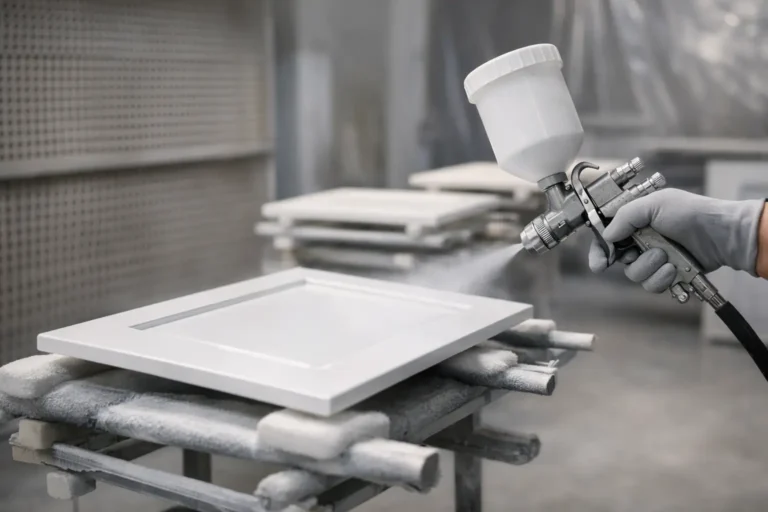
Cabinetry should be cleaned and degreased before any sanding begins. Gloss must be properly abraded, damaged areas repaired, and the surface primed for adhesion. Doors and drawer fronts should then be sprayed in a controlled environment to create a smooth, even coating. When those steps are rushed, semi-gloss will expose the shortcuts.
Matte and Flat Finishes: Beautiful, but More Selective
Matte cabinetry has become popular in modern design because it creates a soft, furniture-like appearance. It can be especially striking on deep charcoal, black, forest green, and rich blue cabinets. In a well-designed space, the low reflection can feel calm, substantial, and distinctly custom.
However, matte is not automatically the best practical choice for every kitchen. Traditional flat paint is generally too difficult to clean and too vulnerable to burnishing, which occurs when repeated wiping creates shiny patches. Cabinet-specific matte coatings have improved significantly, but homeowners should still consider their household habits.
A matte finish may work well in a lower-traffic bathroom, a butler’s pantry, or a kitchen where a sophisticated low-sheen look is the top priority. It requires thoughtful product selection and proper care. For a busy family kitchen with frequent cooking and young children, satin often delivers a more forgiving long-term result.
How Light Changes the Appearance of Cabinet Paint Sheen
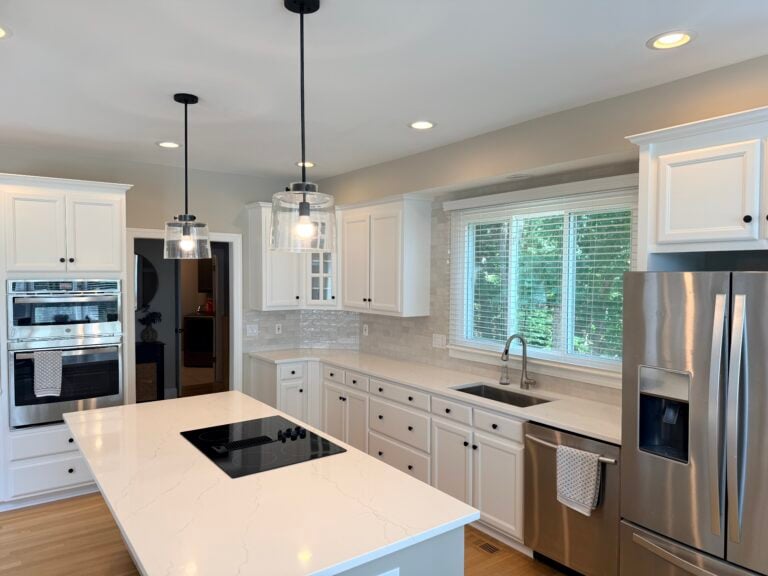
Charlotte homes often have generous windows, open floor plans, and large kitchen islands positioned directly beneath decorative lighting. Those features can make sheen more noticeable than a small paint sample suggests.
Before selecting a finish, consider the room at several times of day. Morning sun may highlight door profiles and wood grain differently than afternoon light. Under-cabinet lighting can create reflections along lower doors, while large glass doors may amplify sheen across an entire island.
Dark colors deserve special consideration. A semi-gloss black or navy cabinet can look dramatic, but it may show dust, fingerprints, and reflected texture more readily. A satin version can preserve the richness of the color with a slightly softer visual effect. Conversely, a lighter cabinet color can sometimes benefit from semi-gloss when the homeowner wants a brighter, more traditional feel.
The surrounding finishes matter, too. Glossy tile, polished quartz, stainless steel appliances, and glass pendants already bring reflection into a kitchen. A satin cabinet finish often balances those materials. In a room with honed stone, matte tile, and warm wood floors, a subtle satin or low-sheen finish can maintain the same relaxed, cohesive character.
The Finish Is Only as Good as the Preparation
Sheen cannot compensate for weak preparation. In fact, the more reflective the finish, the more critical preparation becomes. Cabinet painting is not comparable to applying a quick coat of wall paint over an existing surface.
A lasting result begins with meticulous cleaning and degreasing to remove oils, polish residue, and cooking buildup. The cabinet surfaces are then sanded to create the proper profile for adhesion, followed by priming where needed to support durability and block stains or tannins. Doors and drawer fronts benefit from controlled spray finishing, which produces the smooth, factory-finish appearance homeowners expect from a premium cabinet transformation.
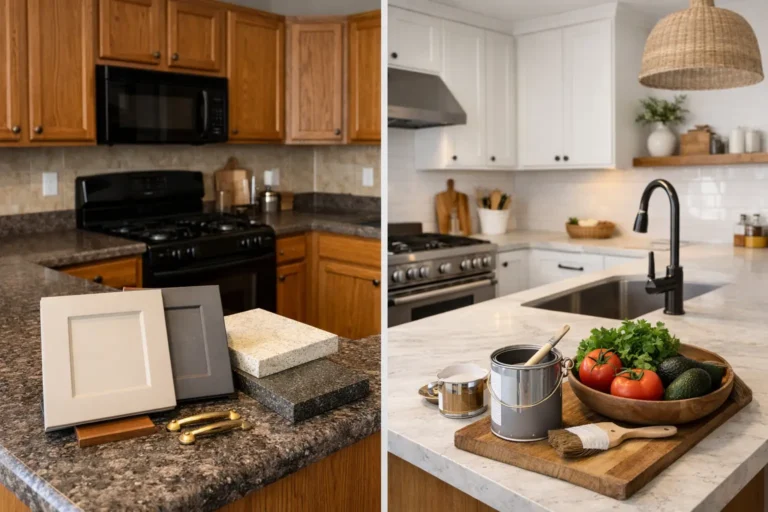
This process is especially important for oak cabinets. Their open grain can remain visible after painting unless it is addressed through the appropriate preparation and finishing approach. Some homeowners appreciate a hint of grain as evidence of real wood, while others want a smoother, more contemporary surface. The desired look should be discussed before choosing both the color and sheen.
Choosing Sheen by Room and Lifestyle
A kitchen with daily cooking, children, pets, and frequent entertaining needs a finish that can be wiped down confidently. Satin is usually the practical recommendation because it provides durability without overemphasizing everyday wear. Semi-gloss can also perform well, particularly for homeowners who prefer its more formal appearance and are comfortable with a finish that shows more detail.
Bathroom vanities face different challenges. Moisture, toothpaste splatter, cosmetics, and regular cleaning make durability essential, but many vanities are smaller and receive less direct sunlight than a kitchen. Satin is still an excellent choice, while semi-gloss may be appropriate for a traditional powder room or a vanity with crisp, detailed trim.
There is no single correct answer for every home. A matte finish may be ideal for a dramatic, design-forward secondary bathroom. Semi-gloss may suit a bright, classic kitchen. Satin remains the dependable middle ground because it works across cabinet styles, colors, and levels of daily use.
A Better Decision Than Following a Trend
High-gloss cabinets, ultra-matte finishes, and every sheen in between can look impressive in photographs. The better choice is the one that supports your home’s architecture, lighting, and daily routine for years to come.
At Simpli Painted, sheen selection is considered alongside cabinet condition, color, hardware, countertops, and the overall character of the room. That level of planning helps ensure the finished cabinetry does not merely look newly painted. It looks deliberately refined, smooth to the touch, and appropriate for the way your home is lived in.
When you are deciding between satin, semi-gloss, or matte, look beyond the sample’s initial shine. Picture the finish on every door, in your actual light, after a busy week in the kitchen. The right sheen should make the room feel elevated while giving you confidence that the finish will continue to perform.
Thinking about your own cabinets?
Simpli Painted refinishes existing cabinets in the Carolinas and coastal Georgia. Doors and drawer fronts are sprayed in our shop, the boxes are finished in place, and every job carries a 2-year warranty against peeling, blistering and yellowing. 4,000+ kitchens, backed by five-star Google reviews.
Send 3–4 photos of your kitchen and we’ll quote it.