![Text logo reads Simpli [house emoji][heart emoji] Painted. Preferred for a reason. The house and heart emojis replace the word love. Black text on a white background.](https://simplipainted.com/wp-content/uploads/2026/08/cropped-IMG_3593.jpg.webp)
Cabinet Painting vs Refacing: Cost, Durability, and Which to Choose
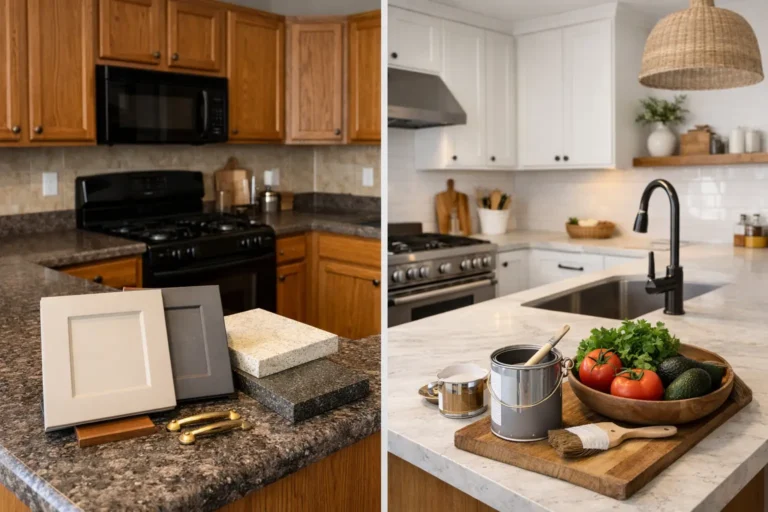
A dated kitchen does not always need a demolition crew. For homeowners weighing cabinet painting vs refacing (painting is what the trade calls refinishing), the right choice usually comes down to one question: are the cabinet boxes worth keeping? When the structure is sound, updating what is already there can create a dramatic change in color, style, and perceived value without turning daily life upside down.

Both approaches improve tired cabinetry, but they do so in very different ways. Cabinet refinishing changes the finish of existing doors, drawer fronts, and cabinet frames. Refacing retains the cabinet boxes but replaces the visible doors and drawer fronts, then covers exposed framework with a new material. Understanding the difference protects you from paying for more work than your kitchen actually needs – or choosing a cosmetic solution for cabinets that need deeper attention.
Cabinet painting vs refacing: the core difference
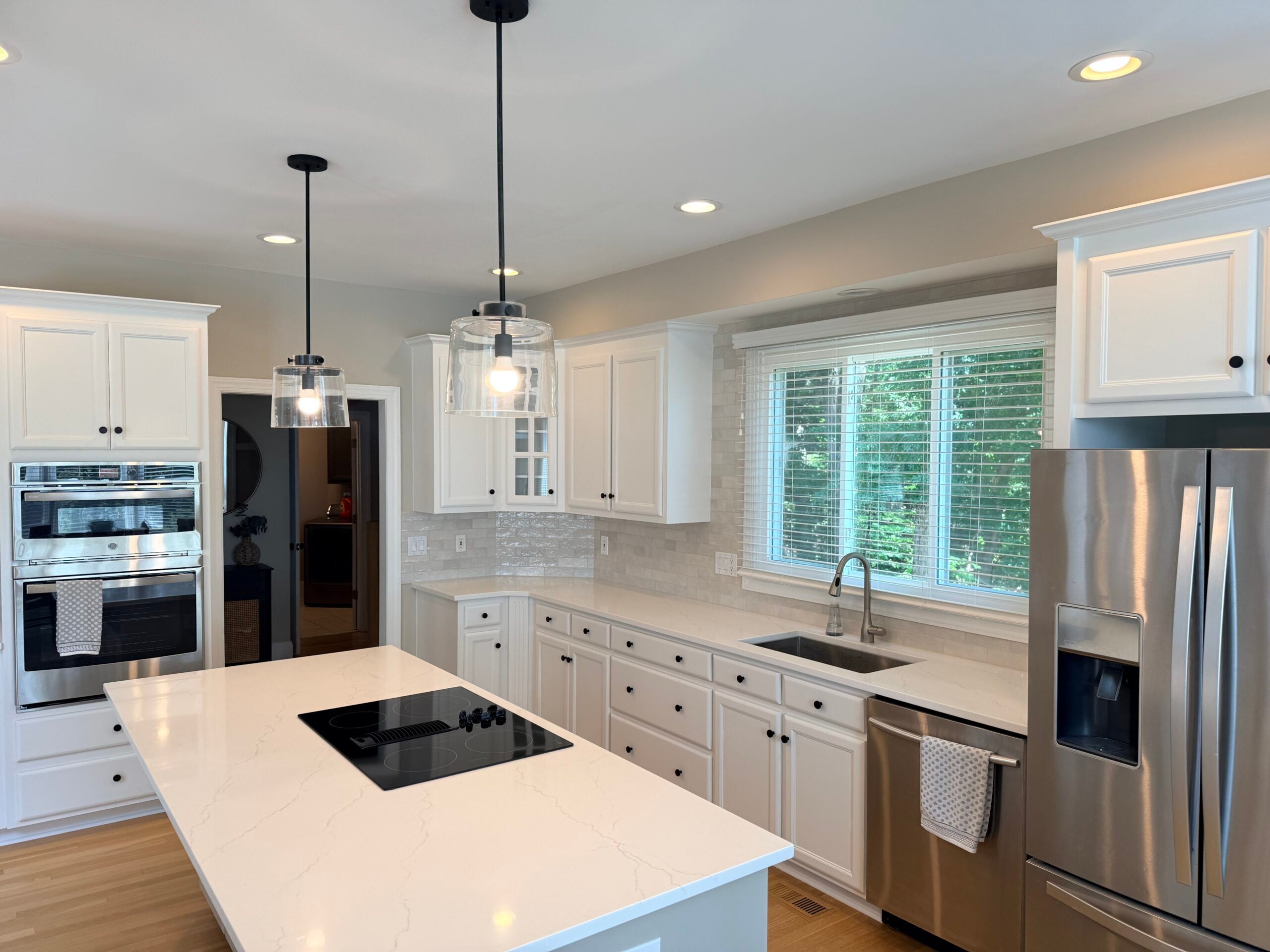
Cabinet refinishing is a finish transformation. It is often the best fit for cabinets with solid construction, doors that operate properly, and a layout the homeowner still likes. A professional refinishing process can take orange-toned oak, worn white paint, dark cherry, or an uneven older finish and give it a clean, current appearance in the color of your choice.
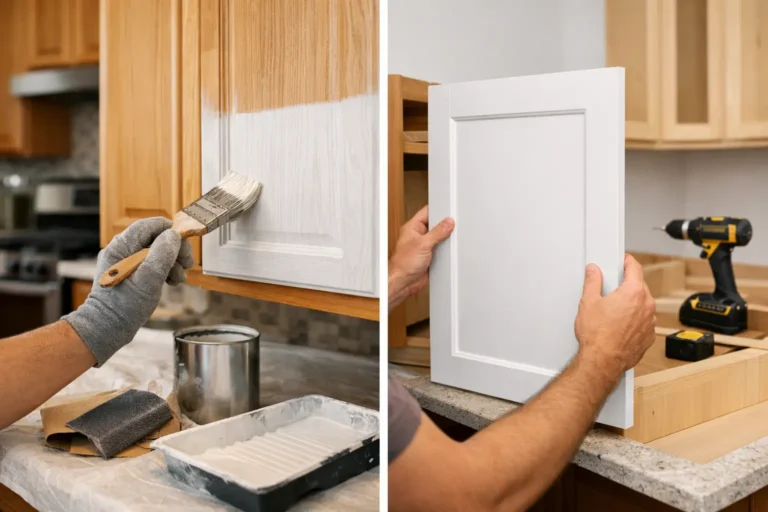
The quality of that result depends heavily on preparation. Cabinet surfaces collect cooking oils, hand residue, furniture polish, and cleaning-product buildup over years of use. Painting over those contaminants can lead to poor adhesion, chipping, and an uneven appearance. A cabinet specialist begins with thorough cleaning and degreasing, followed by sanding, repairs where appropriate, and bonding primer. Doors and drawer fronts are typically removed and spray-finished in a controlled environment, while the cabinet frames are carefully prepared and finished on site.
Refacing is more of a component replacement project. The original cabinet boxes stay in place, but the doors and drawer fronts are removed and replaced with new ones. The exposed cabinet frames receive a matching veneer, laminate, or rigid thermofoil covering so the entire exterior appears new. Refacing allows homeowners to change door profiles more substantially, such as moving from raised-panel doors to a Shaker-style look.
Neither method is automatically better. The better investment is the one that matches the cabinet condition, design goals, and renovation budget.
When painting cabinets makes the most sense
Refinishing is often the smart choice when your cabinets are structurally sound but visually behind the rest of the home. This is common in established Charlotte-area homes where quality wood cabinetry was installed years ago and has simply aged out of the homeowner’s preferred style.
It is especially effective when the kitchen layout works. If you have enough storage, your drawers glide well, and the cabinet boxes are solidly mounted, there is little reason to discard functional cabinetry just because the stain color feels heavy or the painted finish has become worn. A refined white, warm neutral, deep green, navy, charcoal, or custom color can change the character of the entire room while preserving the proportions and storage you already rely on.
Refinishing can also be the better choice for cabinet doors with distinctive construction or quality materials. Solid-wood doors, well-built drawer fronts, and durable face frames are worth retaining when they are in good condition. Replacing them with lower-grade components simply to obtain a new color may not improve the long-term value of the kitchen.
There is an important limitation: paint does not erase every feature. Deep grain in oak may still show texture beneath a painted finish, even with careful preparation. Decorative door profiles remain decorative door profiles. If the goal is a completely flat, contemporary slab door or a major change in door style, refacing may be more appropriate.
When refacing may be worth the added cost
Refacing is a strong option when cabinet boxes remain solid but the doors and drawer fronts are damaged, poorly made, or no longer suited to the desired design. It can create a more fundamental style shift than refinishing because the visible door design changes along with the finish.
For example, a homeowner may like the current kitchen footprint but want narrow-frame Shaker doors, a cleaner contemporary profile, or new drawer-front proportions. Refacing can accomplish that without removing the cabinet boxes, countertops, or much of the surrounding kitchen.
That said, refacing is generally more expensive than refinishing. You are purchasing new doors and drawer fronts, hardware may need to be changed or repositioned, and the visible cabinet framework must be covered with materials that accurately match the new components. The project also involves more measurements, ordering, lead time, and installation coordination.
Refacing has its own visual considerations. The quality of the final appearance depends on precise fit, consistent material matching, and careful application of the frame covering. A kitchen can look excellent when the work is done well, but it is not the same as rebuilding the cabinet boxes. If the boxes are water-damaged, sagging, improperly installed, or poorly configured, refacing preserves those underlying limitations.
Cost of painting kitchen cabinets vs refacing
This is the question most homeowners are really asking. Professional cabinet painting for a full kitchen with Simpli Painted runs $3,000 to $8,000 depending on size, door style, and finish, and the full breakdown is on our cabinet painting cost page. Refacing costs more because you are buying new doors, drawer fronts, and veneer for every exposed surface, then paying to have them fitted; get a written refacing quote for your kitchen and compare it line by line against a painting quote. Full replacement costs more again and adds demolition, countertop risk, and weeks without a working kitchen.
The honest comparison is not just the invoice. Painting keeps your existing doors, so the layout, hinges, and countertop stay exactly where they are, and our projects take 3 to 5 business days from start to finish. Refacing and replacement both involve a fabrication lead time before any work starts.
For many homeowners, cost is the clearest distinction between refinishing and refacing. Professional cabinet refinishing usually costs less because it works with the existing doors and drawer fronts rather than replacing them. It also avoids the expense of new cabinet components and reduces the amount of installation labor required.
The value, however, is more than a lower project price. Retaining sound cabinetry can keep a kitchen update focused and controlled. Countertops, flooring, backsplash, and appliances often stay in place, which reduces the risk of a small cabinet project growing into a full renovation. For homeowners planning to update lighting, hardware, or wall color at the same time, that budget flexibility can make the finished space feel more complete.
Refacing may justify its higher cost when changing the door style is central to the project. If the current doors have dated arches, damaged panels, or a profile that conflicts with the rest of the home, new doors can make a meaningful difference. It occupies a middle ground between refinishing and full replacement.
Full cabinet replacement belongs in the conversation when the layout no longer serves your needs, the boxes are compromised, or you want to relocate appliances, add an island, or significantly rework storage. Neither refinishing nor refacing is designed to solve structural problems or a poorly planned kitchen.
Finish quality is where painting earns its value
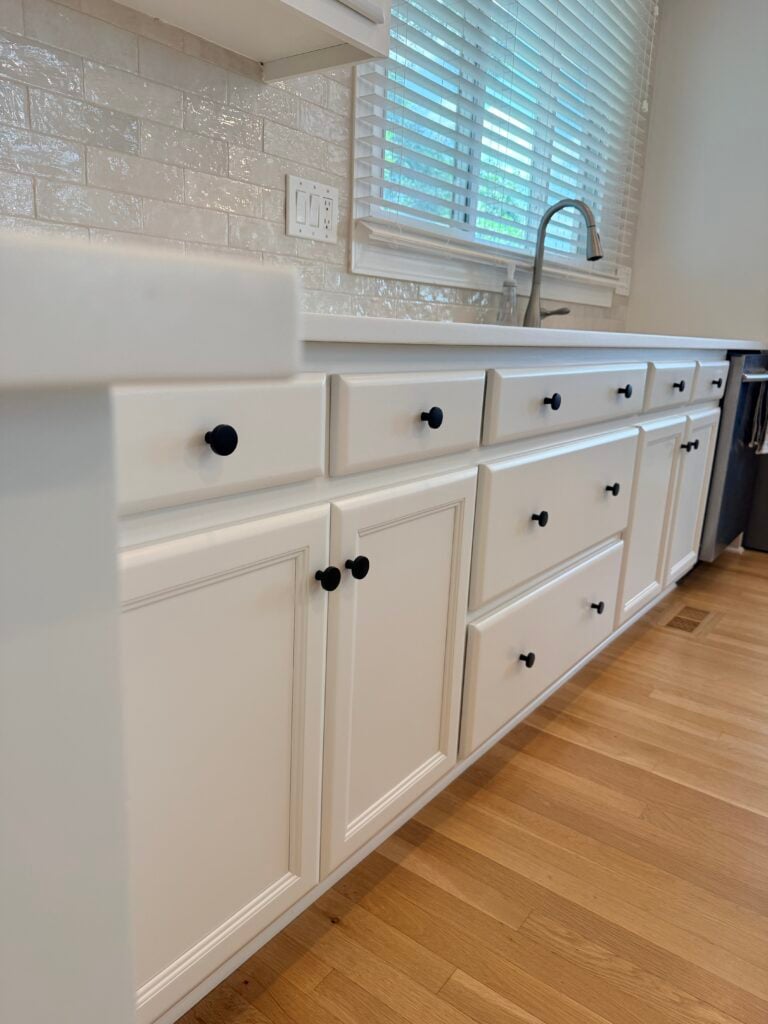
A cabinet refinishing project should not be judged by color alone. The difference between a quick repaint and a durable, factory-quality result is visible in the details: smooth door faces, consistent coverage, crisp edges, proper adhesion, and a finish that stands up to routine kitchen use.
This is why cabinetry deserves a specialized process rather than the same approach used for walls or trim. Cabinets are touched constantly. They are exposed to moisture, grease, heat, and repeated cleaning. Proper degreasing and sanding create a stable surface. Quality primer supports adhesion. Controlled spraying on doors and drawer fronts produces an even finish without the heavy brush marks, roller stipple, and drips that can make a kitchen look rushed.
The work around the cabinets matters, too. A professional project includes careful masking, protection of countertops and floors, orderly handling of doors and hardware, and a clear plan for how the kitchen will function during the process. That attention is especially valuable in active family homes where a kitchen cannot be out of commission indefinitely.
Paint or replace kitchen cabinets? When neither option is enough
If the boxes are water-damaged, the particleboard is swelling, or the layout itself is the problem, painting and refacing are both cosmetic fixes on a structural issue. That is the one case where replacement wins. We cover that decision in detail in cabinet refinishing versus replacement.
How to choose with confidence
Start by evaluating condition before selecting a style. Open the doors and drawers. Look for swelling around sink bases, loose joints, peeling veneer, warped doors, or cabinet boxes pulling away from the wall. Then consider the layout. If the kitchen functions well and the issue is primarily appearance, refinishing is often the most efficient path to a high-end change.
Next, be honest about the look you want. A new color can make an extraordinary difference, particularly when paired with updated hardware and lighting. But if the door profile itself is the problem, refacing may deliver the better visual return. A reputable cabinet specialist can help distinguish between a finish issue, a door-style issue, and a larger renovation need.
For homeowners in Charlotte, Mooresville, Waxhaw, or Fort Mill, a professional assessment can turn a broad remodeling question into a practical plan. The best cabinet update is not necessarily the most extensive one. It is the one that respects the quality already in your home while giving the room a finish you will be glad to see every morning.
Cabinet painting vs refacing: quick answers
Is it cheaper to paint or reface cabinets?
Painting. Refacing replaces every door and drawer front with new material, so it costs more than painting the same kitchen. Painting a full kitchen with Simpli Painted runs $3,000 to $8,000.
Does painting cabinets last as long as refacing?
A professionally sprayed finish on properly prepped doors holds up to daily kitchen use. Simpli Painted backs every project with a 2-year warranty covering peeling, blistering, and yellowing. Refaced doors are new material, but the veneer on the boxes is glued on and can lift at edges over time.
Can you paint cabinets that were refaced before?
Often, yes, if the veneer is bonded well. It has to be inspected first, because loose veneer will not hold a finish. Ask for an in-person look before committing.
Thinking about your own cabinets?
Simpli Painted refinishes existing cabinets in the Carolinas and coastal Georgia. Doors and drawer fronts are sprayed in our shop, the boxes are finished in place, and every job carries a 2-year warranty against peeling, blistering and yellowing. 4,000+ kitchens, backed by five-star Google reviews.
Send 3–4 photos of your kitchen and we’ll quote it.