![Text logo reads Simpli [house emoji][heart emoji] Painted. Preferred for a reason. The house and heart emojis replace the word love. Black text on a white background.](https://simplipainted.com/wp-content/uploads/2026/08/cropped-IMG_3593.jpg.webp)

Can Stained Cabinets Be Refinished? What to Know
A kitchen full of solid wood cabinets can feel dated long before the cabinet boxes have reached the end of their useful life. Orange oak, dark cherry, worn espresso, and uneven stain are common reasons homeowners start pricing a full remodel. But can stained cabinets be refinished without replacing them? In many cases, yes – and the result can be a dramatic, high-end transformation at a fraction of the cost and disruption of new cabinetry.

The key is determining whether the cabinets are good candidates and using a process designed specifically for cabinetry. A quality finish does not come from applying a fresh coat of paint over a glossy stained surface. It comes from careful preparation, the right coating system, and controlled spray application that produces a smooth, durable, factory-finish appearance.
Can Stained Cabinets Be Refinished Successfully?
Stained cabinets can usually be refinished when the cabinet boxes, doors, and drawer fronts are structurally sound. Surface-level concerns such as faded stain, light scratches, grease buildup, dated wood tones, and minor finish wear are all reasons to refinish rather than replace.
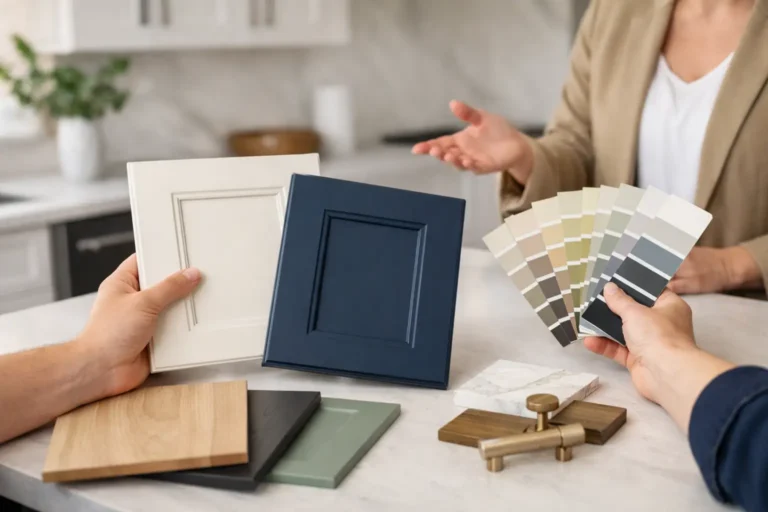
Refinishing can mean two different things. Some homeowners want the wood stripped and re-stained in a new color. Others want to cover the existing stain with a painted finish, such as warm white, soft greige, deep navy, charcoal, or a custom color. Both are possible, but they involve different levels of work and produce very different visual results.
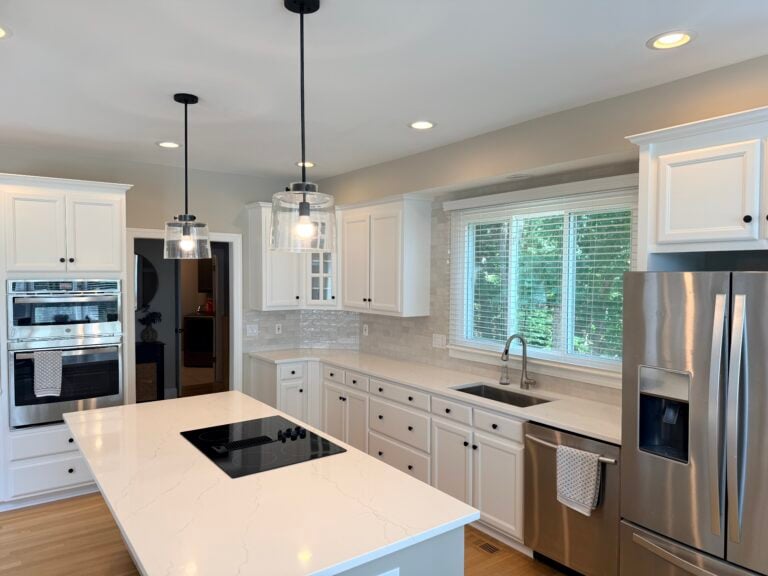
Painting stained cabinets is often the more predictable option when the goal is a complete color transformation. The grain can be minimized, hardware can be updated, and a dated kitchen can take on a clean, contemporary look while retaining the existing cabinet layout and storage.
Re-staining may be the right choice when homeowners genuinely want to keep the natural wood character visible. However, changing a dark stain to a lighter stain can be labor-intensive. The old finish and pigment must be removed evenly, and woods with pronounced grain or uneven absorption may not accept the new stain uniformly. In some cases, a painted finish is the better route to a consistent premium result.
What Makes Cabinets Good Candidates for Refinishing?
A professional assessment starts with the condition of the cabinetry, not just its color. Solid wood doors, quality veneer doors, and well-built cabinet boxes are commonly excellent candidates. Older homes often have particularly sturdy cabinets that would be expensive to replace with comparable construction today.
Cabinets may need repair before refinishing if doors are warped, veneer is peeling extensively, water damage has softened the material around the sink, or joints have become loose. Small dents, minor chips, and ordinary wear are generally repairable. Severe swelling from a long-term leak or widespread delamination may call for selective replacement of affected components instead.
The existing finish also matters. Most stained cabinets have a clear topcoat, often lacquer, varnish, polyurethane, or conversion varnish. That surface may look smooth and durable, but it is also designed to resist adhesion. A successful refinishing project depends on properly cleaning, sanding, and priming that finish before color is applied.
Why Preparation Determines the Finish Quality
Kitchen cabinets collect more than everyday dust. Cooking oils, hand residue, furniture polish, silicone products, and airborne grease can settle into corners, door profiles, and areas around pulls. Those contaminants can interfere with adhesion even when the cabinets appear clean.
A professional cabinet refinishing process begins with thorough cleaning and degreasing. This step removes the substances that can cause paint to separate, fish-eye, or wear prematurely. Next comes meticulous sanding to degloss the existing coating and create an appropriate surface for the primer system.
Repairs are addressed during preparation as well. Small cracks, nail holes, dents, and edge damage can be filled and sanded so they do not distract from the finished surface. If a homeowner wants a smoother appearance on open-grain wood such as oak, grain filling may also be considered. This adds labor, but it can significantly reduce the deep texture that remains visible beneath paint.
Then comes primer. The right bonding primer helps bridge the gap between an old stained finish and the new topcoat. It is especially important for cabinets with tannin-rich woods, such as oak or cherry, where discoloration can migrate through a light-colored finish if the coating system is not selected and applied correctly.
Skipping any of these stages may save time upfront, but it often shows later as peeling near handles, chipping at door edges, uneven sheen, or stains bleeding through the paint. Cabinetry is a high-touch surface. It deserves a process built for daily use, not a quick cosmetic cover-up.
Spray Finishing Creates a More Refined Result
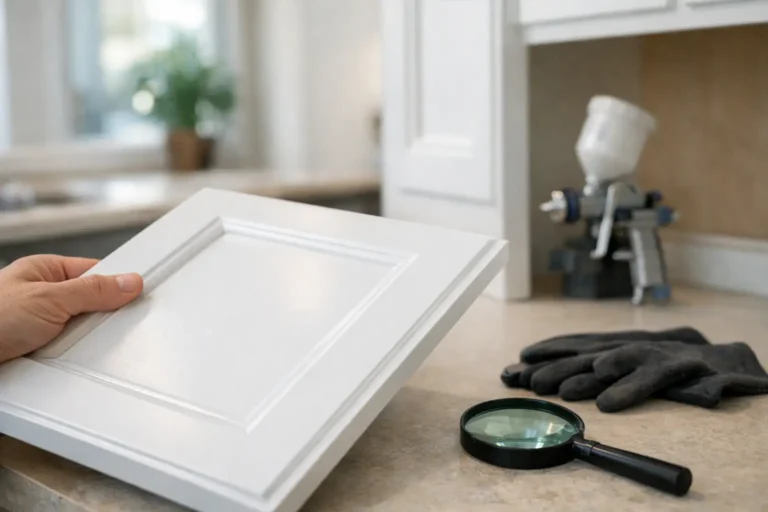
Brushes and rollers have their place on walls and trim, but cabinet doors benefit from controlled spraying. Doors and drawer fronts can be removed, prepared individually, and finished in a controlled environment where dust and overspray are managed more effectively.
Spraying allows the coating to level into a smoother, more even film with fewer visible brush marks and roller texture. After appropriate curing, the result is the clean, consistent appearance homeowners associate with new factory-finished cabinetry.
On-site cabinet boxes are also carefully masked and protected before they are refinished. A specialist should treat surrounding countertops, floors, appliances, backsplashes, and adjacent rooms with the same care given to the doors. The goal is not simply a new color. It is a finished kitchen or bath that looks intentional from every angle.
Choosing Paint or Stain for Your Cabinets
The best direction depends on the look you want, the wood species, and the condition of the existing finish. Painted cabinets are ideal for homeowners who want to move away from an outdated wood tone or create contrast with their island, flooring, and countertops. They also make it easier to unify cabinets made from slightly different materials or featuring mismatched replacement doors.
Stain is a strong choice when the wood itself is a design feature. A rich walnut-inspired tone, a refined medium brown, or a refreshed natural wood look can add warmth that paint cannot replicate. Yet staining is less forgiving than painting. Scratches, filler repairs, inconsistent wood grain, and leftover pigment can remain visible, particularly when moving to a lighter color.
For many Charlotte-area homeowners, the decision comes down to the overall renovation plan. If countertops, backsplash, lighting, and hardware are staying in place, a carefully selected cabinet color can make those elements feel newly coordinated. If the home has beautiful wood cabinetry with minimal damage, restoring the stain may preserve a character worth keeping.
Durability Comes From the System, Not Just the Paint
Not all cabinet coatings perform alike. Cabinet doors are opened, closed, cleaned, bumped by dishes, and touched around pulls every day. A quality refinishing system is selected for hardness, adhesion, cleanability, and the desired sheen level.
Even the best finish needs sensible care. Use a soft cloth with a mild cleaner rather than abrasive powders, harsh degreasers, or scouring pads. Clean spills promptly, especially around the sink and dishwasher, and avoid repeatedly hanging wet towels over cabinet doors. These habits help protect both painted and re-stained finishes over time.
Homeowners should also have realistic expectations about normal wear. A professionally refinished cabinet can be highly durable, but it is not indestructible. Heavy impacts can chip any coating, just as they can damage a factory-finished door. The difference is that a properly prepared and sprayed finish is built to hold up far better than a rushed DIY application or ordinary wall paint.
When Replacement May Be the Better Investment
Refinishing is not the right answer for every kitchen. If the layout no longer works, storage is inadequate, cabinet boxes are badly damaged, or you plan to relocate plumbing and appliances, replacement may make more sense. Refinishing preserves what is already there; it cannot add a pantry, widen an aisle, or correct a poorly designed floor plan.
It is also worth considering replacement when inexpensive cabinet construction has failed extensively. Particleboard boxes with major water damage, broken drawer systems, or crumbling hinges may not provide a strong enough foundation for a lasting update.
Still, many homeowners are surprised by how much value remains in their existing cabinetry. Keeping sound cabinet boxes avoids demolition, reduces waste, and allows the budget to go toward a finish transformation that is immediately visible every time you enter the room.
A well-executed cabinet refinishing project should make your kitchen feel like it belongs in the home you have now, not the year it was built. If the structure is sound, the stain is simply the starting point – not a reason to tear out cabinets that still have years of life ahead.
Simpli Painted refinishes stained and previously finished cabinets for homeowners in Huntersville and the surrounding towns.
Thinking about your own cabinets?
Simpli Painted refinishes existing cabinets in the Carolinas and coastal Georgia. Doors and drawer fronts are sprayed in our shop, the boxes are finished in place, and every job carries a 2-year warranty against peeling, blistering and yellowing. 4,000+ kitchens, backed by five-star Google reviews.
Send 3–4 photos of your kitchen and we’ll quote it.