![Text logo reads Simpli [house emoji][heart emoji] Painted. Preferred for a reason. The house and heart emojis replace the word love. Black text on a white background.](https://simplipainted.com/wp-content/uploads/2026/08/cropped-IMG_3593.jpg.webp)
Painting a Bathroom Vanity: Why a Professional Finish Lasts in a Wet Room
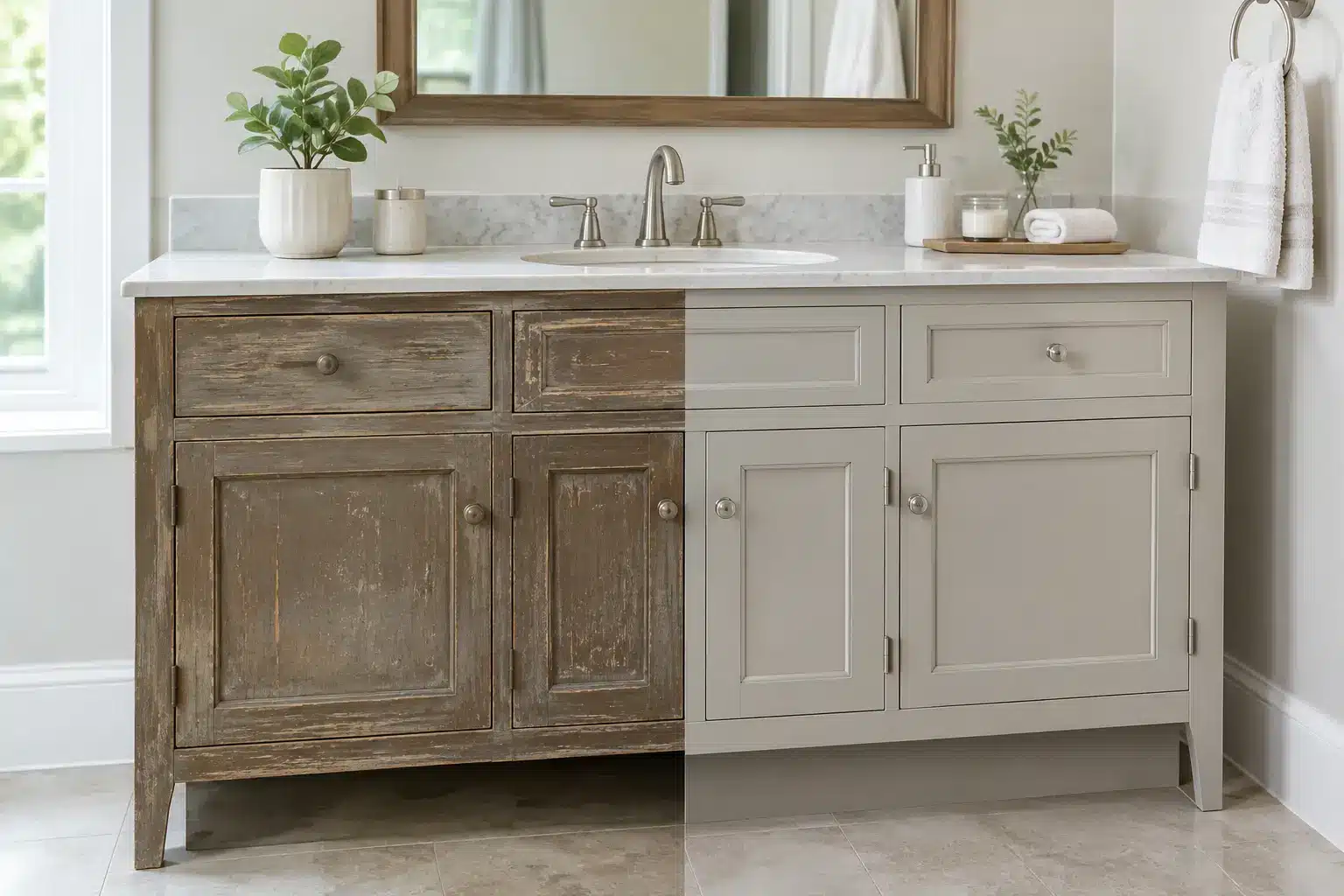
A bathroom vanity can make an otherwise well-kept bathroom feel dated. Honey oak, worn espresso finishes, yellowing white paint, and chipped drawer fronts draw attention every morning. A professional bathroom vanity painting service gives homeowners a way to change that focal point without removing cabinetry that is still structurally sound.
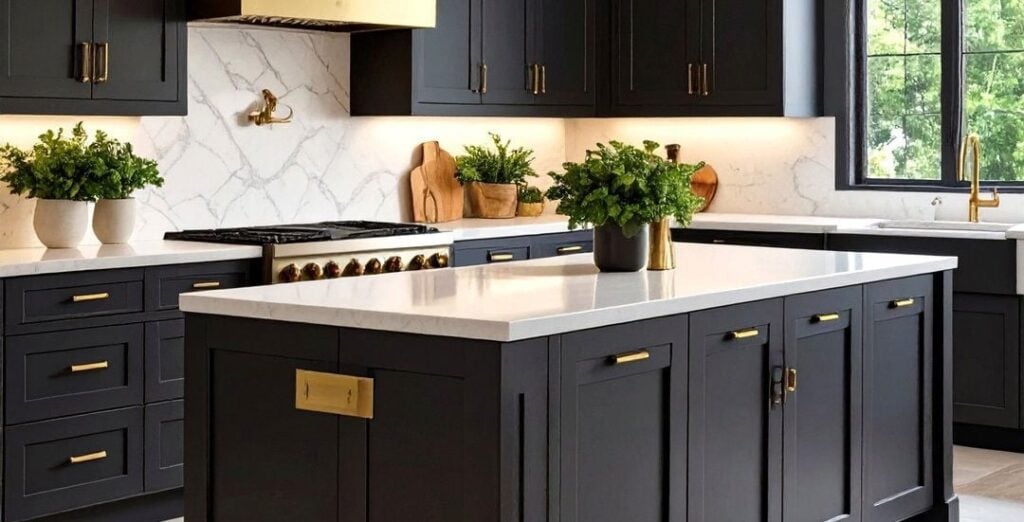
The difference is not simply the color on the doors. It is the preparation, product selection, and spray-finishing process behind it. When those details are handled correctly, an existing vanity can take on the smooth, durable appearance of new cabinetry while avoiding much of the cost, waste, and disruption of replacement.
Why Painting a Bathroom Vanity Needs a Specialized Finish
Bathroom cabinets live in a demanding environment. Steam, humidity, splashing water, hand soap, cosmetics, hairspray, and frequent cleaning all work against a painted surface. A finish that may seem acceptable on a low-contact wall can quickly show wear on vanity doors, drawer fronts, and the frame around the sink.
That is why cabinet painting should not be treated like a standard room-painting project. General-purpose latex paint and a quick brush application can leave visible texture, uneven sheen, sticking doors, and surfaces that chip around pulls and handles. The problem often begins before the first coat of paint is applied. If residue, oils, or old failing finish remain on the cabinet, even a quality coating cannot form the bond it needs.
A specialist evaluates the cabinet material, the condition of the existing finish, water exposure around the sink, and the condition of the doors and drawer fronts. Solid wood, wood veneer, MDF, and previously painted cabinetry can often be refinished successfully, but each calls for the right preparation and primer. Cabinets with swelling particleboard, severe water damage, loose veneer, or structural failure may need repair or replacement instead. A reputable contractor should be clear about that trade-off before work begins.
What a Professional Bathroom Vanity Painting Service Includes
A lasting finish is built in stages. The visible color change is the final result of a disciplined process, not a shortcut.
Cleaning and Degreasing Come First
Vanities collect more residue than many homeowners realize. Products used near the sink and countertop can leave behind films that interfere with adhesion. Professional cleaning and degreasing remove those contaminants before sanding begins, helping create a stable surface for primer and finish coats.
This step matters particularly on cabinets that look clean at a glance. A door can appear spotless while still carrying invisible oils from hands, lotion, hair products, or household cleaners. Painting over that residue risks peeling and premature wear.
Sanding Creates a Sound Surface
Sanding is not about stripping every cabinet down to bare wood. It is about properly dulling and leveling the existing finish so the new coating can adhere. Areas with chips, dents, rough grain, or prior paint failure receive additional attention. Small repairs may be completed before primer is applied, depending on the condition of the vanity.
Careful sanding also improves the final appearance. A high-end painted vanity should not highlight old brush marks, rough edges, or uneven surfaces. Meticulous preparation is what allows the new finish to look intentional rather than like an attempted cover-up.
Primer and Controlled Spraying Make the Difference
The correct bonding primer helps bridge the gap between the old cabinet surface and the new finish. It also supports more consistent color coverage, especially when changing from dark wood tones to a lighter white, soft gray, or warm neutral.
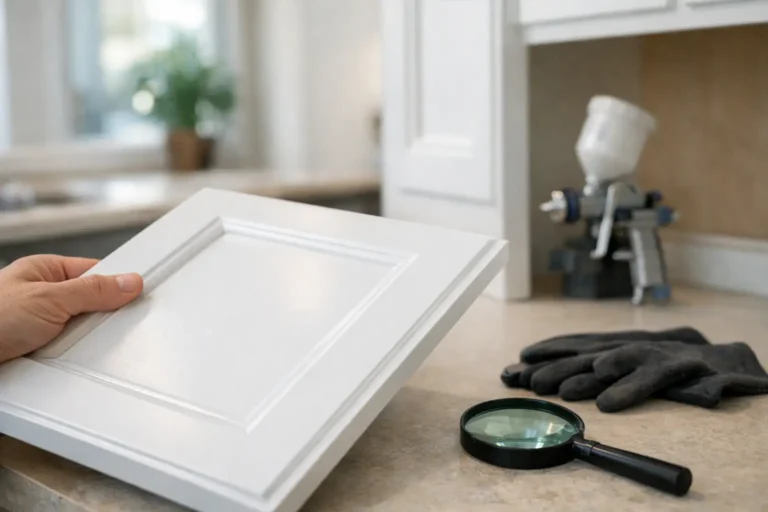
Doors and drawer fronts are typically removed and sprayed in a controlled environment. This produces a smoother, more even coating than most on-site brush-and-roll methods can achieve. Cabinet boxes are carefully prepared and finished in place, with surrounding surfaces protected throughout the project.
Controlled spraying is a major reason professionally refinished cabinetry has a factory-finish appearance. It minimizes texture, delivers consistent coverage, and gives the vanity a refined look that works with upgraded countertops, mirrors, lighting, and hardware.
The Benefits of Painting Instead of Replacing
Replacing a bathroom vanity can involve more than buying a new cabinet. Depending on the room, it may require disconnecting plumbing, removing countertops, repairing flooring or wall surfaces, modifying electrical fixtures, and coordinating multiple trades. Those costs and decisions can expand quickly.
Painting makes sense when the cabinet layout works, storage is adequate, and the vanity itself is well built. Retaining those cabinets preserves the room’s existing footprint while allowing for a significant visual change. The result can feel like a renovation without turning a focused update into a larger construction project.
That does not mean painting is always the right answer. If you want to change the vanity width, add drawers, relocate plumbing, replace a damaged countertop, or improve poor storage design, replacement may be the better investment. The strongest projects start with an honest assessment of what the bathroom needs, not a one-size-fits-all recommendation.
Choosing the Right Color and Sheen for a Painted Vanity
A painted vanity should relate to the rest of the bathroom, not compete with it. Bright white remains a classic choice for rooms with clean, traditional finishes, while warmer whites can soften bathrooms with beige tile or brass fixtures. Deep navy, charcoal, muted green, and black can create a custom furniture-like focal point in a powder room or primary bath with sufficient light.
The surrounding elements matter. Countertop veining, floor tile, shower wall finishes, mirror frames, and hardware all influence whether a color feels current and cohesive. In Charlotte-area homes with warm wood flooring and natural stone surfaces, a soft neutral or balanced warm white often creates a polished transition between the bathroom and adjoining spaces. A more saturated color can work beautifully when it is supported by the room’s lighting and fixed finishes.
Sheen deserves the same consideration. A cabinet-grade finish should be easy to clean while avoiding an overly glossy look that exposes every imperfection. The appropriate sheen depends on the desired style, the cabinet condition, and the amount of natural and artificial light in the room.
Questions to Ask Before Hiring a Cabinet Painter
Before choosing a contractor, ask how they prepare cabinet surfaces, whether doors and drawer fronts are removed for spraying, and what products they use for primer and finish coats. Ask how they protect countertops, flooring, fixtures, and adjacent rooms while work is underway. These answers reveal whether the company sees cabinetry as a specialty or simply another surface to paint.
It is also reasonable to ask about the expected project schedule, cure time, hardware removal, and how minor repairs are handled. Freshly finished cabinetry needs proper time to harden before it is subjected to normal daily use. Knowing what to expect helps you plan around the project and protect the finish once it is complete.
Look closely at a painter’s past cabinet work. Smoothness, consistent color, clean edges, and careful treatment of detailed door profiles are signs of a disciplined process. A low estimate may be appealing, but it can be costly if insufficient preparation leads to peeling, chipping, or a finish that needs to be redone within a few years.
Painting a Bathroom Vanity Yourself vs Hiring It Out
Most “how to paint a bathroom vanity” guides skip the part that decides whether it lasts: a bathroom is the wettest, most humid room in the house, and a brushed-on finish over a lightly scuffed door does not hold up to that. The doors and drawer fronts on our projects are removed and sprayed off-site in our shop, the same process we use on full kitchens, so the finish is smooth and cured before it goes back on. If you are weighing doing it yourself, DIY vs professional cabinet painting lays out where the two paths split.
Caring for a Newly Painted Vanity
Once the finish has cured, routine care is straightforward. Use a soft cloth and a mild, non-abrasive cleaner, then wipe standing water from the countertop edge and cabinet face. Avoid harsh scouring pads, strong solvents, and aggressive cleaners that can dull or damage the coating over time.
Address leaking faucets, drips, and recurring moisture promptly. Even a durable cabinet finish performs best when it is not asked to withstand constant water exposure at sink seams or along the base of the vanity. Adding felt bumpers where needed and tightening loose hardware can also prevent unnecessary wear.
For homeowners who want a bathroom that feels current without sacrificing solid existing cabinetry, professional refinishing is a practical, design-forward choice. The right color is only the beginning; the lasting value comes from a carefully prepared, smoothly sprayed finish that looks at home in the room for years to come.
Bathroom Vanity Painting: Quick Answers
How much does it cost to paint a bathroom vanity?
A vanity is a fraction of a kitchen, so it is priced per project based on the number of doors and drawer fronts and the condition of the existing finish. Request a free quote and you will get a firm number, not a range.
Can you paint a bathroom vanity without removing it?
The cabinet box stays in place. The doors and drawer fronts come off and are sprayed in our shop, then reinstalled. The plumbing and countertop are not touched.
How long does a painted bathroom vanity last?
With proper prep and a sprayed finish, it holds up to daily bathroom humidity. Simpli Painted backs every project with a 2-year warranty covering peeling, blistering, and yellowing.
Simpli Painted refinishes bathroom vanities and built-ins alongside kitchens, serving Matthews and nearby communities.
Thinking about your own cabinets?
Simpli Painted refinishes existing cabinets in the Carolinas and coastal Georgia. Doors and drawer fronts are sprayed in our shop, the boxes are finished in place, and every job carries a 2-year warranty against peeling, blistering and yellowing. 4,000+ kitchens, backed by five-star Google reviews.
Send 3–4 photos of your kitchen and we’ll quote it.