![Text logo reads Simpli [house emoji][heart emoji] Painted. Preferred for a reason. The house and heart emojis replace the word love. Black text on a white background.](https://simplipainted.com/wp-content/uploads/2026/08/cropped-IMG_3593.jpg.webp)

DIY vs Professional Cabinet Painting Compared
A cabinet color change can make a Lake Norman kitchen or a South Charlotte bathroom feel newly renovated without removing a single cabinet box. But DIY vs professional cabinet painting is not simply a question of who can hold a brush. The difference comes down to preparation, finish control, durability, disruption, and how much risk a homeowner is willing to take with one of the most visible surfaces in the home.
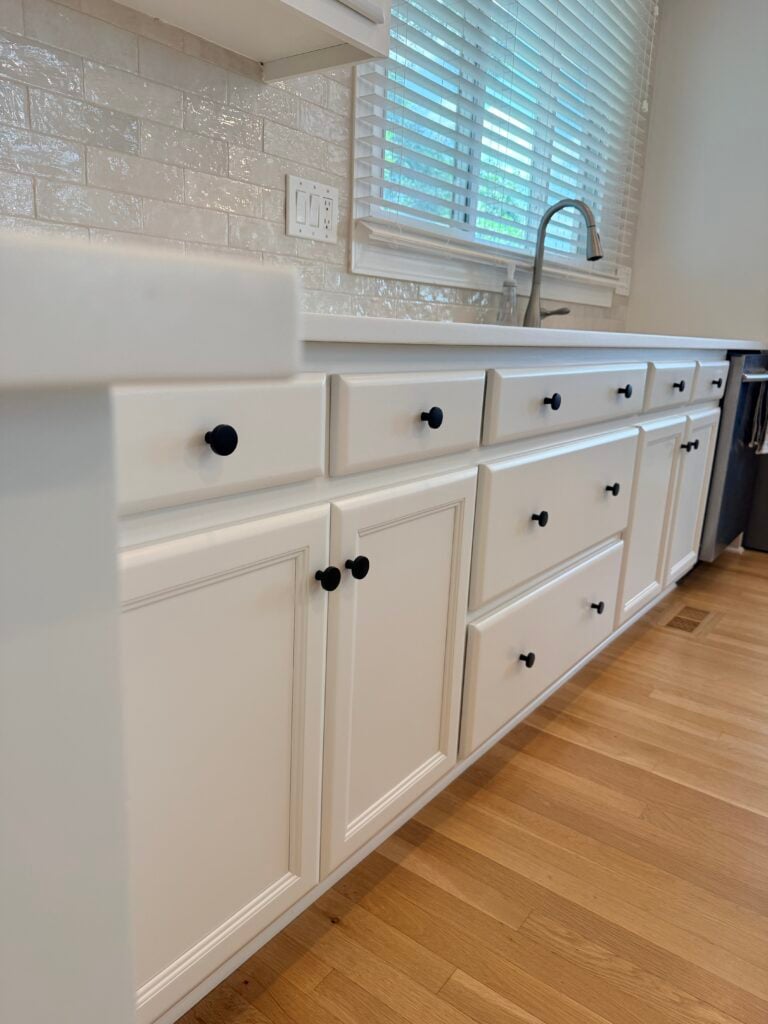
For cabinets that are structurally sound but dated, painting is often a smart alternative to replacement. The right path depends on the condition of the cabinetry, the look you expect, your available time, and whether a near factory-finish is the goal.
Why Cabinets Are Harder to Paint Than Walls
Cabinets live a demanding life. Kitchen doors are touched repeatedly, exposed to cooking oils and moisture, bumped by chairs and dishes, and cleaned more aggressively than most painted surfaces. Bathroom vanities face humidity, water splashes, cosmetics, and frequent use in a smaller space.
That is why a wall-painting approach rarely produces a cabinet-grade result. A finish may look acceptable immediately after application, then reveal brush marks, rough texture, peeling near handles, or yellowing and wear around high-use areas months later. Cabinet refinishing requires the coating to bond to a surface that may already contain grease, wax, polish, old stain, lacquer, or previous paint.
A professional process addresses those variables before color ever goes on the cabinets. It starts with cleaning and degreasing, followed by sanding and detailed surface repair. The appropriate primer creates adhesion, and durable cabinet coatings are applied under controlled conditions. Each stage supports the next one.
DIY vs Professional Cabinet Painting: The Real Differences
DIY cabinet painting can be a reasonable choice for a handy homeowner with a modest project, realistic expectations, and time to learn the process. A powder room vanity, laundry-room cabinets, or a small set of basic doors may be a manageable first project, especially when the existing finish is in good shape.
A full kitchen is a different commitment. Removing doors and drawer fronts, labeling hardware, protecting counters and flooring, cleaning every profile, sanding detailed edges, priming, applying multiple coats, allowing for cure time, and reinstalling everything accurately can take far longer than expected. The work also needs a clean, ventilated setting where wet paint is not exposed to household dust, pet hair, or everyday traffic.
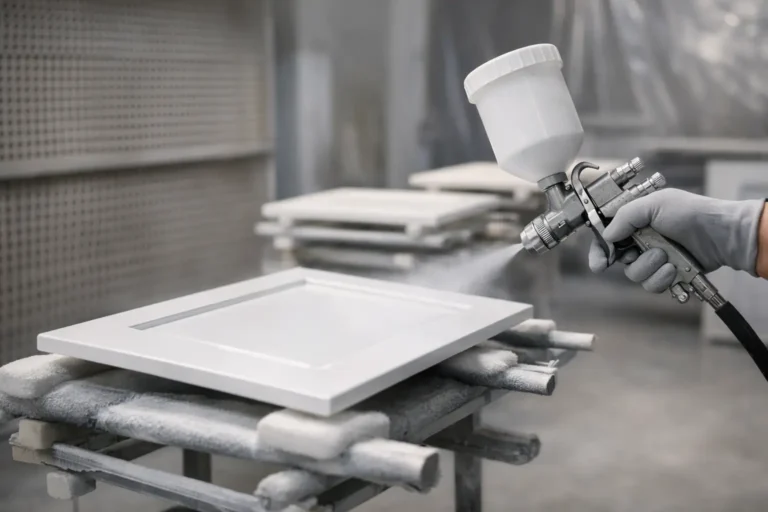
Professional cabinet painters bring a repeatable system to that work. Rather than treating cabinets as an extension of a room-painting job, a specialist evaluates the substrate, identifies repairs, selects compatible materials, and uses spray application for doors and drawer fronts. This is how a smooth, even, furniture-like appearance is achieved across large flat panels, routed profiles, and drawer faces.
Finish Quality and Texture
Most homeowners notice finish quality before they know why it looks different. Hand-applied paint can leave brush strokes, roller stipple, lap marks, or heavier paint buildup in corners and panel details. Careful DIY work can reduce these issues, but it is difficult to duplicate a consistent sprayed finish without the right equipment, technique, and preparation area.
Professional spraying atomizes the coating into a fine, even layer. Doors and drawer fronts are typically finished off-site or in a controlled environment, helping keep dust and debris out of the final coat. Cabinet frames are protected and finished with deliberate masking and spray techniques designed for the occupied home.
The goal is not merely a new color. It is a refined finish that looks intentional from across the room and up close in morning light.
Preparation and Adhesion
Preparation is the part of cabinet painting homeowners do not see once the project is complete, yet it has the greatest effect on longevity. Cabinets around ranges, trash pullouts, coffee stations, and sinks often hold invisible grease or residue. If it is not fully removed, paint can fail even when premium products are used.
DIY instructions sometimes make the job sound simple: clean, scuff sand, and paint. In practice, the right preparation varies by cabinet material and existing coating. Solid wood, wood veneer, MDF, thermofoil, laminate, and previously painted cabinets each need to be assessed differently. Damaged veneer, peeling thermofoil, open seams, deep scratches, and worn edges may require repairs before refinishing can begin.
A cabinet specialist also knows where failure is most likely to occur: around handles, on door edges, beneath sink cabinets, and at drawers that rub against face frames. Addressing those areas early helps preserve the finished appearance.
Durability After the Project
A cabinet coating must cure, not just feel dry. This distinction matters because doors can seem ready for use while the finish is still gaining hardness. Reinstalling hardware too quickly, closing doors against fresh paint, or wiping surfaces with harsh cleaners can mark a new DIY finish.
Professional refinishing uses coating systems selected for cabinetry and follows timing requirements between coats and before reassembly. Homeowners also receive clear expectations for curing and maintenance. Even a high-quality painted finish should be treated with reasonable care, but it should stand up to normal family use without quickly chipping, peeling, or dulling.
For busy Charlotte households, durability often changes the cost equation. Saving money on the initial project is less compelling if the kitchen needs touch-ups, repairs, or a full repaint sooner than expected.
Cost Is More Than the Price of Paint
DIY is usually less expensive at the outset because you are supplying the labor. Still, the actual budget should include degreaser, sandpaper, filler, caulk, primer, cabinet-grade paint, brushes, rollers, sprayer equipment or rental, masking supplies, drop cloths, cleaning materials, replacement hardware, and potential repair materials. A homeowner may also need to account for mistakes, wasted product, or a second attempt at an uneven finish.
Professional cabinet painting costs more because it includes skilled labor, specialized equipment, surface preparation, containment, spray finishing, materials, and project management. In return, homeowners retain their existing cabinet structure while receiving a substantial visual transformation at a fraction of the cost and disruption of cabinet replacement.
The best value is not always the lowest estimate. Ask what preparation is included, whether doors and drawer fronts are sprayed, what coating system will be used, how the home will be protected, and what the expected timeline looks like. A general painter may offer a lower price, but cabinetry requires a level of detail that general residential painting does not always provide.
Time, Disruption, and Daily Life
DIY painting can stretch across several weekends, particularly when work must fit around family schedules. A kitchen may be partly disassembled for longer than planned, and the project can become frustrating when weather, drying conditions, or unexpected repairs interrupt progress.
A professional team creates a defined workflow. Doors and drawer fronts are labeled and removed systematically, kitchen surfaces are protected, and the work is scheduled around proper drying and curing. There is still temporary disruption, because high-quality refinishing cannot be rushed, but it is organized rather than open-ended.
This is particularly valuable for homeowners preparing to sell, hosting family, or completing a broader kitchen refresh involving new counters, backsplash, lighting, or hardware. Cabinet color should support the whole design, not become the delay that holds everything else back.
When DIY Makes Sense
DIY can make sense when the project is small, the cabinets have a simple profile, and you are comfortable accepting a finish that may not look professionally sprayed. It can also work well for a utility area where perfect smoothness is less important than achieving a fresh, clean color.
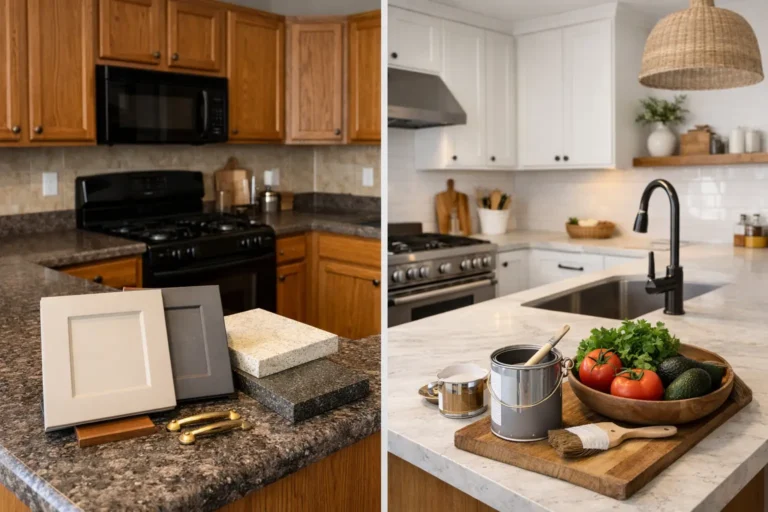
It is less ideal when cabinets are the focal point of an open kitchen, when doors have detailed profiles, when the existing finish is failing, or when the desired result is a clean, premium transformation. Dark wood being changed to a light neutral, a high-traffic family kitchen, and cabinets with visible damage all raise the stakes.
When a Cabinet Specialist Is the Better Investment
Professional refinishing is often the stronger choice when you want your existing cabinetry to look intentionally updated rather than simply painted. It is especially worthwhile for homeowners who value a smooth finish, consistent color, durable wear resistance, and a process that protects the rest of the home.
Simpli Painted focuses specifically on cabinet and vanity refinishing for homeowners across the Charlotte metro area. That specialization matters because the details – degreasing, sanding, priming, repairs, masking, controlled spraying, and careful reinstallation – are what create the finish homeowners expect in a high-value kitchen or bath.
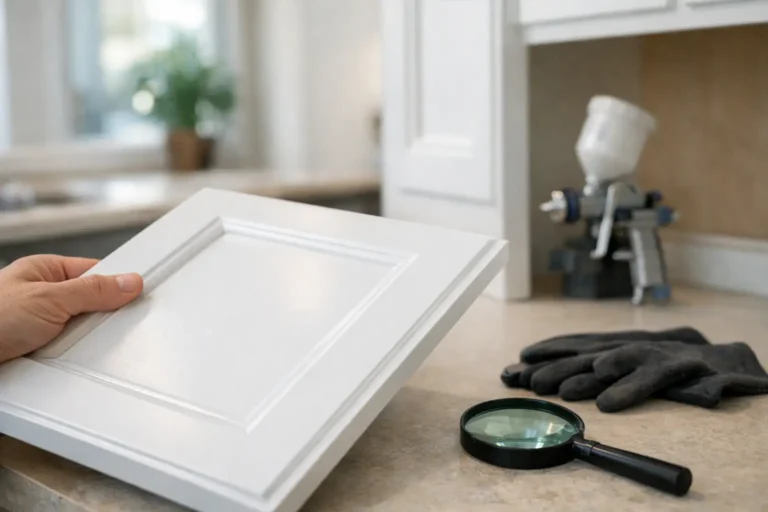
Before choosing either route, look closely at your cabinets in daylight. If the boxes are solid and the layout still works, the right refinishing process can give the room the fresh, polished character of a much larger renovation while preserving what already serves your home well.
Thinking about your own cabinets?
Simpli Painted refinishes existing cabinets in the Carolinas and coastal Georgia. Doors and drawer fronts are sprayed in our shop, the boxes are finished in place, and every job carries a 2-year warranty against peeling, blistering and yellowing. 4,000+ kitchens, backed by five-star Google reviews.
Send 3–4 photos of your kitchen and we’ll quote it.