![Text logo reads Simpli [house emoji][heart emoji] Painted. Preferred for a reason. The house and heart emojis replace the word love. Black text on a white background.](https://simplipainted.com/wp-content/uploads/2026/08/cropped-IMG_3593.jpg.webp)

Can You Paint Laminate Kitchen Cabinets Well?
A dated maple-look laminate kitchen can make an otherwise well-built home feel stuck in another decade. The good news is that you can paint laminate kitchen cabinets when the cabinet boxes, doors, and drawer fronts are structurally sound. The result can be a dramatic, contemporary transformation without the cost, demolition, and disruption of cabinet replacement.

The qualification matters: laminate is not painted successfully with a quick coat of wall paint. Its slick, nonporous surface demands careful evaluation, thorough preparation, the right bonding products, and a controlled spray finish. When those steps are handled well, laminate cabinetry can take on the smooth, durable appearance homeowners expect from a high-end kitchen update.
Can All Laminate Cabinets Be Painted?
Many cabinets described as “laminate” have a decorative plastic surface bonded to an engineered wood substrate. If that surface is firmly attached, intact, and not excessively damaged, it is often an excellent candidate for refinishing.
Before painting, a cabinet specialist looks closely at the condition of the laminate. Edges that are lifting, peeling, cracked, or swollen from moisture need to be repaired or may signal that replacement is the smarter investment. Paint can transform a sound surface, but it cannot permanently correct failing adhesion underneath it.
Thermofoil cabinets deserve particular attention. Thermofoil is a heat-fused vinyl coating, often found on white or routed cabinet doors. Once it begins releasing from the door, especially near ovens, dishwashers, or sink areas, painting over the failure will not stop it. A professional may be able to repair isolated areas, but widespread peeling commonly calls for replacement doors rather than refinishing.
Cabinet construction matters as much as the finish. Solid cabinet boxes, properly functioning drawers, and doors that close squarely are strong reasons to preserve what you have. For many Charlotte-area homeowners, cabinet painting is the most sensible way to update an outdated color while retaining a kitchen layout that already works.
Why Laminate Requires a Specialized Process
Laminate resists stains, moisture, and everyday wear because it is dense and smooth. Those same properties make it difficult for ordinary paint to grip. Skipping preparation may produce a cabinet that looks good for a few weeks, then scratches at a fingernail, chips around pulls, or peels at corners.
A durable finish begins with meticulous cleaning and degreasing. Kitchens collect airborne cooking oils, hand residue, furniture polish, and cleaning-product buildup, even when they appear clean. Any contamination left on the surface can interfere with primer adhesion.
After cleaning, the surface is carefully scuff-sanded. The goal is not to sand through the laminate or create deep scratches. It is to create the fine texture needed for a high-adhesion primer to anchor correctly. Cabinet doors often receive additional attention along profiles, edges, and frequently handled areas where failure is most visible.
Primer Is the Adhesion Layer
The primer selected for laminate cabinets is not an afterthought. It is the bridge between a slick manufactured surface and the finish coats that provide color and protection. A quality bonding primer, applied evenly after proper surface preparation, helps prevent peeling and supports a more consistent final sheen.
This is one reason a general house-painting approach can fall short. Walls are porous and forgiving. Cabinet surfaces are neither. The products, sanding method, dry times, and application standards must be suited to cabinetry rather than treated like another interior wall project.
Spraying Creates the Factory-Finish Difference
Brushes and rollers can be useful for certain cabinet areas, but they rarely deliver the refined finish most homeowners envision for doors and drawer fronts. Brush marks, roller texture, and uneven build are especially noticeable on broad, flat laminate panels and in lighter colors.
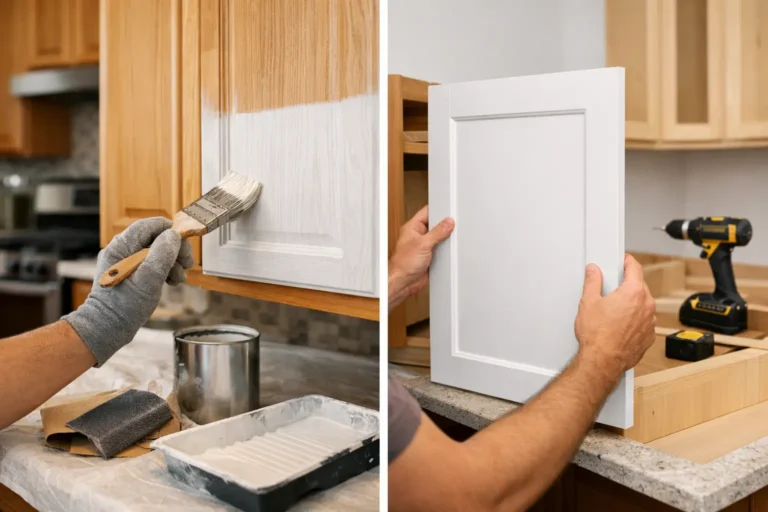
Professional cabinet refinishing typically involves removing doors and drawer fronts for controlled-environment spraying. This allows for a more even application, proper coverage around edges, and a smoother surface free from the dust and debris that can settle into wet paint in an active kitchen.
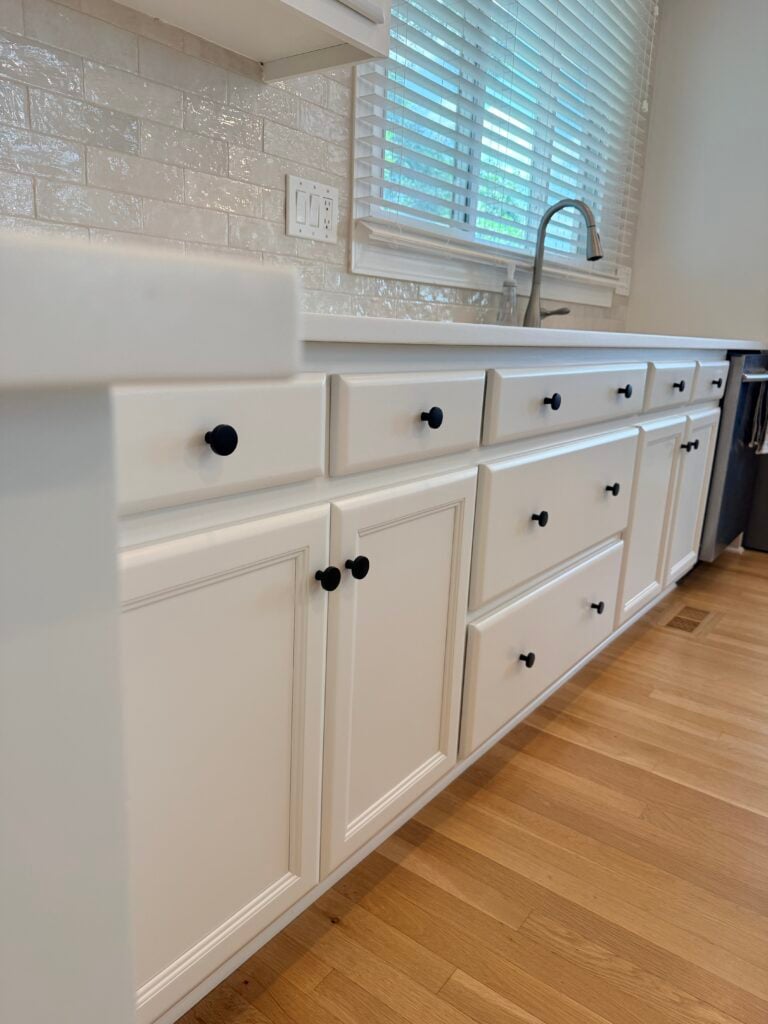
At Simpli Painted, this detail-oriented workflow is central to achieving a factory-quality appearance. Cabinet frames are protected and finished carefully in the home, while doors and drawer fronts are prepared and sprayed under controlled conditions. The difference is not simply visual on completion day. It also affects how the cabinets hold up to daily use.
What a Professional Laminate Cabinet Project Looks Like
A quality cabinet-painting project begins with an honest assessment, not a color fan deck. The cabinet condition, surface type, hardware, existing damage, and kitchen traffic all affect the recommended scope. A busy family kitchen with dogs, children, and frequent entertaining may benefit from a different sheen or repair plan than a lightly used secondary kitchen.
Once the project is approved, doors and drawer fronts are removed, labeled, and transported for refinishing. In the home, cabinet boxes are protected from surrounding floors, countertops, appliances, and walls. Thorough masking is part of craftsmanship, not an optional extra. A beautiful finish is less meaningful if overspray or careless preparation compromises the rest of the kitchen.
Cleaning, degreasing, repairs, scuff-sanding, priming, and finish application follow in a deliberate sequence. Each coating needs appropriate time to dry and cure before the next stage. Rushing this process can trap problems beneath the surface and reduce long-term durability.
After spraying and curing, doors and drawers are reinstalled, adjusted, and inspected. Hardware is reattached or updated, depending on the design plan. New pulls or knobs can be a modest addition with an outsized impact, particularly when paired with a fresh cabinet color, updated lighting, or new countertops.
Choosing a Color That Works With Laminate Cabinets
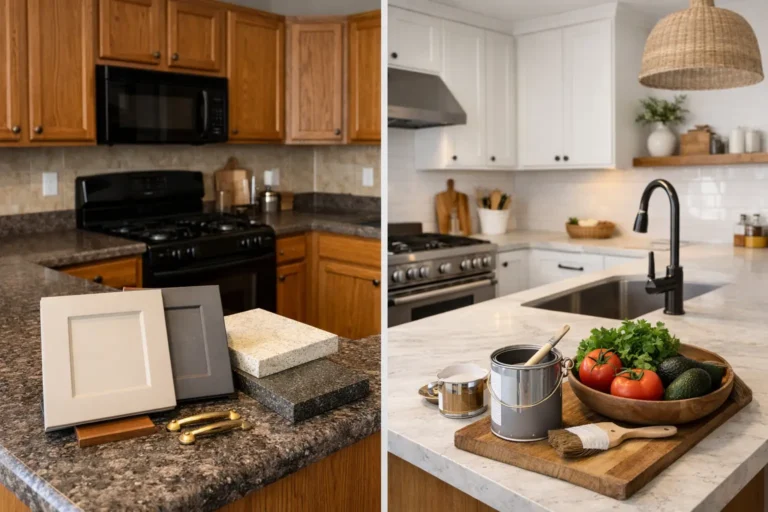
The right color can make older cabinet construction look intentional rather than merely covered. Warm whites, soft greiges, muted greens, deep navy, and charcoal tones can all work beautifully, but the best choice depends on the fixed elements in the room.
Start with countertops, backsplash, flooring, and the undertones of nearby paint colors. A bright white may look crisp next to cool quartz but overly stark beside warm travertine or honey-toned flooring. Similarly, a dark island can add welcome contrast, yet it may feel heavy in a kitchen with limited natural light.
Sheen also deserves consideration. A cabinet-grade satin or low-luster finish often gives homeowners the balance they want: enough light reflection for a clean, polished look, without highlighting every fingerprint or minor surface irregularity. Higher gloss can look striking, but it reveals flaws more readily and requires especially precise preparation.
DIY Painting vs. Professional Refinishing
A motivated homeowner can paint laminate cabinets, but the project is more demanding than it appears in online videos. The physical work is substantial, and the risk is concentrated in the details: incomplete degreasing, over-sanding, using an incompatible primer, applying coatings too heavily, or reinstalling doors before the finish has cured.
DIY can make sense for a small utility area, a temporary update, or cabinetry where a hand-painted look is acceptable. A main kitchen is different. It is a high-touch surface in one of the most visible rooms in the home, and it must withstand repeated cleaning, moisture, impacts, and daily use.
Professional refinishing is an investment in preparation, equipment, finish materials, and skill. It also protects your time and helps preserve the value of cabinetry that does not need to enter a landfill simply because its color is outdated. For homeowners weighing painting against replacement, retaining sound cabinet boxes can free more of the renovation budget for countertops, lighting, flooring, or other meaningful upgrades.
How to Protect Newly Painted Laminate Cabinets
Even a durable cabinet finish needs sensible care. Use a soft cloth with a mild cleaner rather than abrasive pads, harsh solvents, or aggressive degreasers. Wipe up splashes promptly, especially around the sink, dishwasher, and range, and avoid hanging wet towels over cabinet doors.
Give the finish the full curing time recommended by your refinisher before treating the kitchen as usual. Paint can feel dry long before it has reached its full hardness. During that early period, gentle use helps protect the finish while it develops its long-term resilience.
The most rewarding cabinet transformations begin with a clear-eyed look at what is already worth keeping. If your laminate cabinets are solid, stable, and simply no longer fit the home you want to enjoy, a carefully prepared and professionally sprayed finish can give the kitchen a fresh beginning without starting over.
Simpli Painted refinishes laminate and wood cabinets for homeowners across the Charlotte metro, including Ballantyne.
Thinking about your own cabinets?
Simpli Painted refinishes existing cabinets in the Carolinas and coastal Georgia. Doors and drawer fronts are sprayed in our shop, the boxes are finished in place, and every job carries a 2-year warranty against peeling, blistering and yellowing. 4,000+ kitchens, backed by five-star Google reviews.
Send 3–4 photos of your kitchen and we’ll quote it.