![Text logo reads Simpli [house emoji][heart emoji] Painted. Preferred for a reason. The house and heart emojis replace the word love. Black text on a white background.](https://simplipainted.com/wp-content/uploads/2026/08/cropped-IMG_3593.jpg.webp)
Kitchen Remodel Alternatives That Preserve Value
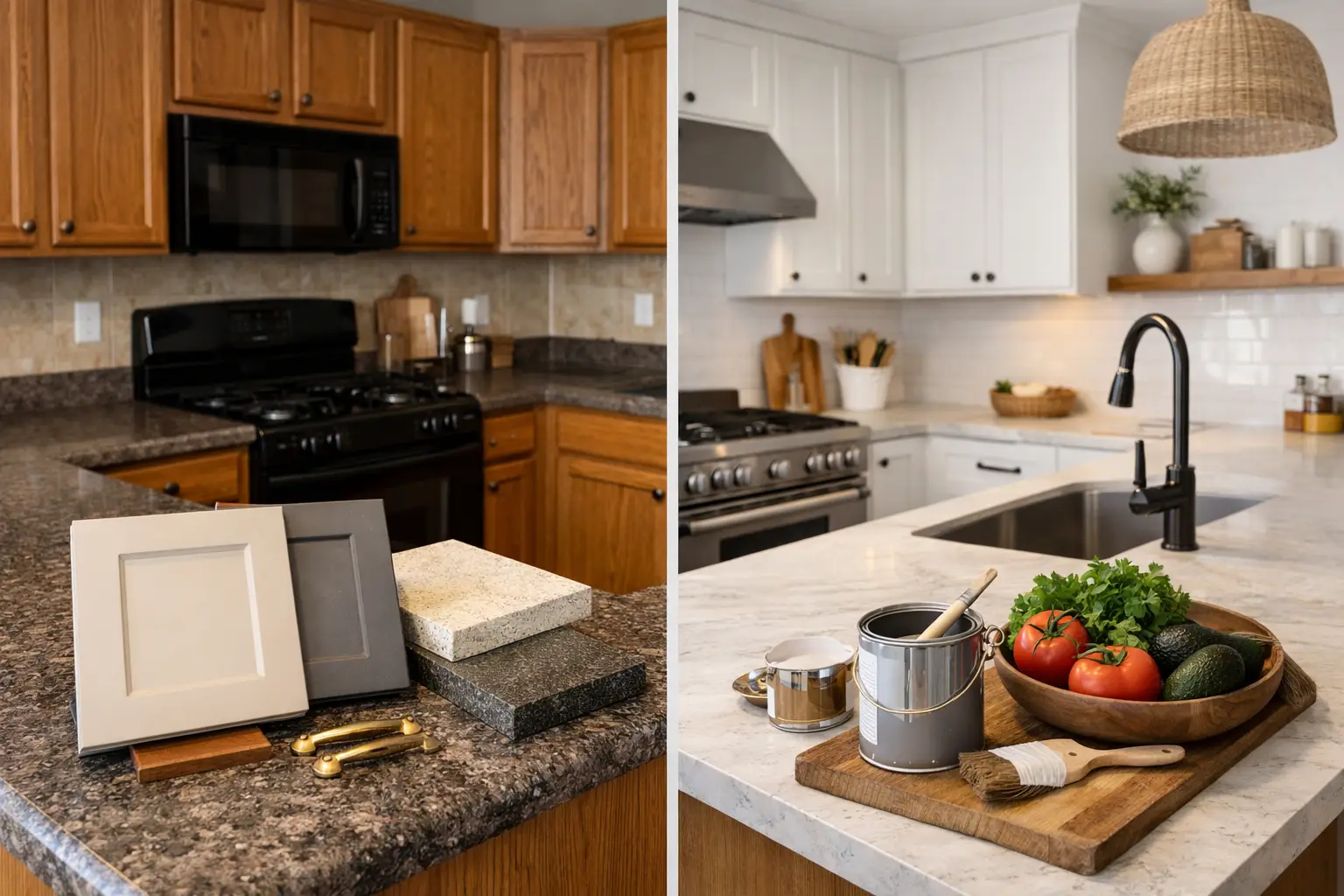
A kitchen can feel stuck in another decade long before it stops working. Honey-oak doors, worn clear coats, dated hardware, and a color palette that fights the rest of the home can make homeowners assume a full renovation is the only answer. In many Charlotte-area homes, however, the cabinet boxes are structurally sound. The most effective kitchen remodel alternatives focus on changing what people see, touch, and use every day without tearing out quality cabinetry that still has years of life left.
The right option depends on what is actually wrong with the kitchen. A finish problem calls for a different solution than poor storage, water damage, or a layout that no longer supports how the household cooks and gathers. Understanding that distinction protects both your budget and the long-term value of the project.
Start With the Cabinet Structure, Not the Cabinet Color
Before choosing a remodeling path, look beyond the door style and finish. Cabinet boxes should be securely mounted, free of significant water damage, and built from materials that can support the update you want. Doors and drawer fronts should operate properly, or be reasonably repairable. If those fundamentals are in place, replacement may be more extensive than necessary.
Older cabinets are often better constructed than homeowners expect. Solid wood doors, sturdy face frames, and well-built boxes can be excellent candidates for refinishing, new hardware, or targeted functional upgrades. A dated appearance does not automatically mean outdated construction.
Full replacement becomes more sensible when cabinets have swollen particleboard, widespread delamination, major structural failure, persistent moisture damage, or a layout that cannot accommodate the household’s needs. The goal is not to avoid replacement at all costs. It is to reserve it for kitchens where it solves a real problem.
Professional Cabinet Painting and Refinishing
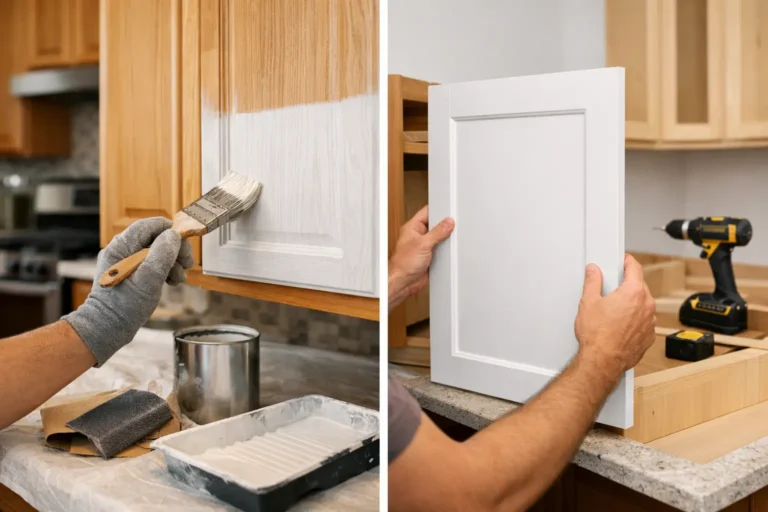
For structurally sound cabinetry, professional painting is often the most visible transformation available without a complete remodel. It changes the dominant surface in the room, allowing countertops, flooring, backsplash, lighting, and wall color to feel new again.
The difference between a lasting cabinet finish and an ordinary paint job is preparation. Kitchen cabinetry collects years of cooking residue, oils, furniture polish, and hand oils, especially around pulls and frequently used doors. A professional process begins with detailed cleaning and degreasing, followed by sanding and repairs that create a sound surface for primer and finish coatings.
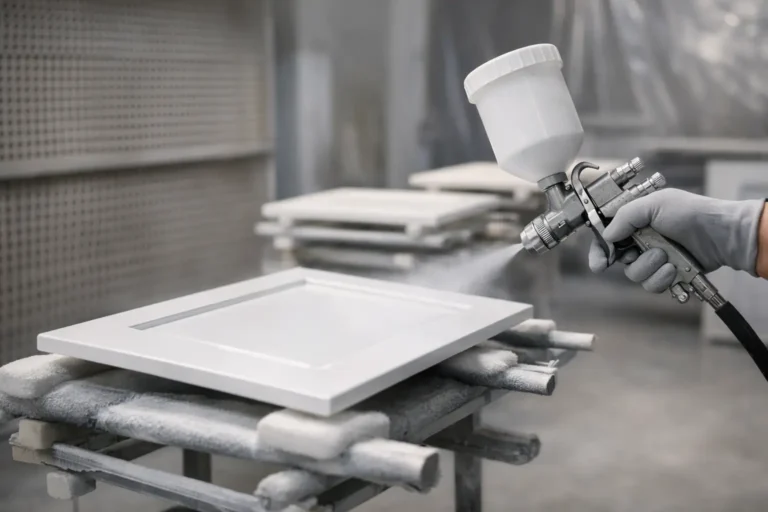
Doors and drawer fronts should be removed and spray-finished in a controlled environment whenever possible. Controlled spraying produces the smooth, even coverage homeowners associate with a factory-finish appearance. It also avoids the brush marks, uneven sheen, and premature wear that can make a DIY project or general house-painter approach look disappointing after only a short time.
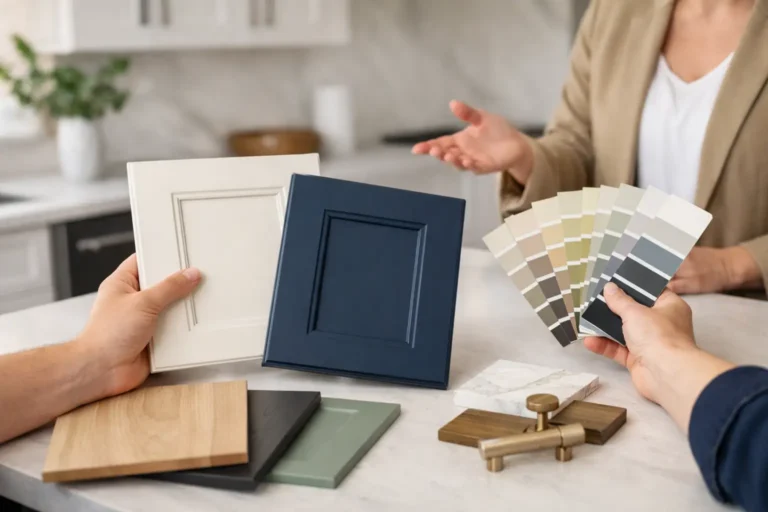
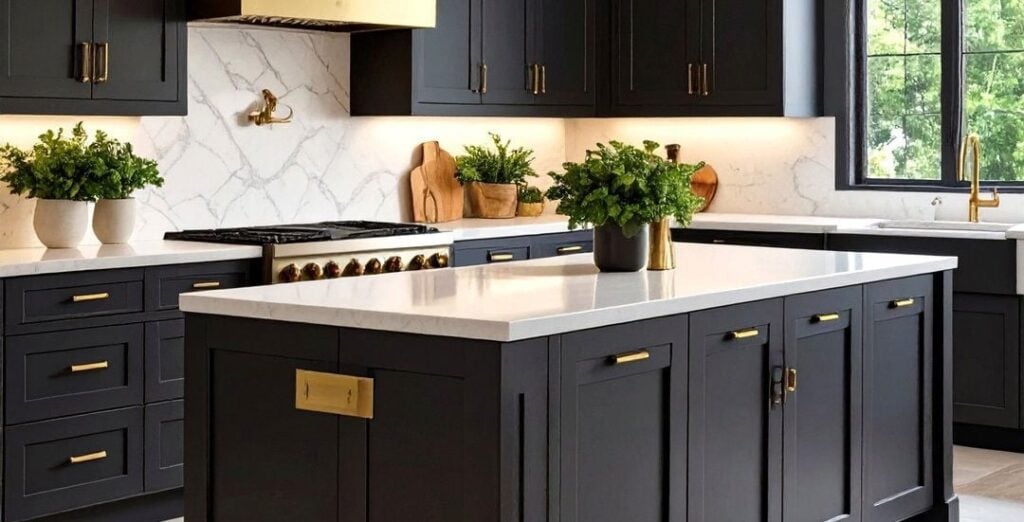
Color choice matters just as much as process. Warm whites can brighten a traditional Lake Norman kitchen without feeling stark. Soft greige, mushroom, muted green, navy, and charcoal can add contrast and dimension, particularly for islands or lower cabinets. The best choice responds to the fixed elements that remain: countertop undertones, flooring, backsplash, and the amount of natural light in the room.
Cabinet painting is not a substitute for rebuilding damaged cabinetry, but it is a high-value option when the layout works and the existing cabinets deserve to be retained. It also creates far less demolition, dust, and downtime than a full replacement project.
Cabinet Refacing When You Want a Different Door Profile
Refacing is another option for cabinets with sound boxes but a door style that no longer suits the home. The existing cabinet boxes remain in place, while visible exterior surfaces are covered and new doors and drawer fronts are installed. This can be useful for homeowners who want to move from ornate raised-panel doors to a simpler Shaker profile without changing the kitchen footprint.
The trade-off is cost and scope. Refacing generally involves more materials and labor than painting, and the finished result depends heavily on how well the new components and box coverings are matched. It may be a good middle ground when door style is the primary concern, but it does not inherently improve cabinet construction, storage capacity, or room layout.
For homeowners who like their existing door profile but dislike the wood tone or worn finish, refinishing is usually the more direct solution. There is no reason to discard good doors simply because their color no longer fits the home.
Make Functional Changes Without Rebuilding the Kitchen
A kitchen’s daily frustrations are not always caused by its appearance. Sometimes a few carefully chosen upgrades improve function more than a large-scale renovation would. Adding rollout shelves, drawer organizers, pullout trash storage, or better pantry organization can make existing cabinetry work harder.
Hardware is another small change with an outsized visual impact. Replacing dated knobs and pulls after a cabinet color transformation can sharpen the entire design. Hardware should be selected with care, especially if new pulls require different hole spacing. Existing holes may need filling and refinishing before installation to prevent a compromised appearance.
Lighting deserves similar attention. Under-cabinet lighting improves task visibility and adds warmth in the evening, while a new pendant or updated recessed lighting plan can make freshly refinished cabinets look more intentional. These changes work best as part of a coordinated design plan rather than a collection of unrelated updates.
Update the Surrounding Surfaces Strategically
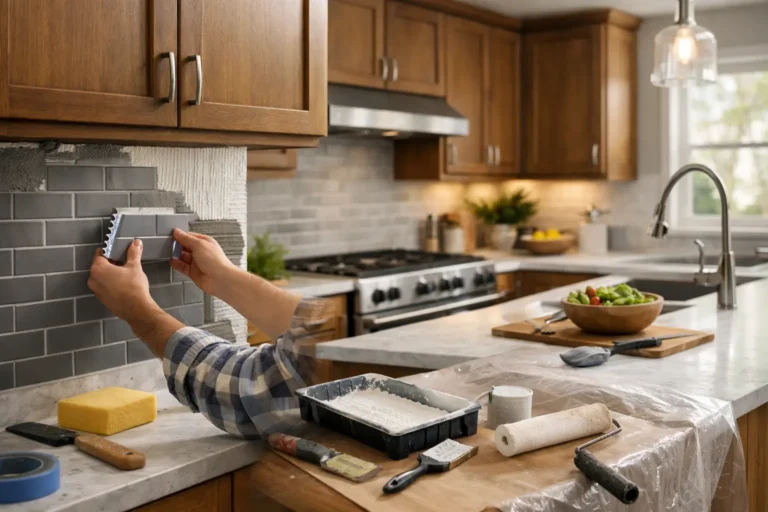
When cabinet boxes stay in place, homeowners can direct a greater share of their budget toward the surfaces that complete the room. A new backsplash may be enough to bring a kitchen forward several decades. Replacing a laminate countertop with stone or quartz countertops can further elevate the result, provided the cabinet structure can support it.
This approach requires sequencing. Cabinet refinishing, countertop installation, backsplash work, and hardware installation should be planned so that one trade does not damage another’s completed work. A cabinet color should also be selected in person, with samples evaluated against the actual countertop, tile, and flooring in the home’s lighting.
There is no requirement to update every surface at once. Many homeowners paint cabinets first, then live with the new color before selecting a backsplash or countertop. That can be a practical way to spread investment over time while still creating a meaningful immediate change.
When Selective Replacement Makes More Sense
Kitchen remodel alternatives do not have to be all-or-nothing. A thoughtful project may retain most cabinets while replacing an inefficient island, a damaged sink base, or a shallow pantry section. Selective replacement can solve a specific storage or layout problem while preserving the cabinetry that remains sound.
This route does require careful planning. Matching new cabinets to older construction can be difficult, particularly when door profiles, wood species, and box dimensions differ. A painted finish can help create visual unity, but only if the cabinets are properly prepared and the new pieces are integrated thoughtfully.
If walls need to move, plumbing locations must change substantially, or the kitchen lacks the work zones your family needs, a full remodel may be the better investment. No finish upgrade can make a cramped, poorly planned layout function like a redesigned space. The key is to distinguish a cosmetic problem from a structural or functional one before committing to demolition.
How to Choose Among Kitchen Remodel Alternatives
A useful decision starts with three questions: Are the cabinet boxes sound? Does the current layout work for how you live? Which elements make the kitchen feel dated first? If the boxes and layout are strong, cabinet refinishing paired with hardware, lighting, and selective surface updates can produce a dramatic result with less disruption.
If storage is the frustration, consider organizational upgrades before replacing every cabinet. If the door style is the issue, refacing may deserve consideration. If the room itself does not function, replacement and layout changes may be justified. Each path has a place, and the most expensive option is not automatically the most valuable one.
For homeowners in Charlotte, Lake Norman, Cornelius, Matthews, Waxhaw, and South Charlotte, a specialized cabinet-finishing consultation can clarify whether existing cabinetry is a strong candidate for transformation. Simpli Painted evaluates the condition of the cabinets and applies a meticulous process designed for smooth, durable results rather than treating cabinetry like ordinary wall surfaces.
A kitchen should feel considered when it is finished: the cabinet color belongs with the countertops, the hardware feels deliberate, the drawers work properly, and the finish stands up to daily use. Keeping good cabinetry and improving it with care can leave more room in the budget for the details that make the space truly yours.
Thinking about your own cabinets?
Simpli Painted refinishes existing cabinets in the Carolinas and coastal Georgia. Doors and drawer fronts are sprayed in our shop, the boxes are finished in place, and every job carries a 2-year warranty against peeling, blistering and yellowing. 4,000+ kitchens, backed by five-star Google reviews.
Send 3–4 photos of your kitchen and we’ll quote it.