![Text logo reads Simpli [house emoji][heart emoji] Painted. Preferred for a reason. The house and heart emojis replace the word love. Black text on a white background.](https://simplipainted.com/wp-content/uploads/2026/08/cropped-IMG_3593.jpg.webp)
A Homeowner Guide to Cabinet Refinishing
A kitchen can feel dated because of its cabinet color long before the cabinet boxes themselves are ready to be replaced. This homeowner guide to cabinet refinishing is for Charlotte-area homeowners who want a meaningful visual upgrade while keeping solid, functional cabinetry in place. Done properly, refinishing can replace worn wood tones, yellowing finishes, or tired colors with a smooth, durable painted surface that changes the character of the entire room.

The key phrase is done properly. Cabinet painting is not the same as applying wall paint to a set of doors. Cabinet surfaces collect cooking oils, hand residue, cleaning-product film, and years of daily wear. A lasting finish depends on meticulous preparation, compatible coatings, and controlled spray application – not a quick coat of paint.
When Cabinet Refinishing Is the Right Investment
Cabinet refinishing is often an excellent choice when your cabinet boxes are structurally sound, the layout works for your household, and the doors and drawer fronts are in good condition. If you like the storage capacity and traffic flow of your kitchen but dislike the color or finish, refinishing preserves the expensive parts of the room while giving it a more current appearance.
It is especially effective for homes with quality wood cabinetry that has become visually dated. Honey oak, dark cherry, orange-toned maple, and worn painted finishes can all make a kitchen feel older than it is. A carefully selected color and factory-quality finish can make existing cabinets feel intentional again, whether the goal is a brighter traditional kitchen, a warmer transitional look, or a clean, modern contrast.
Bathroom vanities are another strong candidate. Refinishing a vanity can refresh a powder room or primary bath without the expense of replacing countertops, plumbing connections, mirrors, and flooring. Because bathroom cabinetry sees moisture and frequent handling, however, the preparation and coating system matter just as much as they do in a kitchen.
Refinishing is not always the answer. Cabinets with significant water damage, failing particleboard boxes, delaminating doors, broken joinery, or a layout that no longer serves your family may need repair or replacement first. Likewise, refinishing will not create more storage or change a cramped kitchen footprint. It improves what is there exceptionally well, but it cannot solve structural or design limitations that call for a larger renovation.
A Homeowner Guide to Cabinet Refinishing Preparation
The visible color gets the attention, but preparation determines whether that color still looks polished after years of opening doors, wiping spills, and moving through busy mornings. Professional cabinet refinishing begins with an honest assessment of the existing materials and finish. Solid wood, veneer, MDF, thermofoil, and previously painted surfaces can all require different approaches.
Cleaning and degreasing come first
Kitchen cabinets hold more residue than most homeowners realize. Grease can be nearly invisible, particularly around range hoods, drawer pulls, and upper doors near cooking surfaces. If that residue is not thoroughly removed, primer and paint may not bond correctly. The result can be peeling, chipping, or an uneven finish that shows trouble far sooner than it should.
A specialist cleans and degreases every surface that will receive coating, including door edges, drawer fronts, frames, and detailed profiles. This is not a glamorous step, but it is one of the clearest differences between a durable cabinet finish and a short-lived paint job.
Sanding creates the right surface for adhesion
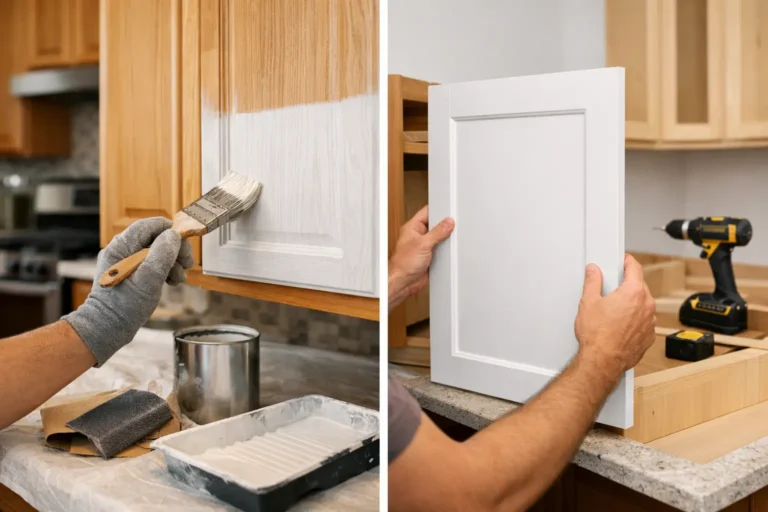
Sanding is not about aggressively stripping every cabinet to bare wood. In many cases, it is about removing surface contaminants, dulling the existing sheen, smoothing minor imperfections, and creating a profile that helps the primer adhere. Detailed doors require care: recessed panels, routed edges, and narrow rails can show sanding marks or missed spots if the work is rushed.
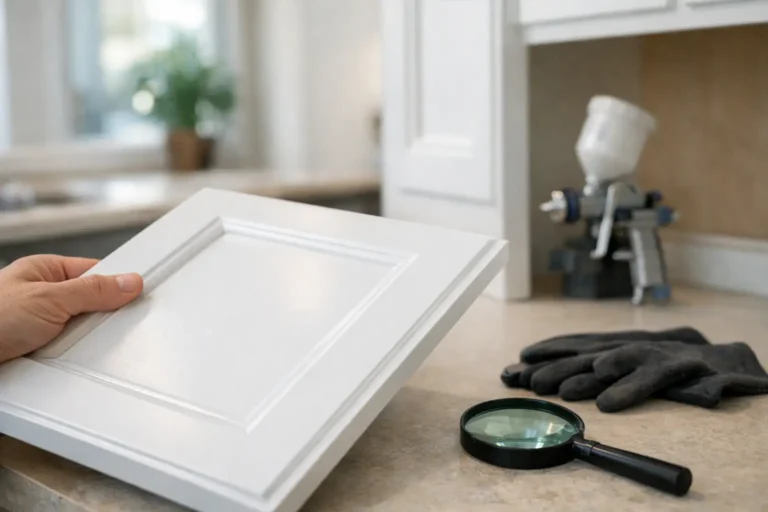
Professional preparation also includes filling dents, repairing minor chips, caulking appropriate seams, and addressing small surface flaws before primer is applied. These details matter because a sprayed finish is remarkably smooth – and smooth finishes make underlying imperfections easier to see.
Primer is a performance layer, not a shortcut
The correct primer helps block stains, improve adhesion, and create a uniform foundation for the topcoat. This is particularly valuable when covering dark stains with a light color or refinishing cabinets with tannin-rich wood that can discolor paint if not properly sealed.
Skipping primer may save time on day one, but it can compromise color consistency and durability. A professional process uses primer as part of a complete coating system, selected for the material being refinished and the finish being applied.
Controlled spraying produces the finish homeowners notice
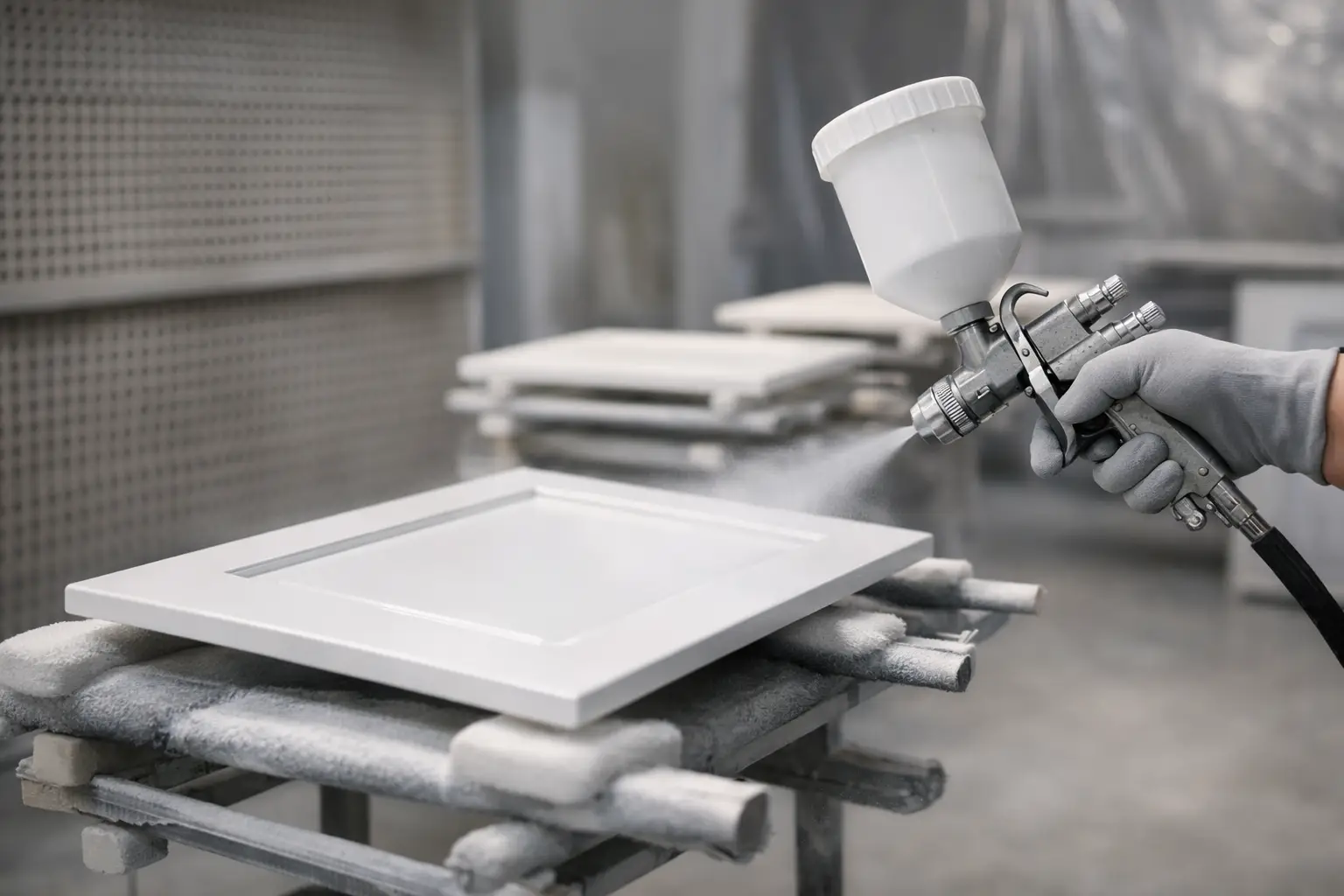
For the most refined result, cabinet doors and drawer fronts are typically removed and spray-finished in a controlled environment. This approach helps create an even, factory-finish appearance without the brush marks and roller texture that can make cabinets look like a weekend project.
The cabinet frames are protected and finished carefully in place, while surrounding areas are masked to control overspray and dust. The process requires planning and respect for the home, especially in an active kitchen. The temporary inconvenience of having doors removed is balanced by a finish quality that is difficult to achieve with casual on-site painting alone.
Choosing a Color That Works Beyond the Sample
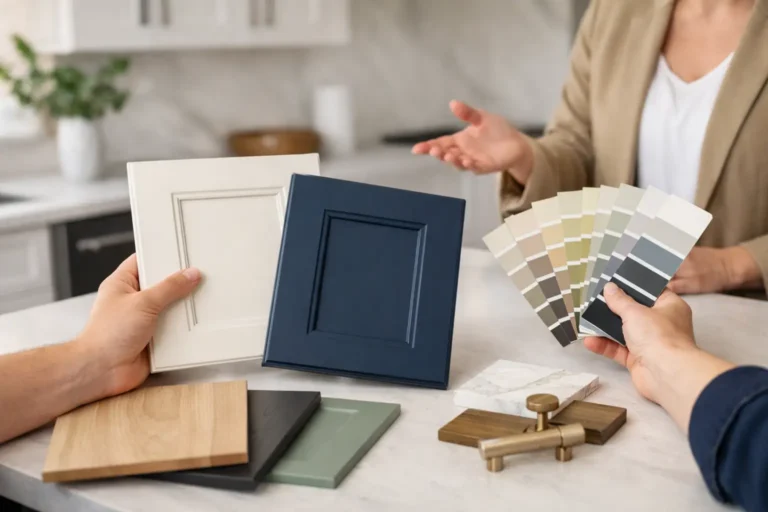
Color selection should begin with the fixed elements that will remain: countertops, backsplash, flooring, wall color, hardware, and lighting. A cabinet color that looks beautiful on a small swatch can read very differently across an entire kitchen, particularly in Charlotte homes where abundant natural light can shift throughout the day.
Warm whites and soft greiges can brighten a traditional kitchen without making it feel stark. Deeper greens, charcoal tones, and navy can add depth to an island or lower cabinets when the room has enough light and visual balance. Natural wood accents, brass hardware, and warm stone often pair well with colors that have a subtle warm undertone, while cool gray countertops may call for a more neutral or carefully balanced paint color.
Do not choose only by trend. The strongest cabinet color is one that works with your architecture and the finishes you plan to keep for several years. A refinishing professional can help you consider undertones, sheen, and how the color will look across doors, frames, and detailed profiles rather than on a single painted sample.
Durability Depends on Use and Expectations
A professionally refinished cabinet surface is designed for regular household use, but cabinets are still high-touch surfaces. Areas around pulls, trash drawers, sink bases, and frequently used pantry doors receive the most wear. Good coatings and careful curing provide meaningful durability, yet no painted surface is entirely immune to sharp impacts, abrasive scrubbing, or repeated exposure to standing water.
After refinishing, use a soft cloth and mild cleaner rather than harsh chemicals or abrasive pads. Wipe up splashes promptly, especially near the sink and dishwasher. Add or maintain quality hardware so fingers are not constantly pulling at door edges, and avoid hanging wet towels over cabinet doors.
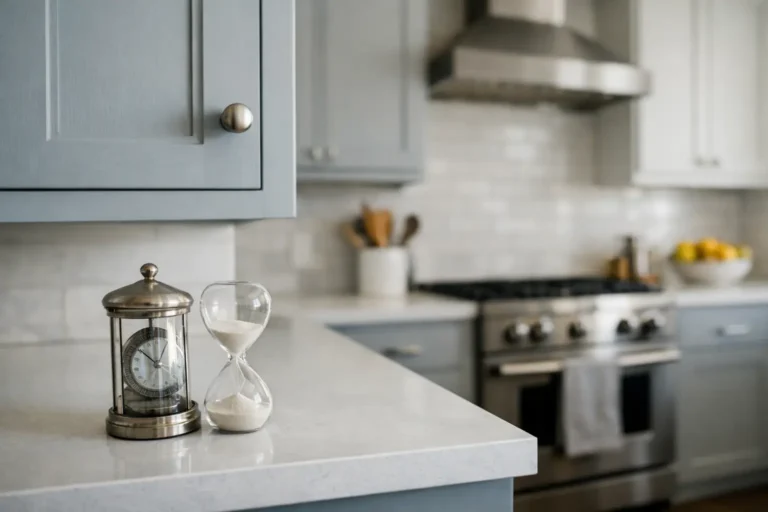
Homeowners should also understand curing. A finish may feel dry before it reaches its full hardness. Your refinishing professional should provide clear care instructions and explain when normal kitchen use can resume. Following that guidance protects the finish during its most vulnerable period.
Why a Cabinet Specialist Matters
A general house painter may be highly skilled with walls, ceilings, and trim, but cabinetry is its own discipline. The materials are different, the surfaces are handled constantly, and the desired result is more exacting. Homeowners are not simply looking for color coverage. They are looking for smoothness, consistency, clean edges, durable adhesion, and a finish that complements a high-value home.
When comparing refinishing providers, ask how they handle degreasing, sanding, repairs, priming, dust control, spraying, and cure time. Ask whether doors and drawer fronts are removed, how the kitchen is protected, and what coating system is used. Before-and-after photos can be useful, but process questions reveal whether the finish is being treated as a specialty craft or a quick painting task.
For homeowners in Charlotte, Mooresville, Waxhaw, or Fort Mill, cabinet refinishing can be one of the most visible upgrades available without the cost and disruption of full replacement. Simpli Painted approaches that work with a cabinet-specific process designed around preparation, controlled spraying, and long-term appearance.
The best time to refinish is before you resign yourself to a kitchen you no longer enjoy. If the cabinets are sound, their current color does not have to dictate how your home feels every day.
Thinking about your own cabinets?
Simpli Painted refinishes existing cabinets in the Carolinas and coastal Georgia. Doors and drawer fronts are sprayed in our shop, the boxes are finished in place, and every job carries a 2-year warranty against peeling, blistering and yellowing. 4,000+ kitchens, backed by five-star Google reviews.
Send 3–4 photos of your kitchen and we’ll quote it.