Cabinet Refacing or Painting? Choose the Right Update
A kitchen can feel dated long before its cabinets stop functioning well. If the layout works, the boxes are solid, and storage meets your household’s needs, cabinet refacing may seem like the obvious next step. But for many homeowners, professional cabinet painting delivers the same dramatic visual change with less material waste, less disruption, and a stronger return on the existing cabinetry.
The right choice depends on what is actually wrong with your cabinets. A tired finish and an outdated color call for a different solution than damaged cabinet boxes, undersized drawers, or doors with a style you no longer want. Understanding the difference before committing helps you invest where it will make the biggest impact.
What Cabinet Refacing Actually Changes
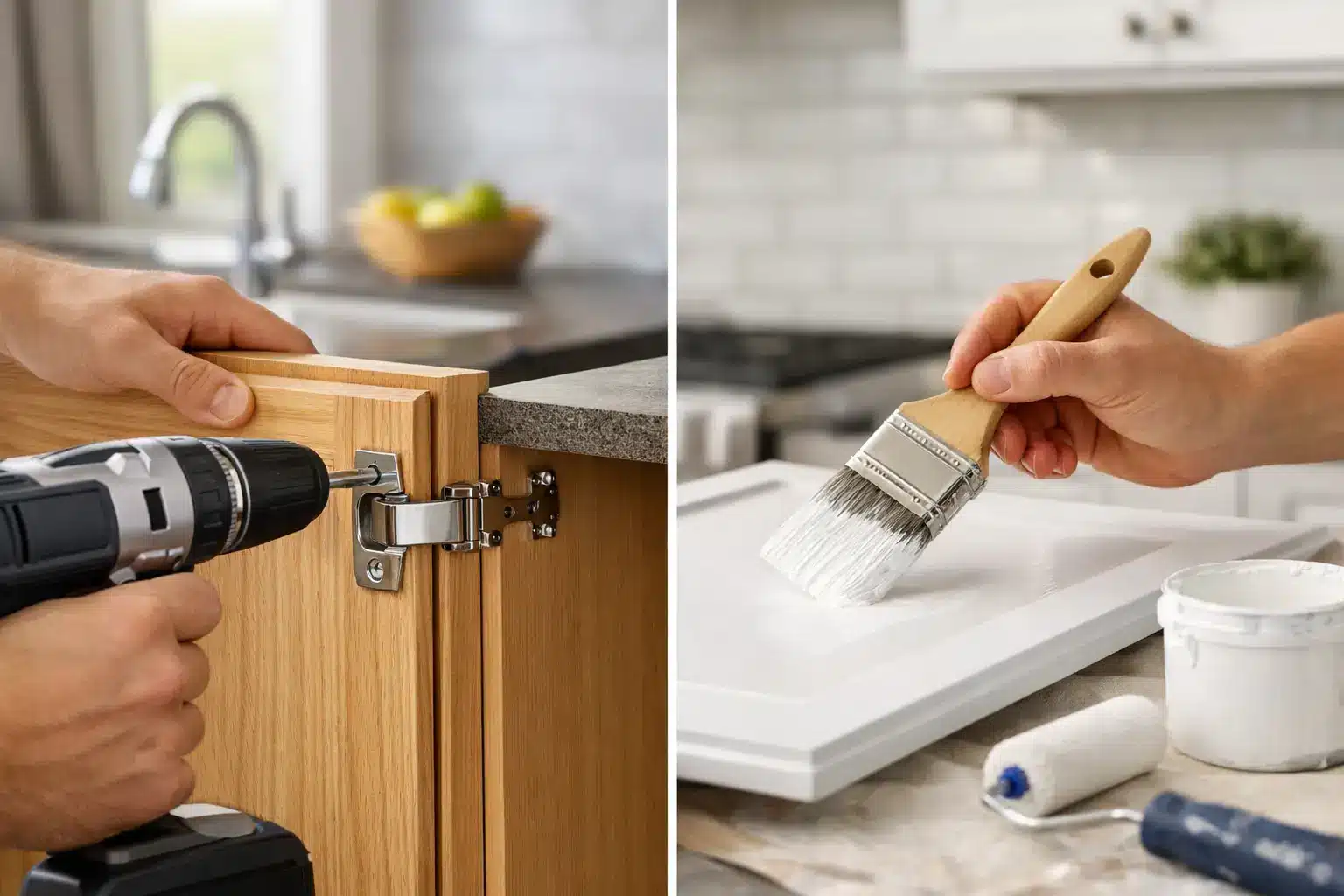
Cabinet refacing keeps the existing cabinet boxes in place while changing their visible surfaces. In a traditional refacing project, the face frames and exposed sides of the boxes are covered with a new veneer or matching material. The old doors and drawer fronts are typically replaced with new ones, along with new hardware if desired.
This approach can make sense when the cabinet boxes are structurally sound, but the door profile is unmistakably dated. For example, a homeowner who wants to replace ornate raised-panel oak doors with clean shaker-style doors may find refacing more practical than trying to alter what is already there. It also gives you an opportunity to change the species, door style, and sometimes the hardware configuration.
Refacing is not the same as repainting. It involves new components and installation work, which means more material cost and more variables to coordinate. It can still be less disruptive than a full cabinet replacement because the cabinet footprint remains intact, but it is generally a larger project than refinishing an existing set of doors and drawer fronts.
Cabinet Refacing vs. Professional Cabinet Painting
The question is not which option is universally better. It is which one best fits the condition of your cabinets and the result you want.
When refacing is the stronger choice
Refacing is worth considering when you want a true change in door style, when doors are warped or heavily damaged, or when the existing profiles cannot support the look you have in mind. New shaker doors can substantially change the character of a traditional kitchen. New drawer fronts can also bring better visual consistency where old pieces have been repaired repeatedly or no longer align well.
It can be a smart middle ground for homeowners who do not need to move walls, alter plumbing, or redesign their kitchen layout, but who want more than a new color. The existing cabinet boxes must still be in good shape. A new door and veneer cannot correct moisture-damaged particleboard, a failing cabinet base, or poor installation from the start.
When cabinet painting offers better value
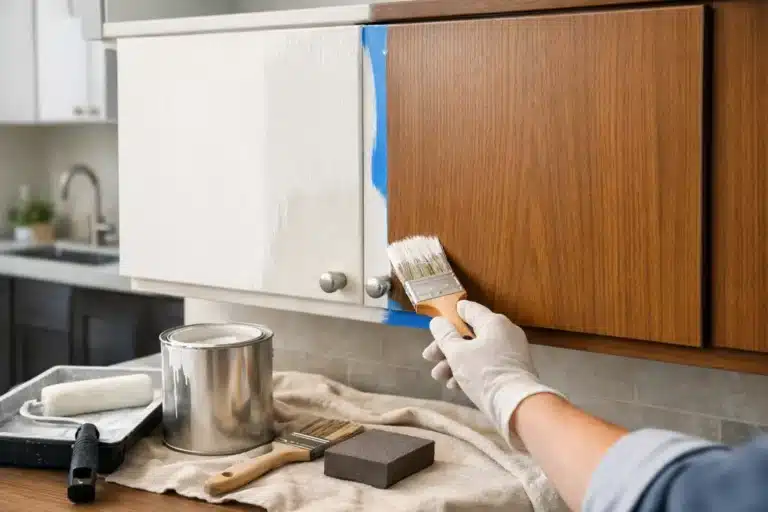
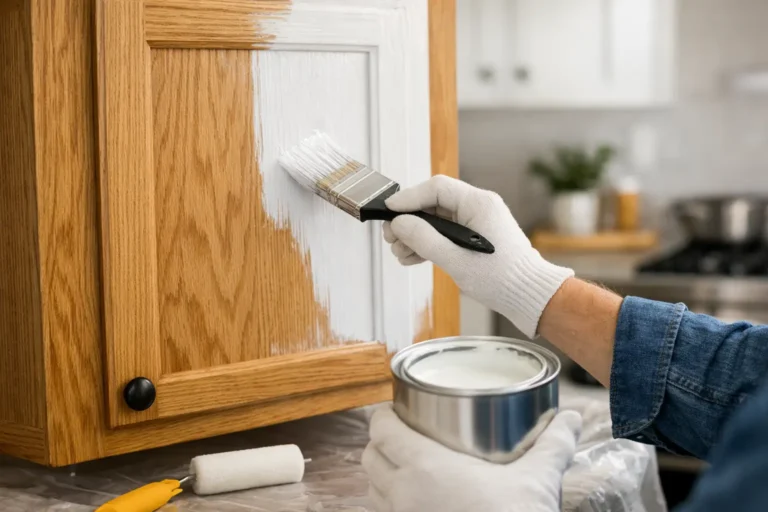
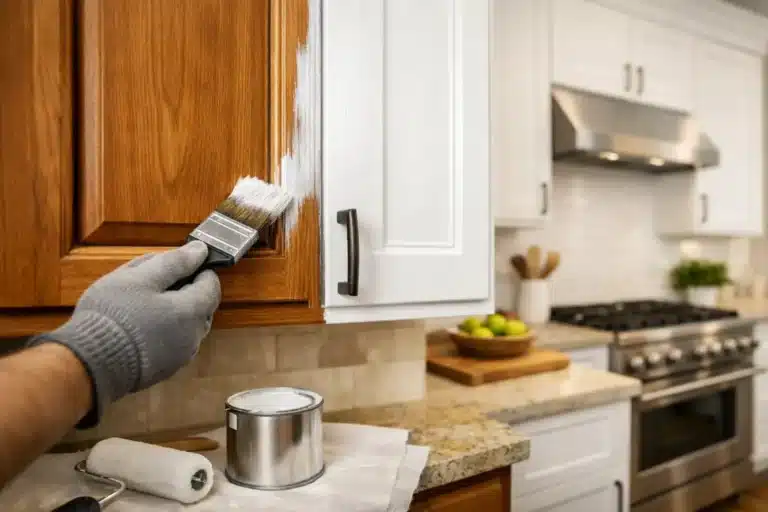
If you like the style and function of your cabinet doors, cabinet painting is often the more efficient choice. It preserves the doors and drawer fronts you already own while transforming the finish from dated honey oak, dark espresso, yellowed cream, or worn white into a fresh, intentional color.
Well-built wood cabinets frequently have years of useful life left in them. Replacing their fronts simply because the color feels old may add expense without creating a meaningfully better kitchen. A professionally sprayed finish can give those existing doors a smooth, refined appearance that feels appropriate beside updated countertops, tile, lighting, and hardware.
Painting is especially compelling when the goal is visual modernization rather than structural change. It also allows homeowners to direct more of their renovation budget toward design elements that affect the entire room, such as countertops, a backsplash, or improved lighting.
The Condition of the Cabinet Box Matters Most
Before choosing either path, look beyond the doors. Open the cabinets and inspect the boxes, shelves, hinges, and areas around the sink and dishwasher. Signs of water damage, swelling, delamination, sagging shelves, or persistent structural movement deserve attention first.
Cabinets with solid frames, stable boxes, and properly functioning drawers are good candidates for a finish update. Small imperfections, old hardware holes, minor dents, and surface wear can often be addressed during preparation. Significant water intrusion or failing construction is different. In those cases, replacement of affected cabinetry may be the more responsible investment.
A careful assessment also prevents a common mistake: treating a storage or layout problem as a cosmetic one. Neither painting nor refacing creates a deeper pantry, improves a cramped work triangle, or adds the pull-out storage a busy household needs. Those priorities may call for selective cabinet replacement or a broader remodel.
A Factory-Quality Look Depends on Preparation
Cabinetry is not a typical wall-painting surface. Doors and drawer fronts are touched constantly, exposed to cooking residue, cleaned often, and subject to repeated opening and closing. A finish that looks acceptable on day one can chip, peel, or feel rough within months if the underlying surfaces were not prepared correctly.
Professional cabinet refinishing begins with thorough cleaning and degreasing to remove oils, polish, cooking residue, and contaminants that interfere with adhesion. Surfaces are then sanded to create the proper profile for bonding, while dents, seams, and other imperfections are addressed. A high-quality bonding primer follows, creating a dependable foundation for the finish coats.
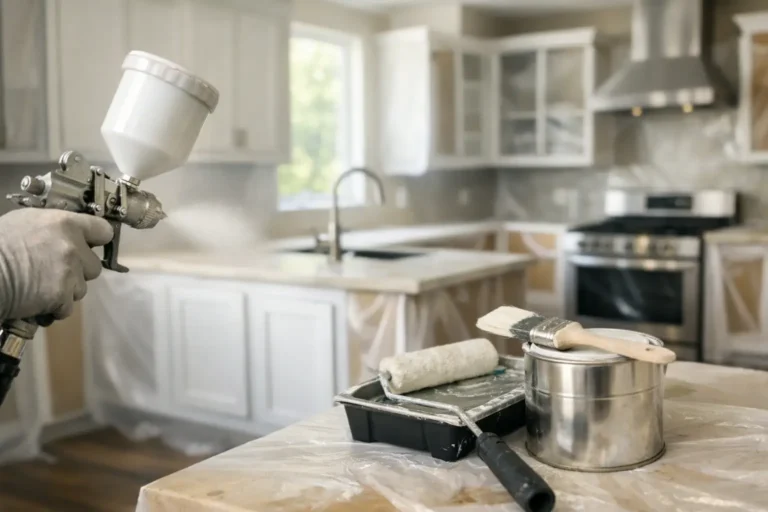
The application method matters just as much. Brushing and rolling can be appropriate for certain projects, but they rarely produce the even finish most homeowners expect from cabinetry. Controlled spraying of doors and drawer fronts creates a more uniform, factory-finish appearance with fewer visible texture marks. Proper drying conditions, careful handling, and adequate cure time protect that result.
This is why hiring a cabinet specialist is different from asking a general house painter to paint the kitchen. The work requires disciplined prep, product knowledge, an organized workflow, and respect for the details that show up under kitchen lighting every day.
Design Choices That Make the Update Feel Intentional
Whether you choose cabinet refacing or painting, the best results come from looking at the kitchen as one connected space. Cabinet color should relate to the countertop, backsplash, flooring, wall color, and the amount of natural light in the room.
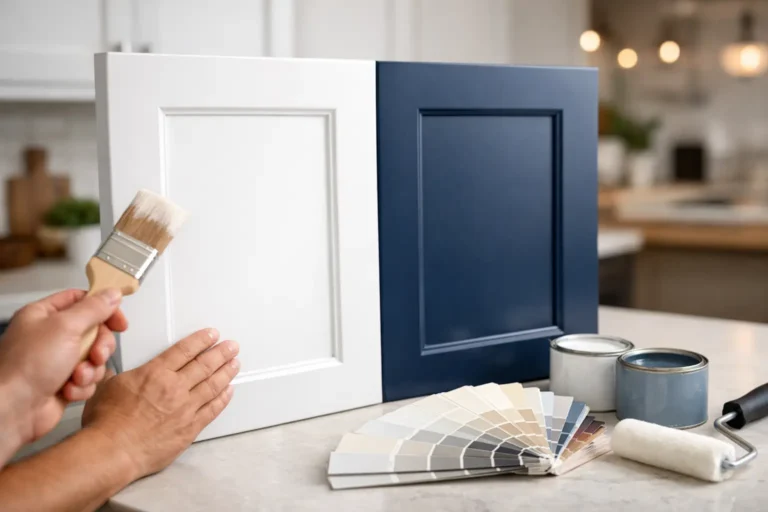
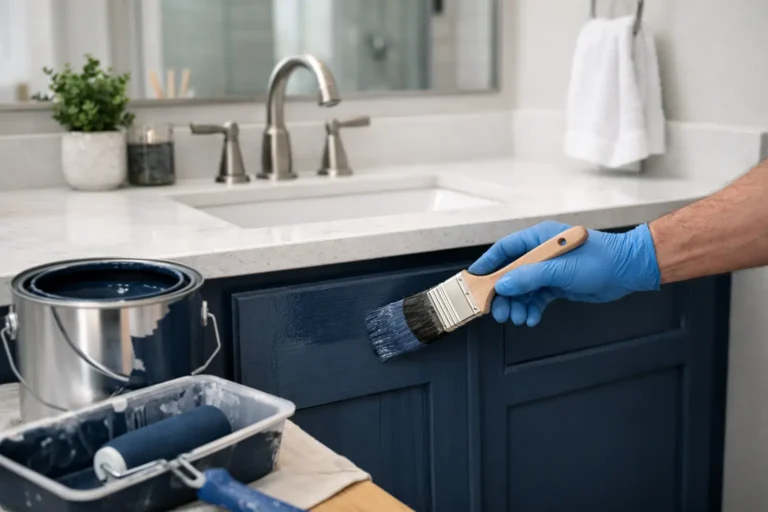
Warm whites can soften a kitchen with natural stone or warm wood flooring, while soft greige and mushroom tones offer a quieter alternative to bright white. Deep navy, charcoal, and muted green can work beautifully on islands or lower cabinets, particularly when upper cabinets remain light. The goal is not to chase a color trend. It is to choose a finish that supports the home’s architecture and will still feel considered years from now.
Hardware is a small change with an outsized effect. Updating pulls and knobs can sharpen the finished look, but hole placement should be planned before work begins. A change from single-hole knobs to long pulls may require filling existing holes and drilling new ones with precise alignment.
For homeowners in Charlotte, Mooresville, Waxhaw, or Fort Mill, a cabinet update can also be a practical preparation step before selling. Neutral, professionally finished cabinetry photographs well and helps buyers see the kitchen as maintained rather than as an immediate renovation project. For homeowners staying put, choosing a more personal color and upgraded hardware can make the same kitchen feel newly tailored to daily life.
Give the Finish Time to Perform
A newly finished cabinet surface may feel dry quickly, but full curing takes longer. During that period, gentle use is wise. Avoid harsh cleaners, abrasive pads, and scrubbing around edges and corners. Use a soft cloth with a mild cleaner approved for painted surfaces, and address splatters before they build up.
Durability is not only about the coating itself. It is also about everyday care. Keeping steam under control, repairing leaks promptly, and using cabinet hardware rather than pulling doors by their edges all help preserve the finish. These habits matter particularly around sinks, dishwashers, and frequently used trash pullouts.
A well-planned cabinet update should make your home feel more polished without forcing you into a renovation you do not need. If your cabinet structure is sound and the design is still working for your family, a meticulous refinishing process can deliver the elevated, lasting transformation you are looking for.