![Text logo reads Simpli [house emoji][heart emoji] Painted. Preferred for a reason. The house and heart emojis replace the word love. Black text on a white background.](https://simplipainted.com/wp-content/uploads/2026/08/cropped-IMG_3593.jpg.webp)
Cabinet Door Spraying for a Factory-Quality Finish
A kitchen can have solid cabinet boxes, a practical layout, and plenty of storage yet still feel tired because of worn doors and dated color. Cabinet door spraying is the step that turns a cabinet-painting project from a cosmetic touch-up into a convincing, high-end transformation. When doors and drawer fronts are prepared correctly and sprayed in a controlled environment, the finish looks smoother, feels more refined, and stands up far better to daily use than a typical brush-and-roll paint job.

For Charlotte-area homeowners who want a meaningful update without the cost, waste, and disruption of replacing sound cabinetry, that difference matters. The doors are the most visible surfaces in the kitchen or bath. They catch the light, frame the room’s color palette, and reveal every shortcut in the refinishing process.
Why Cabinet Door Spraying Delivers a Better Finish
Cabinet doors are not like walls. They are handled repeatedly, exposed to cooking residue and moisture, and viewed at close range. A finish that looks acceptable on drywall can show brush marks, roller texture, uneven sheen, or small debris on cabinet doors.
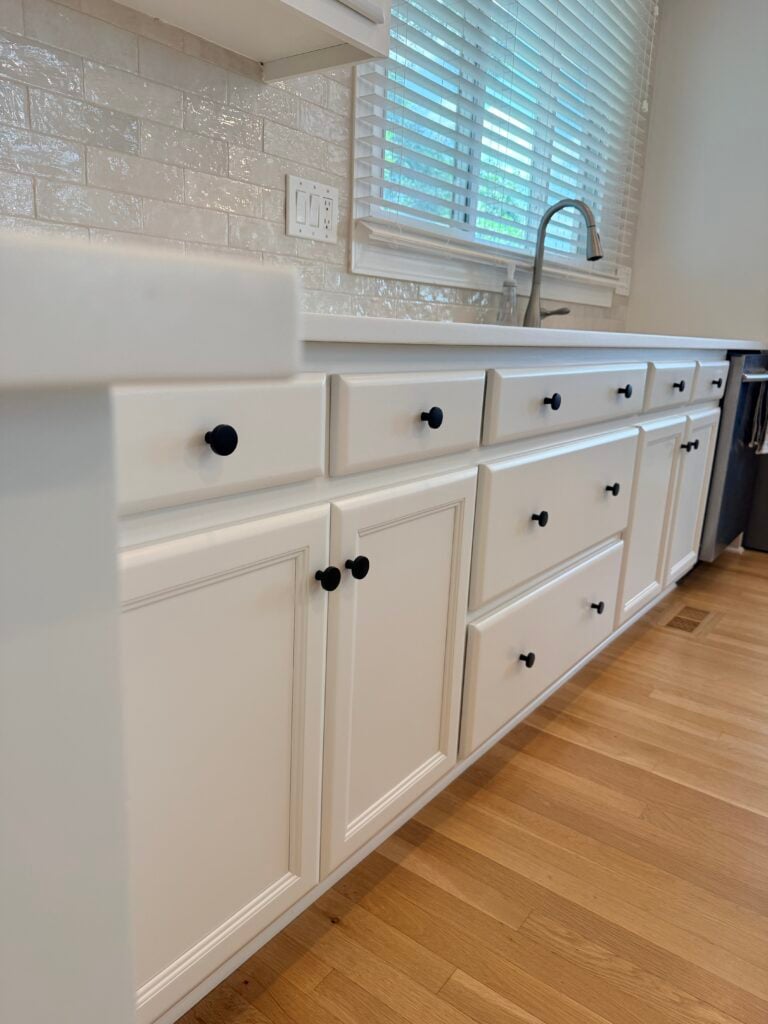
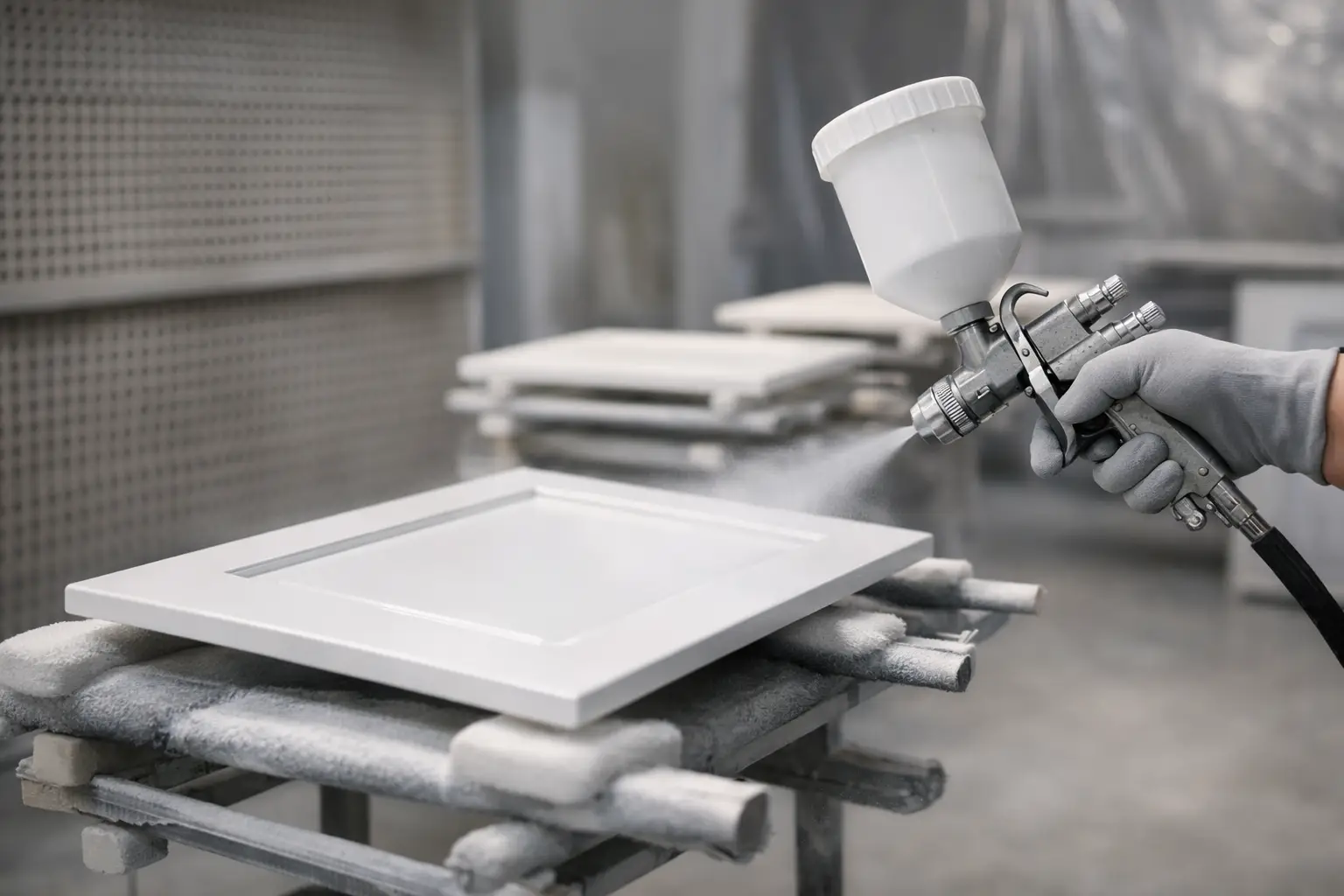
Professional spraying atomizes the coating into a fine, even layer. Applied properly, it creates the smooth, consistent appearance homeowners associate with new cabinetry. Edges are covered evenly, recessed panels receive the attention they need, and the final sheen is more uniform across every door and drawer front.
The result is not simply a new color. It is a finish that helps existing cabinetry look intentional and current, whether the goal is a warm white kitchen, a sophisticated greige perimeter, a deep navy island, or a refreshed bathroom vanity.
That said, spraying alone does not guarantee a factory-quality result. The equipment is only one part of the process. A sprayer can also magnify poor preparation, improper coating selection, or contamination on the surface. The quality homeowners see at the end begins long before the first coat is applied.
The Preparation Behind Professional Cabinet Door Spraying
The strongest cabinet finishes are built in layers. Before doors are sprayed, they must be removed, labeled, and thoroughly assessed. Labeling protects the layout of the kitchen and makes reinstallation orderly, especially where doors vary slightly in size or hinge placement.
Cleaning and Degreasing Come First
Kitchen cabinets collect more than visible dirt. Oils from cooking, hand lotions, food residue, and household cleaners can remain on the surface even when doors appear clean. If these contaminants are left behind, primer and paint may struggle to bond properly.
Meticulous cleaning and degreasing remove that barrier. This step is especially important around handles, pulls, lower doors, and cabinet surfaces near the range. Skipping it can lead to adhesion issues that show up later as peeling, chipping, or a finish that fails under normal use.
Sanding Creates a Reliable Surface
Sanding is not about aggressively stripping every door to bare wood. In many projects, the purpose is to degloss the existing finish, smooth imperfections, and create the surface profile needed for dependable primer adhesion. It also helps address minor dents, scratches, and uneven areas before they become more obvious under a fresh coat of paint.
The right approach depends on the cabinet material and existing finish. Solid wood, wood veneer, thermofoil, laminate, and previously painted doors each require a different level of evaluation. A specialist should determine whether the doors are suitable for refinishing before promising a particular result.
Primer Is the Bond Between Old and New
A quality primer does more than cover color. It helps the new coating adhere to the existing surface, blocks certain stains or wood tannins when needed, and creates a consistent foundation for the finish coats. The primer must be compatible with both the cabinet material and the coating system that follows.
This is one reason general house-painting methods often fall short on cabinetry. The goal is not simply to make the doors look painted. The goal is to build a durable finish system that performs under the conditions of a working kitchen or bathroom.
Why Controlled Spraying Matters
Doors and drawer fronts are best sprayed away from the dust, foot traffic, cooking activity, and shifting conditions of the main living space. A controlled spray environment helps reduce airborne debris and allows the coating to cure more consistently.
At Simpli Painted, doors and drawer fronts are removed and finished through a disciplined spraying process, while cabinet boxes are carefully prepared and protected in the home. This approach supports a smoother finish on the pieces homeowners see and touch most often, while limiting unnecessary disruption in the kitchen.
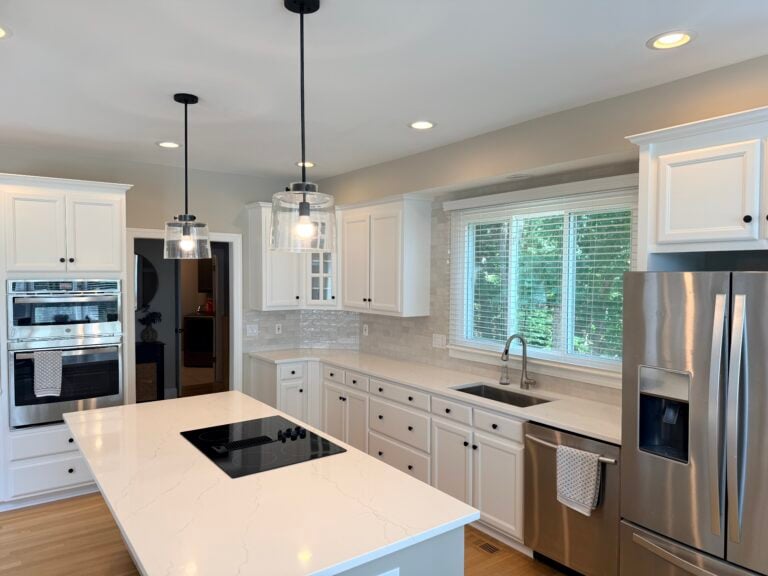
Controlled spraying also supports better consistency from one door to the next. Color, sheen, coverage, and texture should feel unified across the entire kitchen. That is particularly important with white and light neutral finishes, which can reveal flaws quickly when sunlight moves across the room.
Sprayed Doors and Painted Cabinet Boxes: Why the Methods Differ
Homeowners sometimes expect every part of a cabinet project to be sprayed in place. In reality, the doors and drawer fronts can be removed and finished under controlled conditions, while the cabinet boxes remain installed. The fixed frames, side panels, and face frames require careful masking, protection, and application in the home.
This is a practical balance. Removing cabinet boxes would be unnecessarily invasive and would move the project closer to a full renovation. By retaining structurally sound cabinetry and concentrating specialized finishing work on the doors and fronts, homeowners receive a dramatic visual transformation without the cost of replacement.
A skilled cabinet refinishing team takes equal care with both areas. The sprayed doors should blend naturally with the finished boxes so the kitchen reads as one complete, professionally refinished system rather than a collection of mismatched surfaces.
What Determines Long-Term Durability
No painted cabinet finish is indestructible. Cabinet doors still need reasonable care, and sharp impacts can damage even high-quality coatings. But professional cabinet door spraying, combined with correct preparation and curing, creates a finish designed for daily household use.
Durability depends on several connected decisions: the condition of the original doors, the cleaning and sanding process, primer compatibility, coating quality, spray technique, drying conditions, and cure time. Rushing any of these stages can compromise the finished surface.
Homeowners can help protect the investment by using gentle, non-abrasive cleaning methods and avoiding harsh scouring pads or strong solvent-based cleaners. Hardware also matters. Well-fitted pulls and knobs reduce repeated contact with the painted surface, particularly around high-use doors.
It is also wise to allow the finish the recommended time to fully cure before treating the cabinets as normal. A surface may feel dry before it has reached its full hardness. Patience during this period helps preserve the smooth, premium appearance the spraying process is meant to achieve.
When Cabinet Door Spraying Is the Right Choice
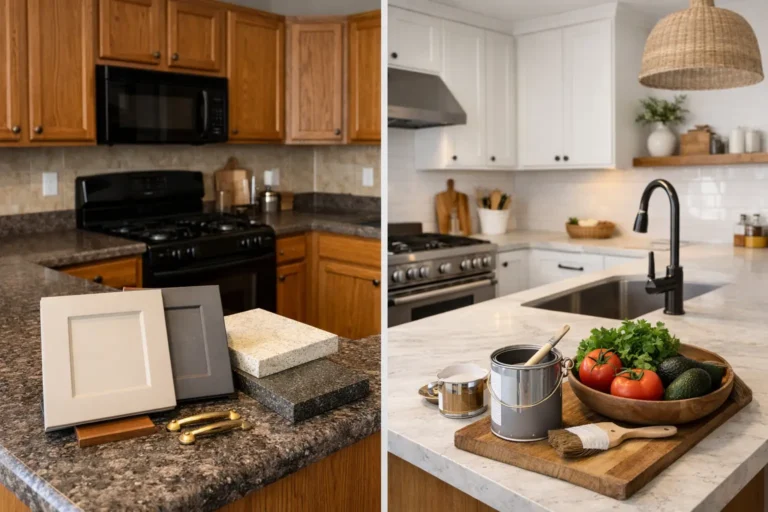
Cabinet door spraying is an excellent fit when the cabinet boxes are structurally sound, the layout still works, and the homeowner wants a major aesthetic change without a full remodel. It can modernize orange-toned wood, freshen yellowing white finishes, cover outdated colors, and restore a cohesive look to a kitchen or bath.
It may not be the best answer for cabinets with severe water damage, broken construction, failing veneer, or a layout that no longer meets the household’s needs. In those cases, replacement or more extensive remodeling may be worth considering. A trustworthy assessment should make that distinction clear rather than treating paint as a solution for every cabinet problem.
For many homes in Lake Norman, Cornelius, Matthews, Waxhaw, South Charlotte, and the surrounding Charlotte metro, the existing cabinetry has good bones. The opportunity is to preserve that value and give the room a finish that feels newly designed.
A beautifully sprayed cabinet door does more than hide an old color. It gives the kitchen or bath a clean visual foundation, making countertops, hardware, lighting, and wall color feel more considered. When the preparation is meticulous and the finish is applied with the right control, keeping your existing cabinets can feel less like a compromise and more like the smart design decision it is.
What goes into the spray gun matters too. Learn the difference in our lacquer vs polyurethane guide.
Thinking about your own cabinets?
Simpli Painted refinishes existing cabinets in the Carolinas and coastal Georgia. Doors and drawer fronts are sprayed in our shop, the boxes are finished in place, and every job carries a 2-year warranty against peeling, blistering and yellowing. 4,000+ kitchens, backed by five-star Google reviews.
Send 3–4 photos of your kitchen and we’ll quote it.