Cabinet Color Transformation Built to Last
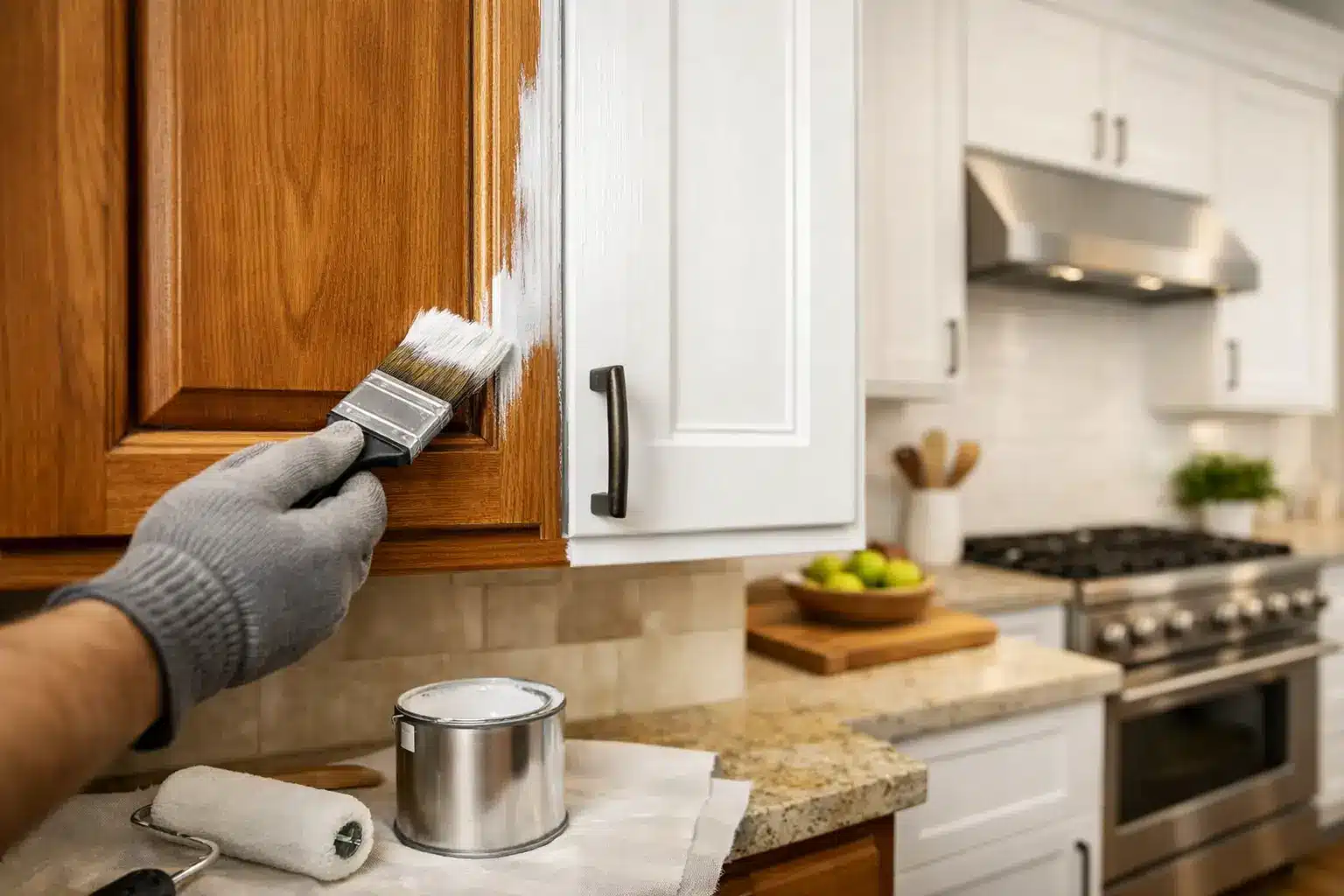
The cabinets may be structurally solid, but an orange-toned stain, faded white paint, or heavily worn finish can make the entire room feel dated. A professional cabinet color transformation changes that visual equation without forcing homeowners to remove functional cabinetry, redesign the kitchen, or live through a full replacement project.
For many Charlotte-area homeowners, repainting cabinets is the most meaningful update they can make within their existing kitchen or bath footprint. The key is treating cabinetry as fine finish work, not as a standard interior painting job. When preparation, materials, and spray application are handled correctly, the result is a smooth, durable, factory-quality finish that makes the room feel intentionally renewed.
What a Cabinet Color Transformation Can Change
Cabinet color affects more than the cabinets themselves. It shapes how countertops read, whether a backsplash feels current, how much natural light the room seems to have, and whether existing floors look warm or dated. A deep espresso cabinet finish may have suited a home when it was built, yet now make a kitchen feel enclosed. Honey oak can be perfectly well made but compete with newer finishes and fixtures. Even white cabinets can look tired when the coating has yellowed, chipped, or become difficult to clean.
Painting allows homeowners to keep the parts of the room that still work: cabinet boxes, layout, countertops, appliances, and storage. Instead of paying for demolition and replacement, they can direct their investment toward the surface that dominates the space visually.
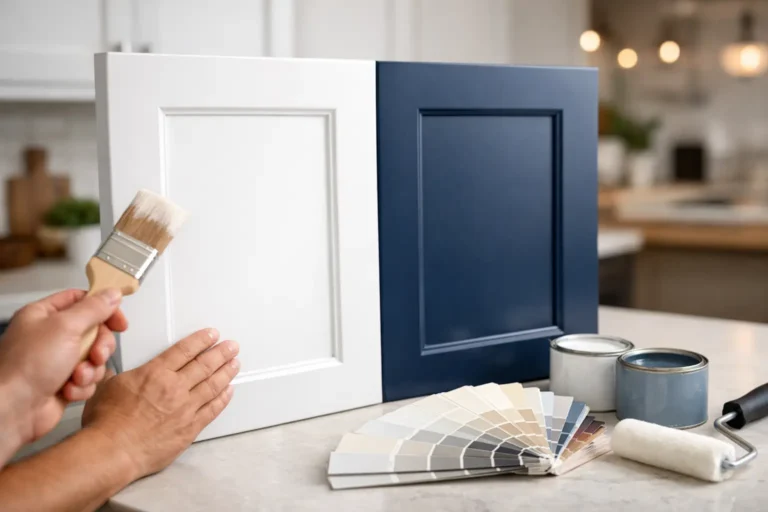
That does not mean every kitchen should be painted bright white. The right color depends on the room’s light, fixed finishes, architecture, and the look a homeowner wants to live with for years. Soft warm whites can complement creamy countertops and traditional homes. Clean whites can sharpen a more contemporary kitchen. Greige, taupe, muted green, navy, charcoal, and black can create contrast and depth, especially on an island or lower cabinet run.
The goal is not simply to choose a popular color. It is to select a finish that makes the entire room feel cohesive.
Color Decisions That Hold Up Beyond the First Reveal
A cabinet color transformation should start with the details that are hardest or most expensive to change. Countertops, tile, flooring, and wall color all influence whether a cabinet color feels balanced. This is where a small undertone mismatch can become obvious. A crisp, cool white beside a warm beige countertop may look stark, while a creamy white beside bright white quartz can appear yellow.
Lighting deserves equal attention. A color sample viewed in a showroom or on a phone screen will not behave the same way in a Lake Norman kitchen with large windows, or in a bathroom with limited natural light and warm vanity fixtures. Samples should be considered in the actual room at different times of day. The same gray-green that looks refined in daylight may read much darker at night.
Homeowners also need to consider contrast. Light cabinets can make a compact kitchen feel more open and can brighten a room with limited daylight. Darker colors introduce drama and can make a large kitchen feel more grounded, but they may show dust, fingerprints, and small marks more readily. Two-tone cabinetry can offer a practical middle ground, with a lighter perimeter and a richer island or vanity color.
Hardware completes the decision. Existing knobs and pulls may work beautifully with a new color, or they may reveal the age of the original design. Brushed brass, polished nickel, matte black, and warm bronze each shift the feel of the finished cabinetry. Testing a cabinet color alongside a hardware sample is often more useful than considering either choice separately.
Why Preparation Determines the Finish
The visible color receives the attention, but the preparation determines whether that color lasts. Kitchen cabinets collect cooking oils, residue from household cleaners, hand oils around pulls, and airborne grime. Bathroom vanities face moisture, cosmetics, soaps, and repeated daily use. Paint applied over contamination or poor surface preparation is far more likely to chip, peel, or wear unevenly.
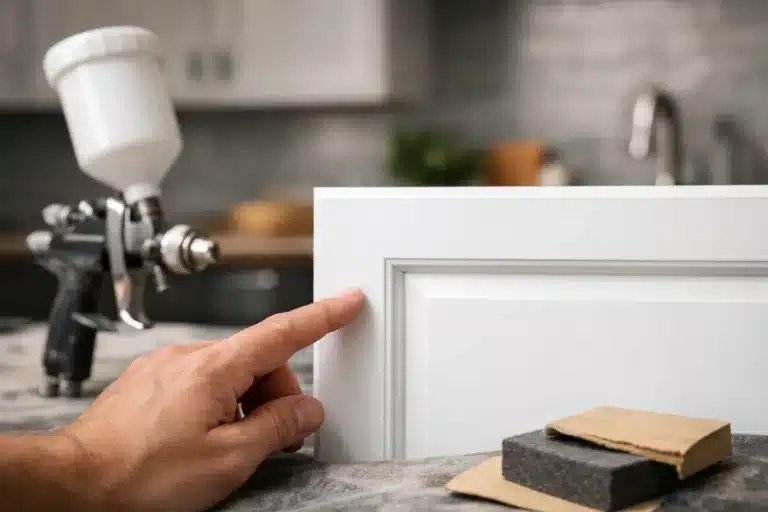
A professional cabinet refinishing process begins with meticulous cleaning and degreasing. This removes the invisible barriers that prevent coatings from bonding properly. Surfaces are then sanded to create the appropriate profile for adhesion and to reduce minor imperfections in the existing finish.
After sanding, a suitable bonding primer is applied. Primer is not an optional shortcut step. It helps establish a stable foundation between the existing cabinet surface and the finish coats, particularly on previously stained wood, older painted cabinets, and slick manufactured surfaces.
Any dents, dings, worn edges, or small hardware holes can be addressed during this stage, depending on the condition of the cabinetry and the planned hardware layout. Sound cabinet doors and boxes can be transformed remarkably well, but refinishing cannot correct major water damage, delamination, broken joinery, or structural failures. Those conditions should be evaluated honestly before a painting project begins.
The Difference Between Brushing and Spray Finishing
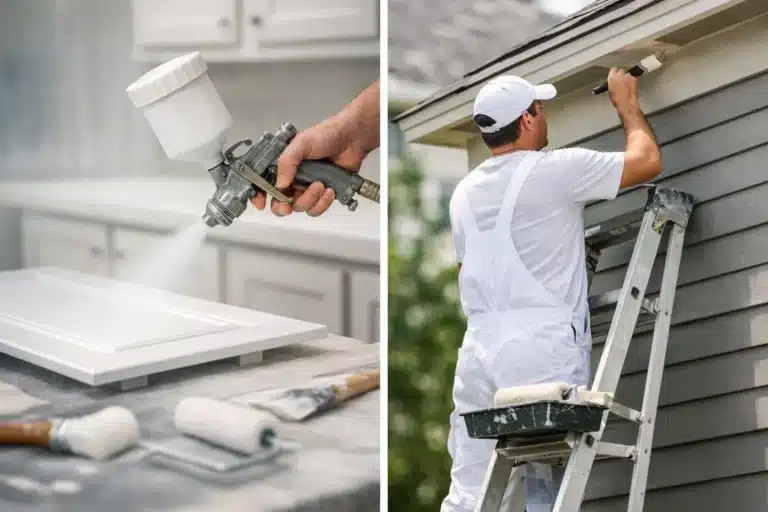
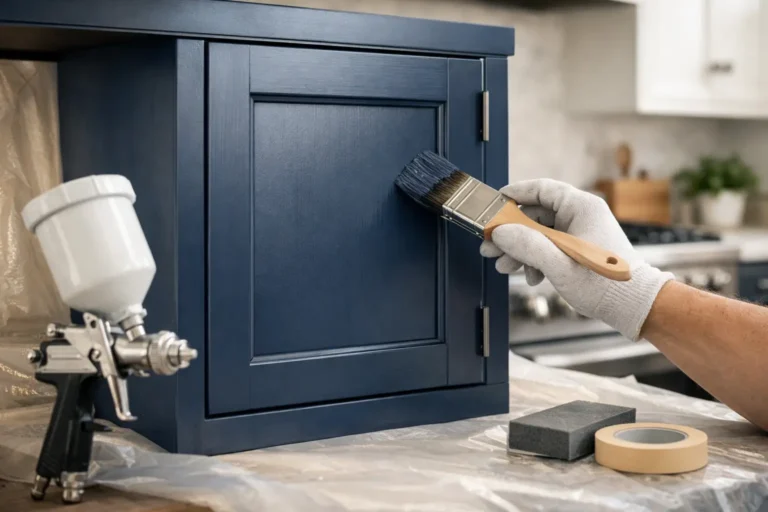
A cabinet door is not the same as a bedroom wall. It is handled constantly, viewed at close range, and covered with details that reveal brush marks, roller texture, drips, and uneven sheen. That is why controlled spray application is central to a premium cabinet finish.
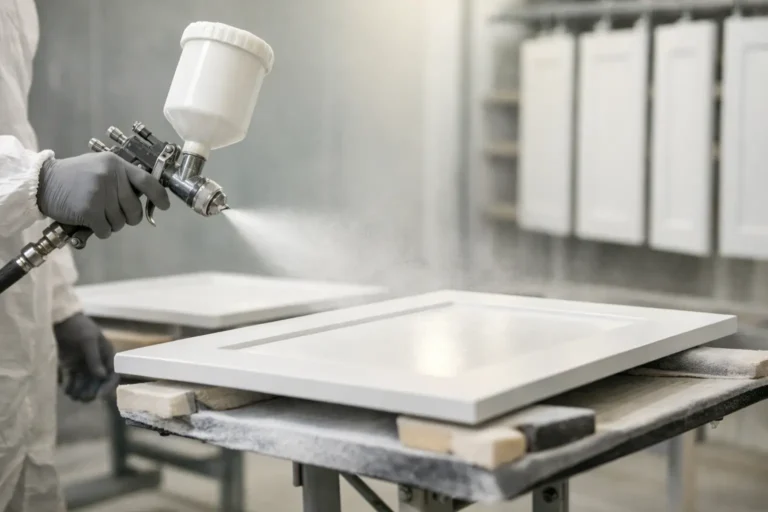
Doors and drawer fronts are removed and sprayed in a controlled environment, while cabinet boxes are carefully prepared and protected in the home. This approach allows the coating to lay down evenly across broad door faces, detailed profiles, and drawer fronts. Multiple finish coats build color consistency and durability without the heavy, uneven appearance that can come from applying too much material at once.
Professional spraying also requires disciplined masking and containment. Countertops, floors, appliances, walls, and surrounding finishes need to be protected with care. Homeowners should not have to choose between a beautiful cabinet update and concern for the rest of their kitchen.
There is a practical trade-off: specialized preparation and controlled spraying take more time than a quick brush-and-roll approach. The payoff is visible every day in the smoothness of the finish, the consistency of the sheen, and the way the cabinets hold up to normal use.
When Cabinet Painting Is a Better Choice Than Replacement
Replacement makes sense when the layout no longer functions, cabinet boxes are significantly damaged, storage needs have changed, or homeowners are planning a full kitchen redesign. It may also be necessary if cabinets are low-quality and deteriorating beyond reasonable repair.
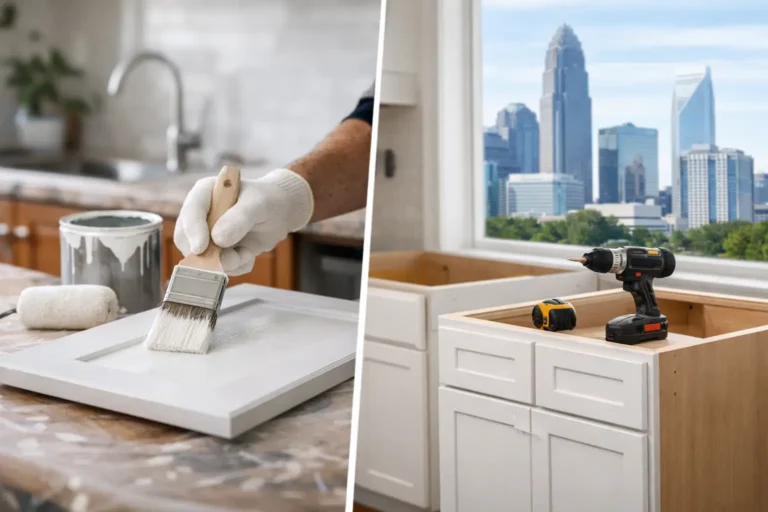
But replacement is often unnecessary when the cabinet structure is in good condition and the real problem is color or finish. Keeping existing cabinetry reduces demolition, avoids the disruption of countertop removal in many cases, and preserves a layout that already works for the household. It can also free budget for details that make the transformation more complete, such as new hardware, updated lighting, a backsplash, or a fresh wall color.
This is especially relevant in established homes throughout Charlotte, Mooresville, Waxhaw, and Fort Mill, where kitchens may have well-built cabinets in finishes that no longer suit the home. A focused refinishing project can provide the visual impact of a renovation while respecting the quality already in place.
How to Protect a Newly Finished Cabinet Color
Once cabinets are refinished, gentle care helps preserve the finish. Use a soft cloth and mild cleaner rather than abrasive pads, harsh degreasers, or products that leave heavy residue. Wipe spills and splatters promptly, especially around cooking areas and sinks. Avoid hanging wet towels over cabinet doors and take care with sharp items around drawer edges.
Normal use will always create occasional marks, particularly in busy family kitchens. A professionally prepared and sprayed finish is designed for that daily reality, but no painted surface is completely immune to impact damage. Treating cabinets with reasonable care protects the investment and keeps the color looking polished longer.
The best cabinet color transformation is one that still feels right after the initial excitement has passed. Choose a color that belongs with the home, retain cabinetry that has earned its place, and insist on the preparation and finish quality that make the update worth doing.