![Text logo reads Simpli [house emoji][heart emoji] Painted. Preferred for a reason. The house and heart emojis replace the word love. Black text on a white background.](https://simplipainted.com/wp-content/uploads/2026/08/cropped-IMG_3593.jpg.webp)
Kitchen Remodeling Without Replacing Cabinets
A dated kitchen rarely announces itself with one dramatic problem. More often, it is the honey-oak cabinets that make the room feel heavy, the worn finish around frequently used drawers, or the dark stain that no longer fits the rest of the home. For many Charlotte-area homeowners, kitchen remodeling begins with a question: do the cabinets need to be replaced, or do they simply need a better finish?

When cabinet boxes are structurally sound, replacement is not always the smartest path to a high-end result. Professional cabinet refinishing can change the entire character of the kitchen while preserving the storage layout, materials, and investment already in place. The difference comes down to process. A lasting cabinet transformation requires far more than applying a new coat of paint.
Kitchen Remodeling Starts With an Honest Cabinet Assessment
Cabinets deserve a close evaluation before any remodeling decisions are made. Solid wood doors, quality plywood boxes, functioning drawers, and a layout that serves the household well are all strong reasons to retain existing cabinetry. Even cabinets that look tired can often become a beautiful foundation for a new kitchen design.
Refinishing is especially compelling when the room’s frustrations are visual rather than structural. Perhaps the cabinet color feels dated, the finish has yellowed, or minor wear has accumulated near the sink, trash pullout, and most-used drawers. Updating those surfaces can produce the visual impact homeowners expect from a renovation without introducing the demolition, delivery delays, and construction disruption associated with replacement.
Replacement makes more sense when cabinet boxes have serious water damage, shelves are failing, the layout no longer works, or the homeowner needs major changes to appliance placement and storage. Cabinet painting is not a shortcut around a genuine design problem. It is a focused, high-value solution for cabinetry that is still worth keeping.
Why Cabinet Finish Quality Changes the Whole Room
Cabinets occupy more visual space than almost any other feature in a kitchen. Their color, sheen, and surface quality influence how countertops, tile, hardware, flooring, and lighting appear. That is why a cabinet color transformation often feels much larger than the project itself.
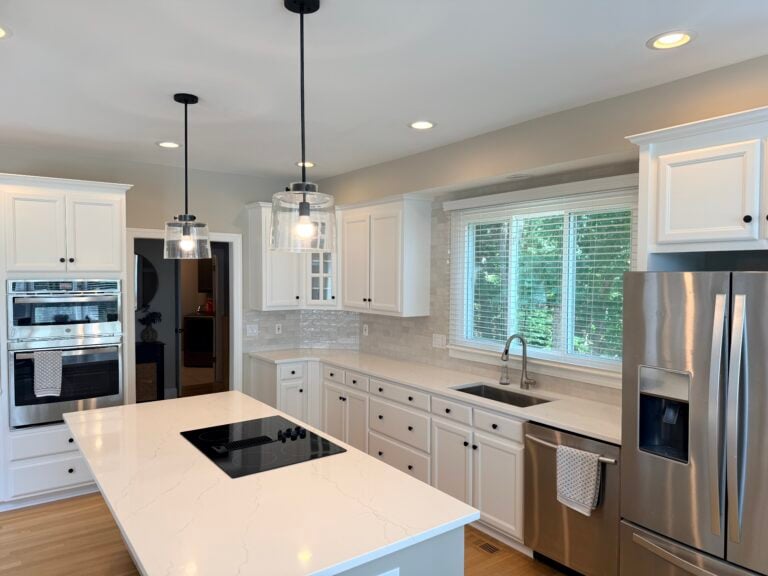
A soft white can brighten a kitchen with limited natural light. A warm greige may bring balance to cool gray counters. Deep blue, charcoal, or black can create a tailored focal point on an island or lower cabinet run. The right choice depends on the home’s existing finishes, lighting conditions, and the look homeowners want to live with for years rather than a single season.
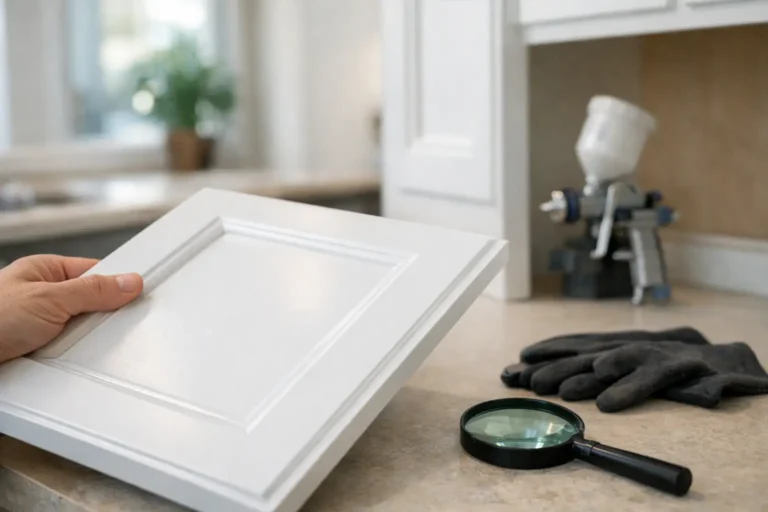
Color matters, but surface quality matters just as much. Brush marks, roller texture, drips, and inconsistent sheen can make even an excellent color look unfinished. A smooth, controlled spray finish gives cabinets the refined appearance homeowners associate with a factory-finish kitchen. It also allows the updated cabinets to hold their own beside new hardware, stone counters, and professionally installed backsplash tile.
The preparation behind a durable result
Kitchen cabinets collect more than dust. They are exposed to cooking oils, hand residue, moisture, cleaning products, and daily impact. Those contaminants are precisely why a general wall-painting approach does not deliver the same result on cabinetry.
A professional refinishing process begins with meticulous cleaning and degreasing. Surfaces are then sanded to create the appropriate profile for adhesion, and repairs are addressed before primer is applied. High-quality priming helps create a stable base for the finish system, particularly on previously stained wood or cabinets with visible grain.
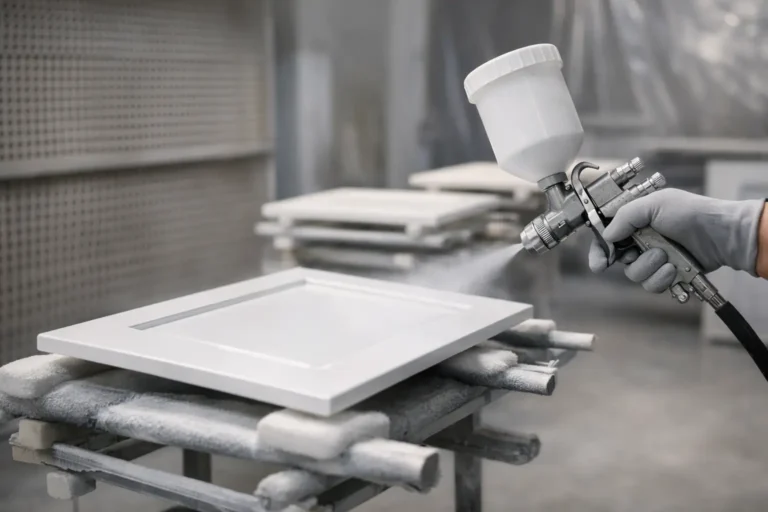
Doors and drawer fronts are typically removed and sprayed in a controlled environment, where the finish can be applied evenly and allowed to cure under more predictable conditions. Cabinet frames are carefully prepared and finished on site with close attention to protecting floors, counters, appliances, and surrounding areas. Each stage supports the next. Skipping one step can show up later as peeling, chipping, visible texture, or uneven coverage.
The Real Cost Question in Kitchen Remodeling
The price of cabinet replacement extends well beyond the cabinets themselves. Removal and disposal, possible flooring repairs, countertop removal, plumbing adjustments, electrical work, delivery schedules, and installation can all expand the project scope. A kitchen may be less usable for weeks while multiple trades coordinate their work.
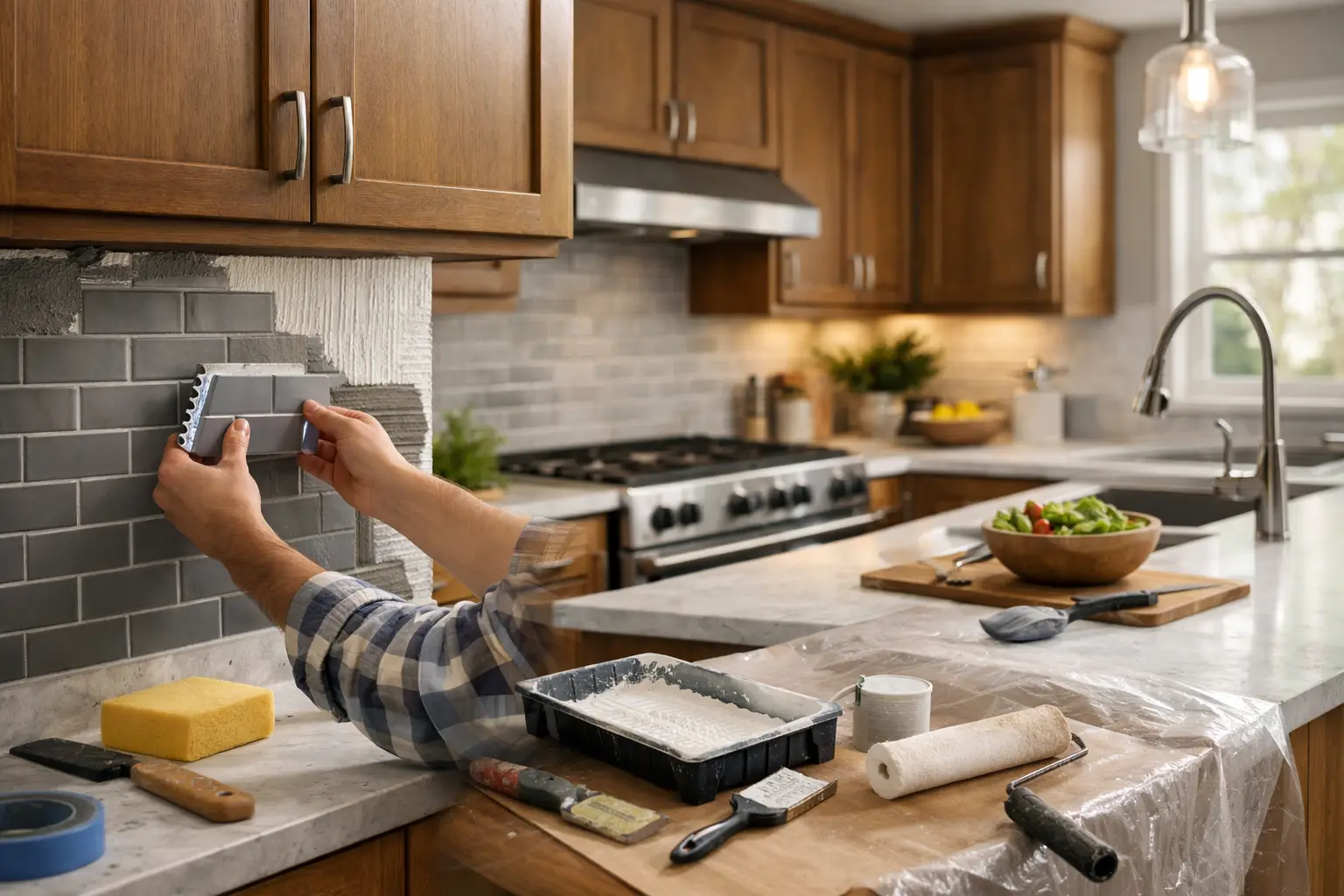
Professional cabinet refinishing keeps much of that disruption off the table. Homeowners retain the cabinet footprint they already know works, while directing more of their improvement budget toward features that complement the new finish. Depending on the project, that may include updated hardware, a new backsplash, improved lighting, fresh wall color, or countertops that better suit the renovated space.
That does not mean refinishing is the lowest-cost option in every situation. Premium preparation, quality materials, and spray-finishing expertise are investments in durability and appearance. The value lies in avoiding unnecessary replacement while achieving a polished result that feels intentional, not temporary.
Where homeowners should avoid cutting corners
DIY cabinet painting can be tempting, particularly when a kitchen appears to need only a color change. The challenge is that cabinets are high-touch surfaces. They are opened, closed, bumped, wiped down, and exposed to heat and moisture every day. A finish that looks acceptable on a sample board may perform differently on doors that receive constant use.
Hiring a general house painter can create a similar concern. Wall painting and cabinet refinishing require different preparation standards, tools, materials, and spray control. Cabinetry specialists understand how to manage grease, grain, door removal, masking, adhesion, and the fine finish details that are immediately visible at close range.
For homeowners in Lake Norman, Cornelius, Matthews, Waxhaw, South Charlotte, and nearby communities, the goal is usually not simply to make cabinets look different. It is to make the kitchen feel appropriately finished for the home. That requires a process designed for cabinetry, not a quick cosmetic update.
Planning a Cabinet-Centered Kitchen Update
A successful remodel starts by defining what needs to change and what already works. Look first at the cabinet layout. If cooking zones, storage, and traffic flow are functional, keep them. Then identify the elements that are competing with the look you want: outdated stain color, worn hardware, an undersized light fixture, busy backsplash tile, or countertops that no longer coordinate with the room.
Cabinet color selection should happen with those adjacent materials in view. Countertops often have warm or cool undertones that are easy to miss until cabinets are painted. Flooring can shift the way a white reads. Natural light can make a color appear brighter, grayer, or warmer throughout the day. Testing samples in the actual kitchen is more reliable than choosing from a small color chip alone.
Sheen also deserves consideration. A low-luster finish can look sophisticated and help minimize the appearance of minor surface variations, while a higher sheen offers more reflectivity and a more formal look. There is no universal best answer. The right finish should suit the cabinet style, household use, and the overall design direction.
Hardware is the finishing detail that often makes the transformation feel complete. Existing pulls and knobs can be reused if they fit the new design, but changing them can create a meaningful shift with relatively little added disruption. When selecting new hardware, measure existing hole spacing before ordering to avoid unnecessary drilling or patching.
A Better Way to Think About Remodeling Value
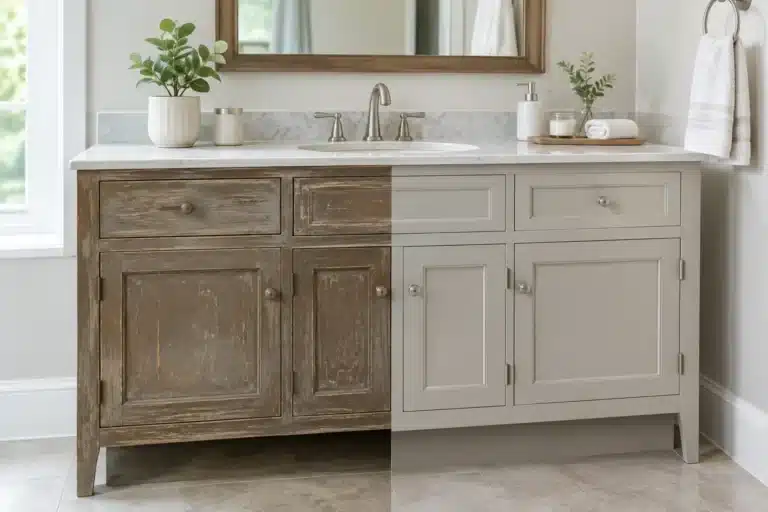
The strongest home improvements solve a real problem while respecting what is already valuable. In many kitchens, the cabinetry itself is not the problem. The finish is. Restoring and recoloring sound cabinets allows homeowners to preserve quality construction while bringing the room in line with the way they live now.
A carefully refinished cabinet system can make a kitchen feel brighter, cleaner, and more current without turning the home into a construction site. With the right preparation, controlled spraying, and attention to every visible detail, an existing kitchen can become the room homeowners hoped was already hiding underneath the dated finish.