![Text logo reads Simpli [house emoji][heart emoji] Painted. Preferred for a reason. The house and heart emojis replace the word love. Black text on a white background.](https://simplipainted.com/wp-content/uploads/2026/08/cropped-IMG_3593.jpg.webp)

How to Paint Oak Cabinets for a Lasting Finish
Oak cabinets can be exceptionally well built, yet their prominent grain and warm honey, red, or orange tones often make an otherwise updated Charlotte kitchen feel stuck in another decade. When homeowners decide to paint oak cabinets, the goal is usually not simply to cover wood. It is to create a smoother, more current finish that looks intentional, feels durable, and makes the existing cabinetry worthy of the rest of the home.

For structurally sound cabinets, painting is often a far better value than replacement. The result, however, depends on preparation and application quality. Oak is not a forgiving surface, and shortcuts tend to show up quickly in the form of visible grain, peeling paint, rough doors, or a finish that wears at handles and drawer pulls.
Why Oak Cabinets Need a Specialized Process
Oak has an open, textured grain. That texture is part of the material’s character when the wood is stained, but it becomes a key consideration when it is painted. A coat of paint will change the color, but it will not automatically erase the grain pattern underneath. In some kitchens, a light amount of grain telegraphing through a painted finish is perfectly acceptable. In others, especially where homeowners want a refined, factory-finish appearance, additional grain filling and leveling are needed.
Oak cabinetry also commonly carries years of cooking oils, furniture polish, hand oils, and cleaning-product residue. Even cabinets that appear clean can have contamination around handles, near the range, and along lower doors. Paint applied over that residue may not bond properly.
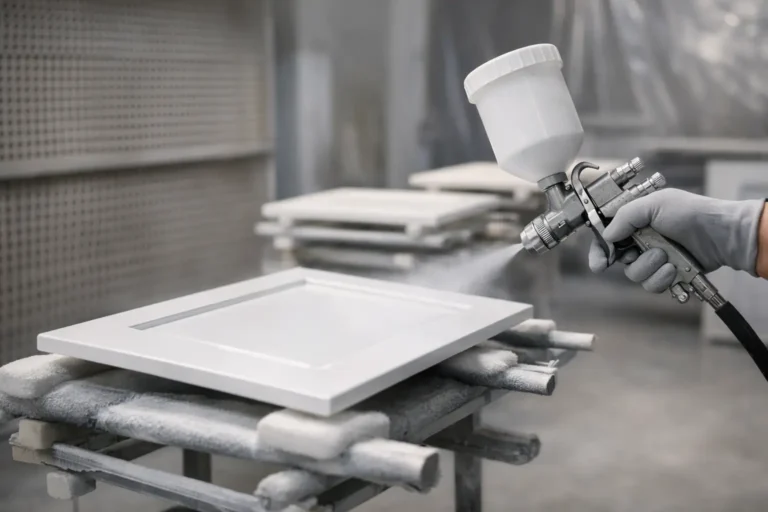
This is why cabinet painting is different from painting a wall or trim. The surface must be carefully cleaned, deglossed or sanded, properly primed, and finished with a coating designed to withstand repeated use. Doors and drawer fronts also benefit from controlled spray application, which produces a more even finish than a brush-and-roller approach on broad cabinet faces.
The Right Time to Paint Oak Cabinets
Painting is an excellent option when cabinet boxes are solid, doors are in good condition, and the layout still works for the household. Many homes in Lake Norman, Matthews, Waxhaw, Cornelius, and South Charlotte have quality oak cabinetry that would be costly to replace, even though the finish no longer matches the homeowners’ style.
It may be worth considering replacement instead if cabinet boxes have extensive water damage, doors are warped or delaminating, hinges cannot be adjusted, or the kitchen layout creates daily frustration. Painting improves the appearance of what is there. It does not add storage, change a cramped footprint, or correct structural problems.
For the majority of well-maintained oak kitchens and bathroom vanities, though, refinishing preserves a useful asset while redirecting the renovation budget toward countertops, lighting, backsplash, hardware, or other design upgrades.
What a Durable Oak Cabinet Finish Requires
A lasting result begins long before the color is applied. The most visible part of the project may be the new paint color, but meticulous preparation determines whether that color remains beautiful after years of opening doors, wiping spills, and living in the space.
Thorough cleaning and degreasing
Every surface needs to be cleaned with cabinet-appropriate degreasers, with extra attention paid to areas touched most often. This step removes contaminants that interfere with adhesion. Simply wiping cabinets down with a household cleaner is rarely enough for a professional refinishing project, particularly in a busy kitchen.
Repairs, sanding, and grain management
Small dents, chipped corners, loose joints, and old hardware holes should be addressed before painting begins. Sanding then creates the proper surface profile for primer while smoothing worn areas and previous finish inconsistencies.
Grain management is where expectations should be discussed clearly. A basic painted finish can retain some of oak’s texture. A smoother, more furniture-like result requires filling the deeper grain, sanding it level, and often repeating that work before primer and finish coats are applied. This extra labor is worthwhile for homeowners seeking a polished, contemporary look, but it does add time to the process.
Adhesion primer
Oak cabinets need a high-quality bonding primer selected for the existing finish and the topcoat system. Primer is not an optional extra coat. It provides a stable bridge between the old wood finish and the new paint, helps prevent tannin-related discoloration, and creates a consistent base for the chosen color.
Sprayed finish coats
The best cabinet finishes are typically applied in several thin, even coats rather than one heavy coat. Doors and drawer fronts are removed and sprayed in a controlled environment whenever possible, while cabinet frames are carefully protected and finished on site. This approach helps produce the smooth coverage and refined sheen homeowners associate with new cabinetry.
Dry time and cure time matter as much as application. A cabinet coating can feel dry to the touch before it has developed its full hardness. Treating newly painted cabinets gently during the early curing period protects the finish at its most vulnerable stage.
Choosing Colors That Work With Oak Cabinet Transformations
Once oak is painted, the room’s color balance changes dramatically. The right color should work with fixed finishes such as flooring, countertops, backsplash, wall color, and nearby furniture. It should also suit the amount of natural light the room receives.
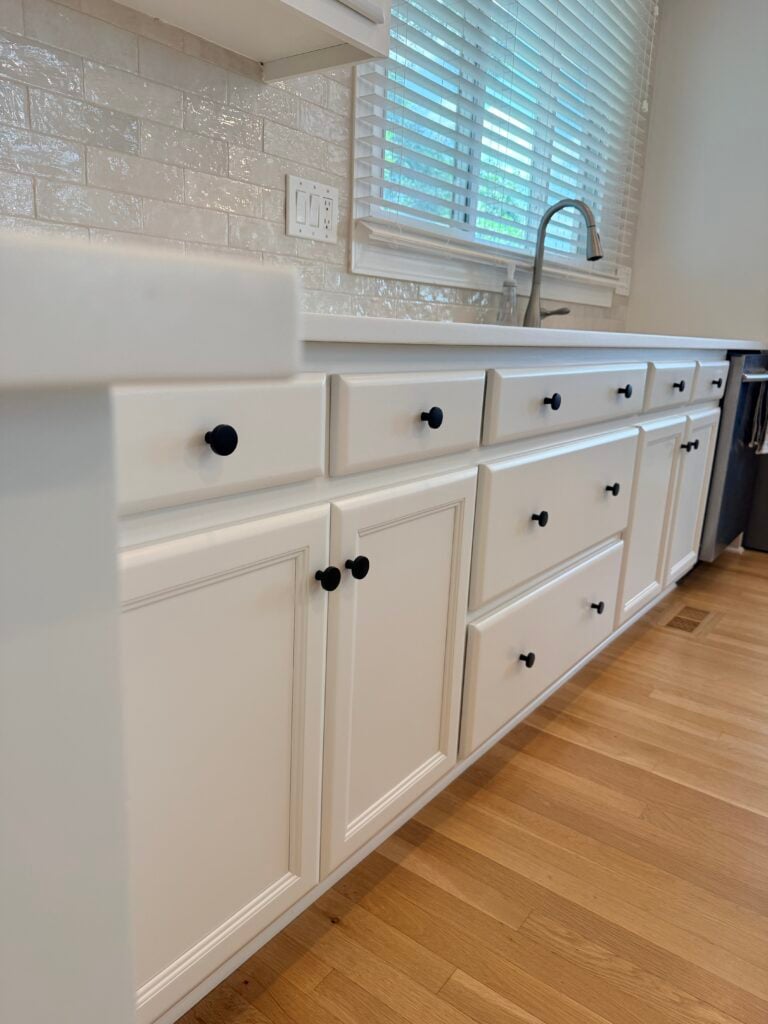
Warm white and soft off-white cabinet colors remain popular because they brighten a kitchen without feeling stark. They work especially well with warm hardwood floors, cream countertops, and traditional Charlotte-area homes that need an update without losing their sense of warmth. Cooler whites can look clean and crisp, but may feel disconnected next to beige tile or warm stone.
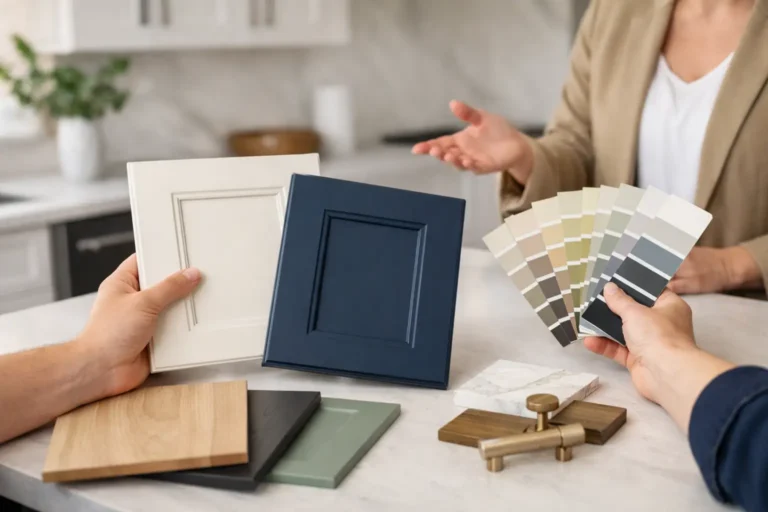
Deep blue, charcoal, and muted green create a more tailored look for islands, bathroom vanities, or lower cabinets. These darker colors can add depth, though they tend to reveal dust, fingerprints, and minor imperfections more readily than mid-tone neutrals. Greige, mushroom, and soft taupe provide a quieter alternative for homeowners who want contrast without committing to a bold statement.
Before finalizing a color, view large samples against the countertop and backsplash at different times of day. A paint color that looks balanced under showroom lighting may read very differently in a north-facing kitchen or a sun-filled breakfast area.
Common Mistakes When Painting Oak Cabinets
The most common mistake is underestimating the preparation. Painting directly over a glossy finish, skipping degreasing, or relying on a single coat of primer may save time initially, but it risks poor adhesion and uneven results. Cabinet doors are high-touch surfaces, not decorative wall panels.
Another mistake is expecting paint alone to make oak grain disappear. If a completely smooth look is the expectation, grain filling must be included in the scope. It is better to decide this upfront than to be disappointed by texture that was visible from the beginning.
DIY products and general house paints can also create challenges. A paint may look acceptable on day one but remain soft, chip at edges, or show brush marks under kitchen lighting. Professional cabinet coatings are selected for hardness, adhesion, cleanability, and a finish level appropriate for cabinetry.
Finally, avoid rushing reinstallation. Doors must be aligned correctly, hardware should be installed carefully, and freshly finished surfaces should not be subjected to hard use before the coating has cured. Detail work is what makes a color transformation feel complete rather than merely painted.
A Better Alternative to Cabinet Replacement
Replacing cabinets often means demolition, new layout decisions, countertop removal, extended construction schedules, and substantial expense. Painting oak cabinets retains the cabinet structure homeowners already own while delivering one of the most noticeable visual upgrades available in a kitchen or bath.
At Simpli Painted, the focus is not on quick cosmetic coverage. It is on a disciplined refinishing process designed to give existing cabinetry a smooth, durable, high-end appearance. That distinction matters when the cabinets are central to everyday life and expected to look good for years.
A well-planned cabinet color transformation can make an older kitchen feel newly designed without turning the home into a construction zone. If the oak cabinets are solid, the opportunity is already in the room – it simply deserves the level of preparation and finish work that quality cabinetry demands.