![Text logo reads Simpli [house emoji][heart emoji] Painted. Preferred for a reason. The house and heart emojis replace the word love. Black text on a white background.](https://simplipainted.com/wp-content/uploads/2026/08/cropped-IMG_3593.jpg.webp)
How Long Do Painted Cabinets Last in a Kitchen?
A kitchen can look dated long before its cabinets are actually worn out. If the doors are solid, the boxes are sound, and the layout still works, repainting can provide the visual transformation of a renovation without removing functional cabinetry. But homeowners reasonably ask: how long do painted cabinets last?
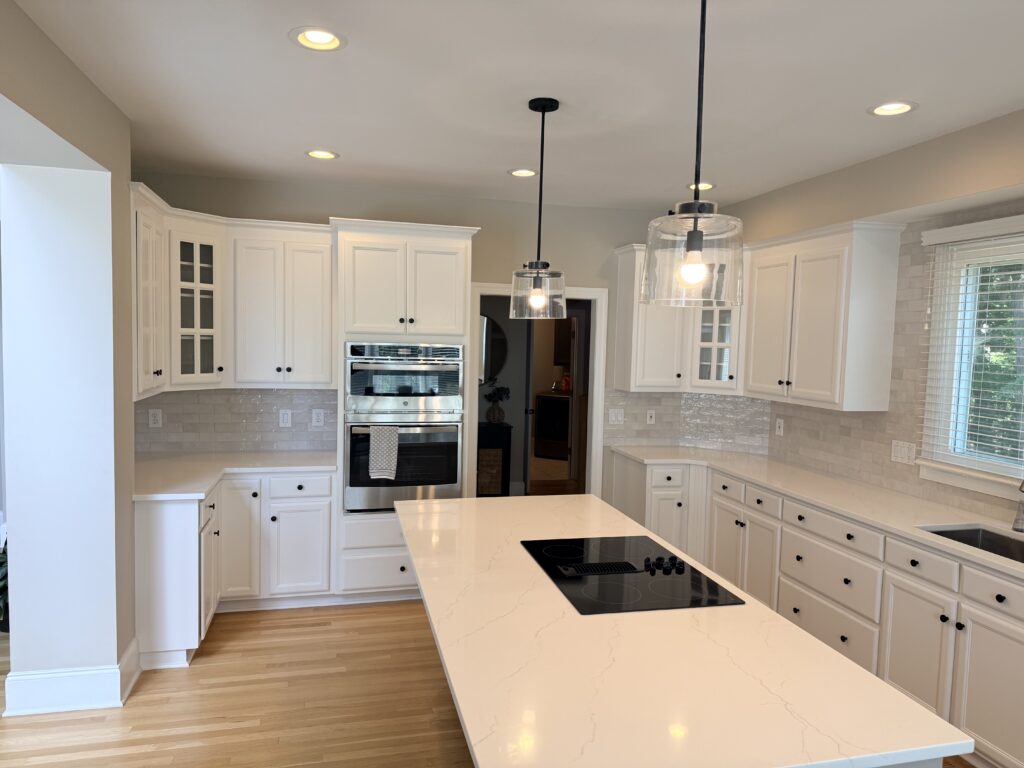
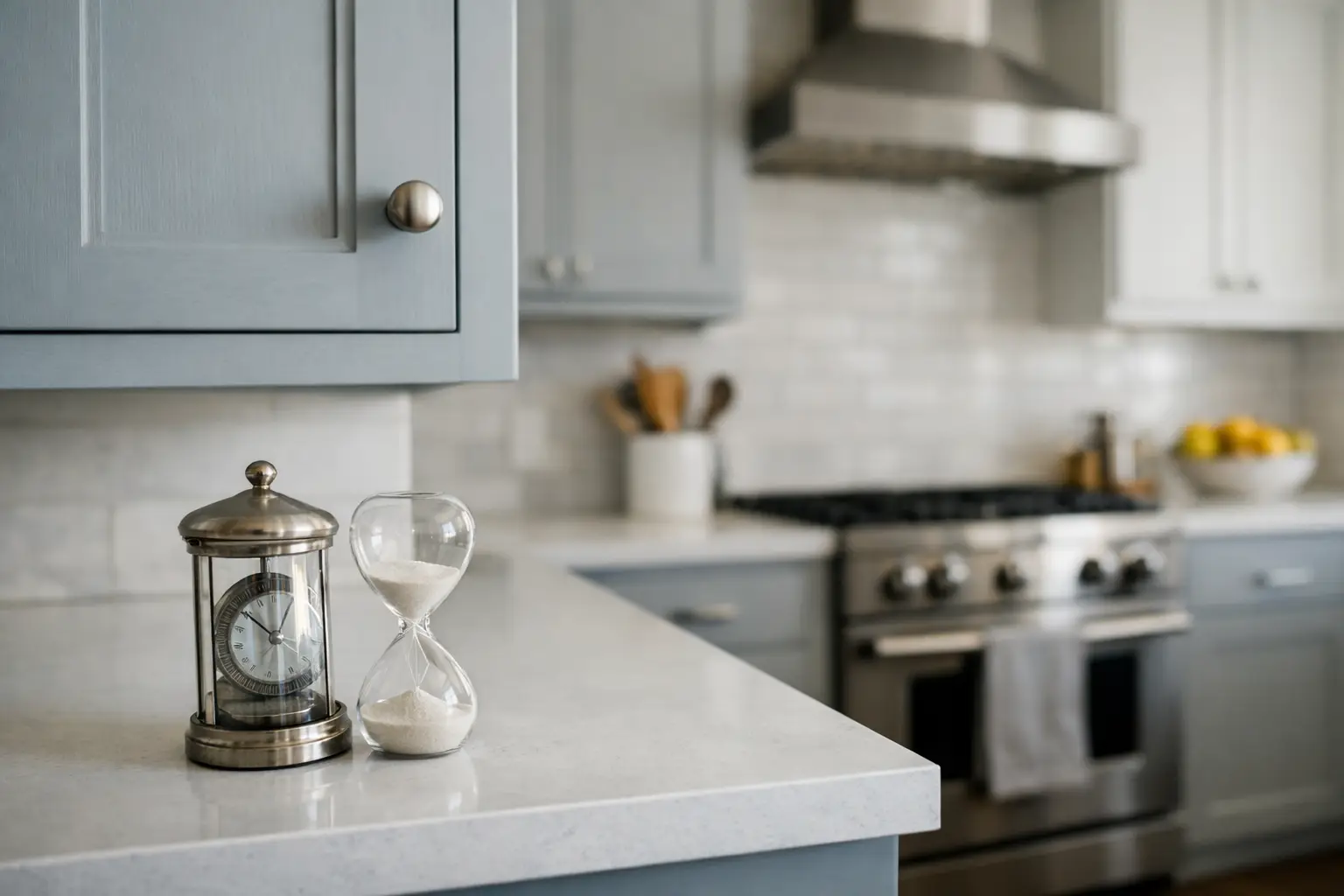
When cabinets are professionally prepared and finished, a painted cabinet finish can commonly look beautiful and perform well for 8 to 15 years, and sometimes longer with thoughtful care. The wider truth is that longevity depends less on the paint color and more on what happens before the first coat is sprayed. Cabinetry is a high-touch surface. It needs a process designed for grease, moisture, repeated cleaning, and daily use – not the same approach used for a bedroom wall.
How Long Do Painted Cabinets Last? The Real Answer
A professionally painted kitchen generally delivers a durable finish for 8 to 15 years. Bathroom vanities may fall closer to the lower end of that range because of humidity, water exposure, and cosmetics that can stain or damage finishes. Cabinets in a calm household may retain their appearance longer, while a busy family kitchen with children, pets, frequent cooking, and lots of entertaining will naturally see more wear.
That does not mean a quality finish suddenly fails at year eight. More often, the first signs of age appear at the places hands and objects touch most: around knobs and pulls, along the lower edges of doors, near trash pullouts, and on the inside edge of frequently used drawers. A professionally finished cabinet can often be cleaned, touched up, or refreshed as needed rather than replaced.
The condition of the cabinets before painting matters, too. Solid wood doors and well-built cabinet boxes are excellent candidates for refinishing. Cabinets with loose veneer, water-swollen particleboard, structural damage, or failing door joints may need repairs or replacement before paint can be expected to perform at a high level.
Preparation Determines Whether Cabinet Paint Holds Up
Paint adheres to a clean, stable surface. Kitchen cabinets rarely begin that way. Years of cooking leave behind oils, airborne grease, hand residue, furniture polish, and cleaning-product buildup – often in a thin layer that is hard to see but easy for paint to fail on.
A lasting result begins with meticulous cleaning and degreasing. This removes contaminants that can interfere with adhesion, especially near cooktops, range hoods, and high-use doors. Surfaces are then sanded to create the proper profile for primer and paint. Sanding is not simply about making a surface feel smooth. It is about giving the coating system something reliable to grip.
Priming follows, using a product suited to the existing cabinet material and finish. Primer helps block stains and tannins where needed, promotes adhesion, and creates a consistent base for the final color. Skipping this stage may save time in the moment, but it can lead to peeling, bleed-through, uneven sheen, or weak areas that reveal themselves once the kitchen returns to normal use.
At Simpli Painted, cabinet refinishing is treated as a specialized process because those details are the difference between a surface that merely looks painted and one that has the smooth, durable character homeowners expect from a factory-quality finish.
Why Sprayed Finishes Usually Last and Look Better
The application method has a direct effect on both appearance and durability. Doors and drawer fronts benefit from controlled-environment spraying, where the finish can be applied evenly without the brush marks, roller texture, and airborne debris common in an active home.
A sprayed finish creates a more uniform film across the cabinet face and door profiles. That consistency supports a refined appearance, particularly on modern colors such as warm whites, soft greiges, deep greens, navy, or charcoal. It also helps make the surface easier to clean because there are fewer visible texture patterns for grease and grime to settle into.
This does not mean every painted surface must be flawless to last. Cabinet doors are used, bumped, and cleaned. The goal is a properly built finish that resists ordinary household wear and can be maintained gracefully, rather than a thin cosmetic coating that chips at the first sign of use.
The Factors That Shorten the Life of Painted Cabinets
Even an expertly painted cabinet finish has limits. Constant moisture is one of the biggest concerns. A leaking sink, dishwasher steam escaping repeatedly at the door edge, or poor bathroom ventilation can compromise the cabinet material itself. Once wood or engineered wood swells, separates, or moves, no coating can permanently conceal the issue.
Harsh cleaning habits can also reduce the life of the finish. Abrasive scouring pads, powdered cleaners, bleach-heavy products, and aggressive degreasers can dull sheen or slowly wear through the protective coating. Cabinets should be cleaned with a soft microfiber cloth and a mild cleaner, then dried rather than left wet.
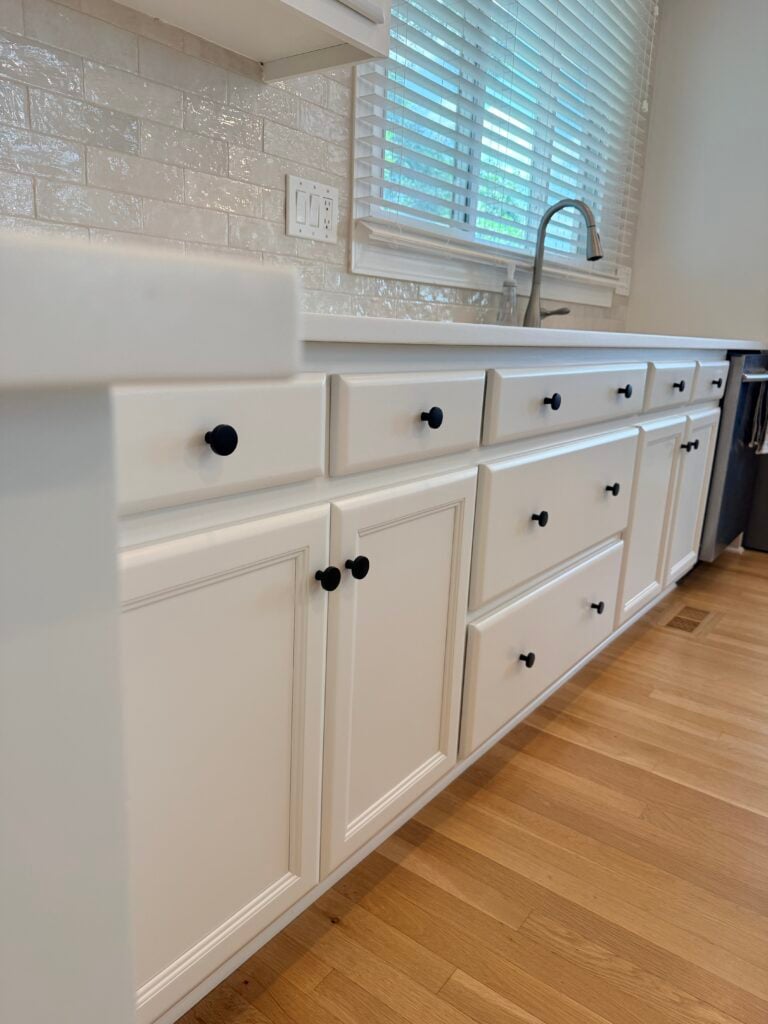
Hardware plays a quieter but meaningful role. Knobs and pulls reduce the oils and friction transferred from hands to painted door fronts. Soft-close hinges and drawer slides also limit the repeated impact that can contribute to chipped edges over time. These are small upgrades, but they support the long-term condition of a freshly refinished kitchen.
Finally, the original cabinet construction matters. A high-quality paint system can transform oak, maple, MDF, and many other cabinet materials, but it cannot turn unstable boxes into durable ones. An honest assessment before refinishing helps establish the right expectations and protects the homeowner’s investment.
Professional Painting vs. DIY Cabinet Painting
DIY cabinet painting can be appropriate for a low-stakes utility room, a small vanity, or homeowners who are comfortable with substantial prep work. It can also be less expensive at the outset. The trade-off is that cabinets demand patience, product knowledge, dust control, drying space, and a willingness to live with the work for several days or weeks.
The most common DIY failures are not about choosing the wrong shade. They come from incomplete degreasing, insufficient sanding, using wall paint instead of cabinet-grade coatings, applying coats too heavily, or reinstalling doors before the finish has properly cured. A cabinet may feel dry within hours, but a coating system needs time to develop its full resistance to scratching and sticking.
A general house painter may provide a neat result, but cabinetry requires a more focused workflow. Doors and drawer fronts must be handled differently from fixed cabinet boxes. Fine sanding between stages, product compatibility, masking precision, and controlled spraying all affect the final finish. For a kitchen that serves as the center of the home, the specialized approach is usually where the value lies.
How to Help Painted Cabinets Reach 10 Years or More
Once your cabinets are refinished, simple care makes a significant difference. Wipe splatters promptly, especially cooking oil, tomato sauce, and standing water near the sink. Use exhaust ventilation while cooking, and address leaks quickly before moisture reaches door edges, toe kicks, or cabinet boxes.
Use soft cloths for routine cleaning and avoid dragging metal, ceramic, or abrasive items across painted surfaces. If a chip does occur, address it early. A small touch-up is easier to blend and protect than a damaged area that continues to collect moisture and wear.
It is also wise to allow newly painted cabinets the full recommended cure period before heavy cleaning or frequent scrubbing. Doors can return to service before the finish reaches maximum hardness, so gentle use early on helps protect the work during its most vulnerable stage.
When It Is Time to Repaint or Refresh Cabinets
Cabinets do not need replacement simply because the color no longer fits the room. If the finish is generally intact but feels tired, a repaint can give the kitchen or bathroom another complete visual reset. Homeowners around Charlotte often choose this route when updating countertops, backsplash tile, flooring, or lighting and want the cabinetry to match the new direction.
A refresh is also worth considering when wear is concentrated in a few high-touch areas, the sheen has become uneven, or older paint no longer delivers the clean, tailored look the space deserves. If the cabinet structure remains sound, refinishing preserves the quality materials already in the home while avoiding the disruption and expense of a full tear-out.
The best way to extend the life of painted cabinets is to begin with a finish that was built for cabinet use, then care for it as the hardworking architectural surface it is. A well-prepared, professionally sprayed finish gives homeowners the freedom to enjoy a dramatic color transformation now and a kitchen that continues to feel polished for years to come.
How long a finish lasts depends heavily on the coating itself. Before you hire a painter, read lacquer vs polyurethane: why lacquer cabinets fail.
Simpli Painted backs its cabinet refinishing with a 2-year warranty, for homeowners from Charlotte out to Weddington.
Thinking about your own cabinets?
Simpli Painted refinishes existing cabinets in North and South Carolina. Doors and drawer fronts are sprayed in our shop, the boxes are finished in place, and every job carries a 2-year warranty against peeling, blistering and yellowing. 4,000+ kitchens, backed by five-star Google reviews.
Send 3–4 photos of your kitchen and we’ll quote it.