![Text logo reads Simpli [house emoji][heart emoji] Painted. Preferred for a reason. The house and heart emojis replace the word love. Black text on a white background.](https://simplipainted.com/wp-content/uploads/2026/08/cropped-IMG_3593.jpg.webp)
Choosing Kitchen Cabinet Painters in Charlotte NC
A kitchen with solid cabinet boxes does not need to be torn apart to feel current again. For homeowners comparing kitchen cabinet painters Charlotte NC, the real question is not simply who can apply paint. It is who can transform the most visible surfaces in the room with the preparation, finish control, and care those surfaces demand.

Cabinets endure far more than ordinary painted walls. They are touched daily, exposed to cooking residue and moisture, bumped by chairs and appliances, and cleaned repeatedly. A beautiful result has to be more than the right color. It needs to look smooth in natural light, feel refined at close range, and stand up to normal family life.
Why Cabinet Painting Requires a Specialist
Cabinet painting is a specialized refinishing service, not a smaller version of painting a bedroom. Doors and drawer fronts have profiles, edges, seams, and high-touch areas that make shortcuts easy to spot. Brush marks, roller texture, overspray, poor adhesion, and paint buildup around hardware can quickly turn a promising update into a disappointing one.
A general painter may do excellent work on walls, trim, and exterior surfaces, but cabinetry calls for a different workflow. The best kitchen cabinet painters in Charlotte NC understand how wood species, existing coatings, grease buildup, humidity, and door construction affect the final result. They also know that the visible finish is only as dependable as the preparation underneath it.
This distinction matters in Charlotte-area homes, where many kitchens were built with quality cabinet boxes but dated honey oak, dark espresso, worn white finishes, or colors that no longer fit the rest of the home. If the layout works and the cabinetry is structurally sound, refinishing can deliver a substantial visual transformation without the expense and disruption of replacement.
The Preparation Behind a Factory-Finish Look
The polished look homeowners want begins long before color is applied. A professional cabinet refinishing process should be deliberate at every stage, because each stage supports adhesion, smoothness, and durability.
First comes cleaning and degreasing. Kitchen cabinets collect an invisible film of oils and residue, particularly near ranges, sinks, and frequently used drawer pulls. Paint applied over contamination may look acceptable initially, then chip or peel when the surface is put back into service. Thorough cleaning creates the stable starting point a long-lasting finish requires.
Next, the existing finish is carefully sanded and prepared. The goal is not to aggressively remove every trace of the old coating in every case. It is to create the right surface profile, address imperfections, and ensure the primer can bond correctly. Dings, minor cracks, worn edges, and small surface flaws can often be repaired as part of the refinishing process, helping doors look renewed rather than merely covered.
Primer is equally important. The correct primer helps block unwanted tannin bleed, promotes adhesion, and creates a consistent base for the chosen color. This is especially relevant for stained wood cabinetry and darker finishes transitioning to lighter colors. Skipping or rushing this step can lead to uneven coverage or discoloration that appears after the project is complete.
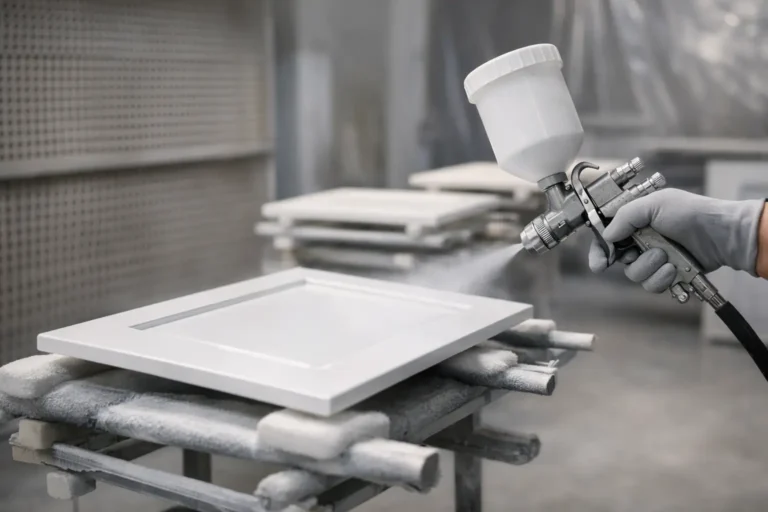
Finally, doors and drawer fronts benefit from controlled-environment spraying. Removing these components for off-site finishing allows for even coverage across profiles and edges, without the texture commonly associated with brushes and rollers. The result should be a smooth, durable, factory-quality finish that complements the rest of the kitchen rather than looking like a temporary coating.
What a Professional Cabinet Painting Project Looks Like
A well-run project balances meticulous workmanship with respect for the home. Homeowners should expect clear communication about the process, the work areas, timing, and how the kitchen will be protected while the project is underway.
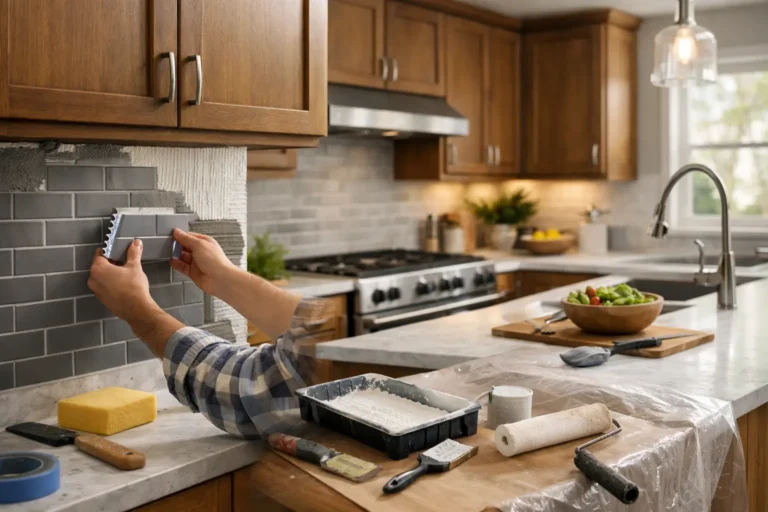
Cabinet doors and drawer fronts are typically labeled, removed, and transported for controlled spraying. Cabinet boxes remain in place and are carefully masked and prepared on site. Floors, counters, appliances, and adjacent areas need protection, especially in an open-concept kitchen where overspray or dust control cannot be treated casually.
The schedule varies with kitchen size, cabinet condition, repair needs, drying times, and the complexity of the selected finish. A smaller kitchen may move quickly, while a large kitchen with extensive doors, detailed profiles, or a color change from dark stain to soft white requires more labor and more patience. Faster is not always better when the goal is a finish that performs well over time.
There is also a practical difference between a cabinet painting project and a full remodel. Refinishing preserves the existing layout, countertops, and much of the daily function of the kitchen. It does involve temporary inconvenience, but it generally avoids demolition, long material lead times, and the broader disruption of replacing cabinetry. For established homes in Lake Norman, South Charlotte, Waxhaw, Matthews, and Cornelius, that can make cabinet painting a particularly sensible investment.
Choosing a Color That Belongs in Your Home
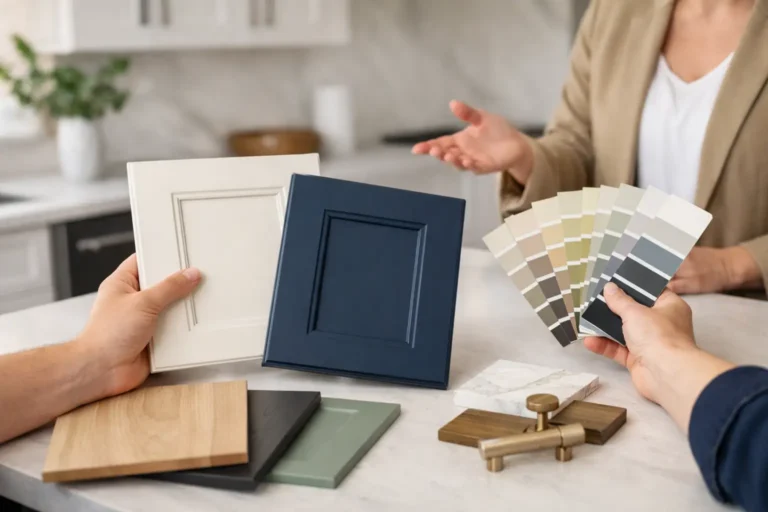
Color selection is where a cabinet transformation becomes personal. Bright white remains a classic option for kitchens that need more light and a cleaner visual direction. Softer whites, warm greiges, muted greens, and deep blue-gray tones can create a more tailored result when they are chosen in relation to countertops, backsplash materials, flooring, wall color, and the amount of natural light in the room.
The right choice depends on the home. A crisp white can look elegant against warm hardwood floors and dark stone, but it may feel too stark beside cream-toned tile. A deep island color can add dimension in a large kitchen, though it may visually narrow a smaller space if used across every cabinet. Two-tone cabinetry can be effective when it has a clear purpose, such as grounding a central island while keeping perimeter cabinets light.
Finish sheen deserves the same attention as color. A finish with too much shine can highlight surface imperfections and reflect more light than expected. A finish that is too flat may be harder to maintain in a busy kitchen. A cabinetry specialist can help homeowners weigh appearance, cleanability, and the style of the home before a final choice is made.
When Refinishing Is the Better Choice – and When It Is Not
Professional painting is an excellent option for cabinets that are structurally sound, properly installed, and worth preserving. Solid wood doors, well-built drawer boxes, and functional layouts are strong candidates. The cost savings compared with replacement can free room in the budget for new hardware, updated lighting, a backsplash, or other details that make the finished kitchen feel intentional.
It is not the right answer for every kitchen. Cabinets with severe water damage, failing boxes, warped doors, major veneer loss, or a layout that no longer works may need more extensive renovation. Homeowners who want to move walls, add storage configurations, alter appliance locations, or significantly change the footprint should evaluate replacement alongside refinishing.
The same is true of very low-quality cabinetry with thin, damaged surfaces. A professional can assess whether repairs and refinishing will provide the value you expect. Honest recommendations matter because the best result is not always the same service for every home.
Questions Worth Asking Cabinet Painters
Before choosing a contractor, ask how they clean and degrease surfaces, what preparation and primer system they use, and whether doors and drawer fronts are spray finished in a controlled environment. Ask how they protect your home, how they handle minor repairs, and what to expect regarding cure time and routine care after installation.
It is also reasonable to ask for examples of completed work and details about their cabinet-specific experience. A reliable provider should be able to explain the process clearly without relying on vague promises. Simpli Painted approaches each project with this specialist mindset: preserve worthwhile cabinetry, prepare it meticulously, and deliver a finish that feels appropriate for the quality of the home.
A thoughtful cabinet transformation can change how a kitchen feels every morning without requiring a full-scale renovation. When the cabinet structure is sound, choosing craftsmanship over shortcuts gives your existing kitchen the chance to look considered, current, and built to be enjoyed for years.
Thinking about your own cabinets?
Simpli Painted refinishes existing cabinets in the Carolinas and coastal Georgia. Doors and drawer fronts are sprayed in our shop, the boxes are finished in place, and every job carries a 2-year warranty against peeling, blistering and yellowing. 4,000+ kitchens, backed by five-star Google reviews.
Send 3–4 photos of your kitchen and we’ll quote it.