![Text logo reads Simpli [house emoji][heart emoji] Painted. Preferred for a reason. The house and heart emojis replace the word love. Black text on a white background.](https://simplipainted.com/wp-content/uploads/2026/08/cropped-IMG_3593.jpg.webp)
Best Paint Finish for Cabinets in Charlotte Homes
A cabinet color can make a dated Charlotte kitchen feel current, but the sheen determines whether that new color looks refined six months later or starts showing every fingerprint, scratch, and cleaning mark. The best paint finish for cabinets is rarely a one-size-fits-all answer. It depends on your room’s light, how your household uses the space, the condition of the cabinetry, and the level of polish you want from the finished result.

For most professionally refinished kitchen cabinets, satin and semi-gloss are the leading choices. Both can deliver a smooth, durable, factory-finish appearance when they are paired with meticulous preparation and professional spray application. The better fit comes down to the balance you want between a softer visual effect and maximum washability.
What the Best Paint Finish for Cabinets Must Do
Cabinets are not walls. They are touched constantly, exposed to cooking residue, opened with damp hands, and cleaned more often than trim or furniture. A suitable cabinet finish needs to resist moisture, oils, scuffs, and repeated wiping without becoming dull or tacky.
Sheen is part of that equation, but it is not the whole story. A premium cabinet coating applied over properly cleaned, degreased, sanded, and primed surfaces will outperform a standard wall paint at the same sheen level. The quality of the coating, the condition of the substrate, and the cure time all influence long-term durability.
The finish also affects how cabinetry reads in the room. Higher sheen reflects more light and can make a kitchen feel brighter. It can also reveal door imperfections, uneven grain, dents, and brush marks. Lower sheen is more forgiving visually, but it may offer less of the crisp, polished look some homeowners expect from a high-end kitchen update.
Satin: The Most Versatile Choice for Painted Cabinets
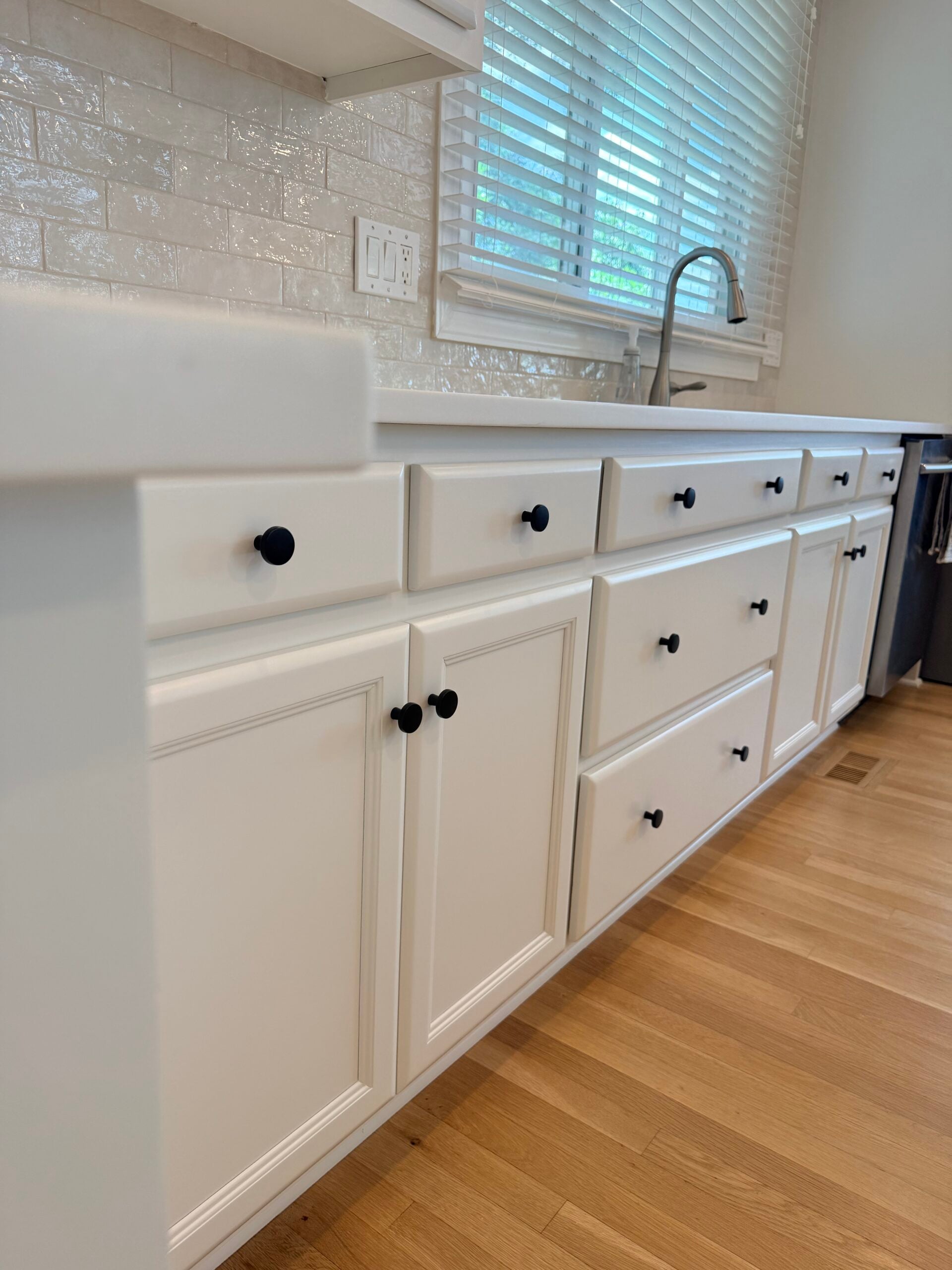
Satin is often the best paint finish for cabinets when homeowners want a clean, elevated result without an overly shiny appearance. It has a gentle, soft luster that reflects light without looking glossy. On shaker-style doors, satin creates a contemporary finish that feels polished while allowing the cabinet color to remain the focal point.
This sheen is especially well suited to kitchens with abundant natural light, open-concept layouts, or darker cabinet colors. In bright rooms, a higher sheen can create noticeable glare across broad door panels. Satin keeps the look calm and sophisticated while still providing a surface that can be cleaned routinely.
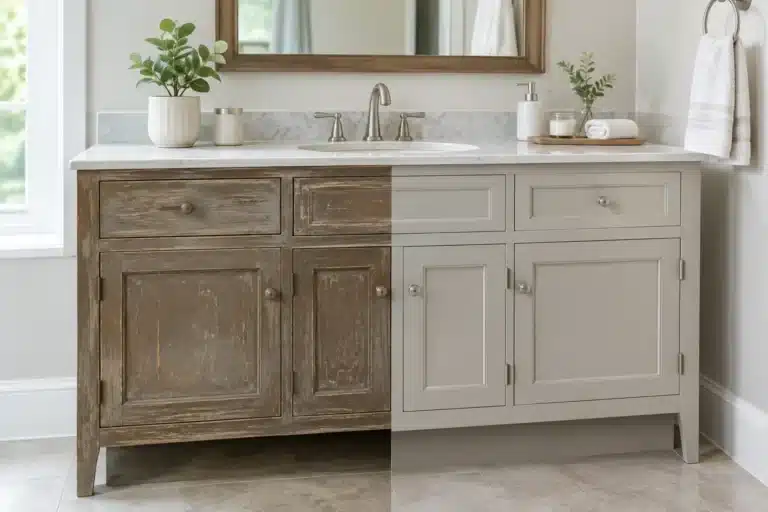
Satin is also a strong option for bathroom vanities. It brings enough moisture resistance and cleanability for a well-ventilated bathroom while giving the vanity a furniture-like appearance. For homeowners in communities from Matthews and Waxhaw to Lake Norman, satin often complements the warm wood floors, stone countertops, and layered lighting found in updated traditional and transitional homes.
The trade-off is that satin may not hide greasy fingerprints as easily as a more reflective semi-gloss finish in a very busy kitchen. It is durable when professionally applied, but homes with young children, frequent cooking, or heavy daily use may benefit from the added washability of semi-gloss.
When satin is the right call
Choose satin when you want a modern, understated finish; your cabinet doors have minor texture or natural wood grain to manage; or your kitchen receives strong daylight. It is the finish many homeowners select when the goal is a premium transformation that feels intentional rather than overly lacquered.
Semi-Gloss: Built for Busy, Hard-Working Kitchens
Semi-gloss has a brighter, more reflective appearance and remains a practical favorite for cabinets that see constant use. It handles routine cleaning exceptionally well, which makes it a smart choice around cooking zones, family kitchens, mudroom cabinetry, and bathroom vanities exposed to frequent splashes.
With semi-gloss, grease and food residue are generally easier to wipe away. The finish has a crispness that works beautifully with classic white cabinetry, deep navy islands, and traditional profiles with raised panels or detailed trim. It can also help a smaller kitchen feel lighter by bouncing available light around the room.
The caution is visibility. Semi-gloss highlights what is underneath it. If a door has dents, open grain, old brush marks, or poor prior paintwork, a shiny finish can draw attention to those flaws. That is why cabinet refinishing requires more than a quick scuff sand and a coat of paint. Surface repairs, thorough sanding, appropriate primer, and controlled spraying are what allow semi-gloss to look smooth rather than unforgiving.
When semi-gloss is the right call
Semi-gloss is a strong fit for highly active kitchens, homes where easy cleaning is the top priority, and cabinet styles that suit a more classic, tailored look. It is also worth considering when you want a clean contrast against matte walls, honed countertops, or textured tile.
Why Eggshell, Flat, and High-Gloss Usually Fall Short
Eggshell can look attractive at first, particularly if you prefer low sheen. However, it is generally less durable and less washable than satin or semi-gloss for high-touch cabinet surfaces. It may be appropriate for decorative built-ins with limited use, but it is not the first choice for a kitchen workhorse.
Flat or matte finishes are even less practical for most cabinets. They can absorb stains, show hand oils, and become difficult to clean without leaving burnished spots. A true matte cabinet look can be beautiful, but it requires a specialized coating system and realistic expectations about maintenance.
High-gloss produces a dramatic, contemporary appearance, but it is the most demanding option. Every imperfection becomes more visible, including minor flaws that would disappear under satin. Achieving a convincing high-gloss result requires exceptional substrate preparation, carefully controlled application, and the right environment for curing. It is better reserved for homeowners who specifically want that sleek, reflective aesthetic and understand the precision it requires.
Sheen Cannot Correct Poor Preparation
The finish level you choose matters, but the preparation behind it matters more. Cabinet doors collect years of cooking oils, furniture polish, hand residue, and cleaning-product buildup. If those contaminants are not fully removed, paint adhesion can fail regardless of whether the final sheen is satin or semi-gloss.
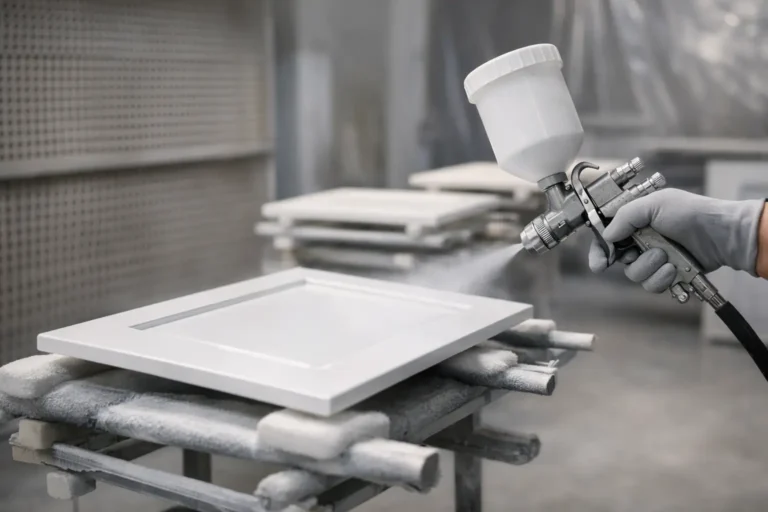
A professional cabinet process begins with cleaning and degreasing, followed by sanding to create a sound surface for adhesion. Areas that need repair are addressed, and a bonding primer is selected for the cabinet material and existing finish. Doors and drawer fronts are then sprayed in a controlled setting to create an even, factory-quality finish with minimal texture.
This process is particularly important for oak and other open-grain woods. A satin finish may soften the appearance of grain, while semi-gloss can make it more noticeable. If a homeowner wants a smoother, more modern surface, grain filling and additional preparation may be needed before the finishing coats are applied.
Consider Color, Lighting, and Cabinet Style Together
A paint finish should support the rest of the design rather than compete with it. Soft whites, warm greiges, and muted greens often look especially elegant in satin because the low-to-mid sheen preserves their depth. Brighter whites can work beautifully in semi-gloss, especially when the kitchen needs more reflected light.
Dark colors deserve extra consideration. Navy, charcoal, black, and deep green cabinets can look rich in either finish, but semi-gloss will show fingerprints and surface irregularities more readily. Satin gives dark cabinetry a more tailored, furniture-inspired presence and is often the safer visual choice for broad, flat door panels.
Cabinet style matters, too. Detailed doors with routed edges and raised panels can carry semi-gloss well because the shine emphasizes their architectural character. Simple shaker doors, slab fronts, and contemporary cabinetry often look more current in satin.
A Professional Recommendation Should Be Specific to Your Home
The right sheen is best decided after looking at the cabinets themselves, not from a paint chip alone. A specialist should consider the wood species or substrate, existing finish, door profile, repairs needed, traffic level, lighting, and your preferred design direction. Those details determine whether satin will provide the ideal balance or semi-gloss will better serve the space.
At Simpli Painted, the goal is not simply to change a cabinet color. It is to create a durable finish that fits how the kitchen or bathroom is used and looks at home with the rest of the space. When your cabinetry is structurally sound, choosing the right finish can deliver the visual impact of a renovation while preserving the investment already built into your home.
Before settling on a sheen, look at real painted cabinet samples in your kitchen morning, afternoon, and evening. The finish that looks best under your own lighting – and still feels practical for your household – is the one that will continue to feel right long after the project is complete.
Sheen is only half the story. The coating underneath matters just as much. See our lacquer vs polyurethane guide to learn why we don’t use lacquer on cabinets.
Thinking about your own cabinets?
Simpli Painted refinishes existing cabinets in the Carolinas and coastal Georgia. Doors and drawer fronts are sprayed in our shop, the boxes are finished in place, and every job carries a 2-year warranty against peeling, blistering and yellowing. 4,000+ kitchens, backed by five-star Google reviews.
Send 3–4 photos of your kitchen and we’ll quote it.