Five Signs Cabinets Need Refinishing Now
A cabinet finish usually does not fail all at once. It starts with a small dull patch beside a handle, a sticky area near the range, or a door that no longer looks like it belongs with the rest of the kitchen. Knowing the five signs cabinets need refinishing helps you act before everyday wear makes your kitchen or bath feel permanently tired.
For Charlotte-area homeowners, the good news is that a dated or damaged finish does not automatically mean the cabinet boxes themselves are the problem. When the cabinetry is structurally sound, professional refinishing can provide the clean, updated appearance you want while preserving the layout and storage you already rely on. The difference is in the preparation and finish process – not simply applying paint over what is there.
Five Signs Cabinets Need Refinishing
1. The finish is peeling, chipping, or flaking
Peeling around door edges, drawer fronts, and handles is one of the clearest signs that the existing finish has lost its bond. This can happen after years of moisture exposure, repeated cleaning, impact from cookware, or simple daily use. A few small chips may seem cosmetic, but they often expose the surface beneath and invite more wear at the edges.
This is especially common on frequently used cabinet doors and bathroom vanities, where humidity and hands-on use are constant. Touch-up products may make an isolated nick less noticeable for a short time, but they rarely restore a uniform sheen or durable surface. If chipping is appearing in multiple places, a complete refinishing process is usually the more polished solution.
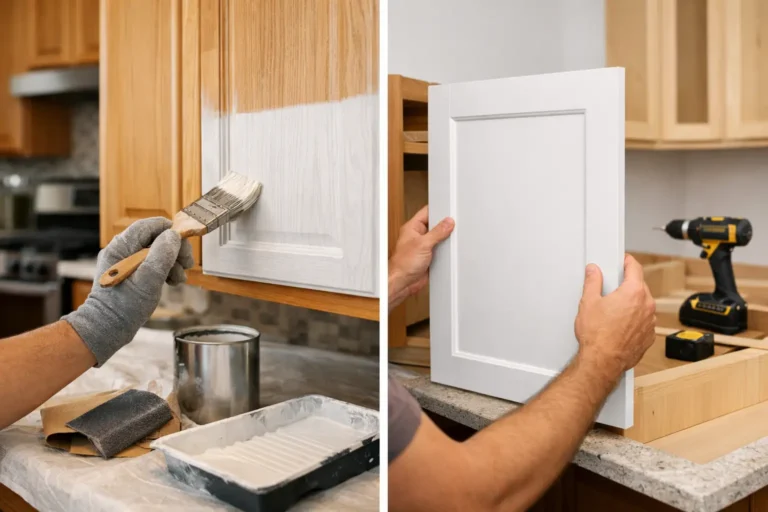
A professional cabinet painter begins by assessing why the finish is failing. Thorough cleaning and degreasing remove residue that can interfere with adhesion. Sanding creates the proper surface profile, and a compatible primer helps the new coating bond consistently. Those steps are what separate a durable finish from one that begins lifting prematurely.
2. Cabinet doors look dull, blotchy, or uneven
A cabinet can be clean and still look worn out. Sunlight, steam, cooking oils, and years of scrubbing can alter the sheen of an original finish. You may notice that upper doors look lighter than lower cabinets, that the area around pulls has become darker, or that one side of the kitchen appears more faded than the other.
Uneven color and sheen can make a well-kept room feel less cohesive. This is often more visible with stained wood tones, ambered clear coats, and older painted finishes. In some cases, the wood itself remains in excellent condition; it is the protective finish and visual consistency that have changed.
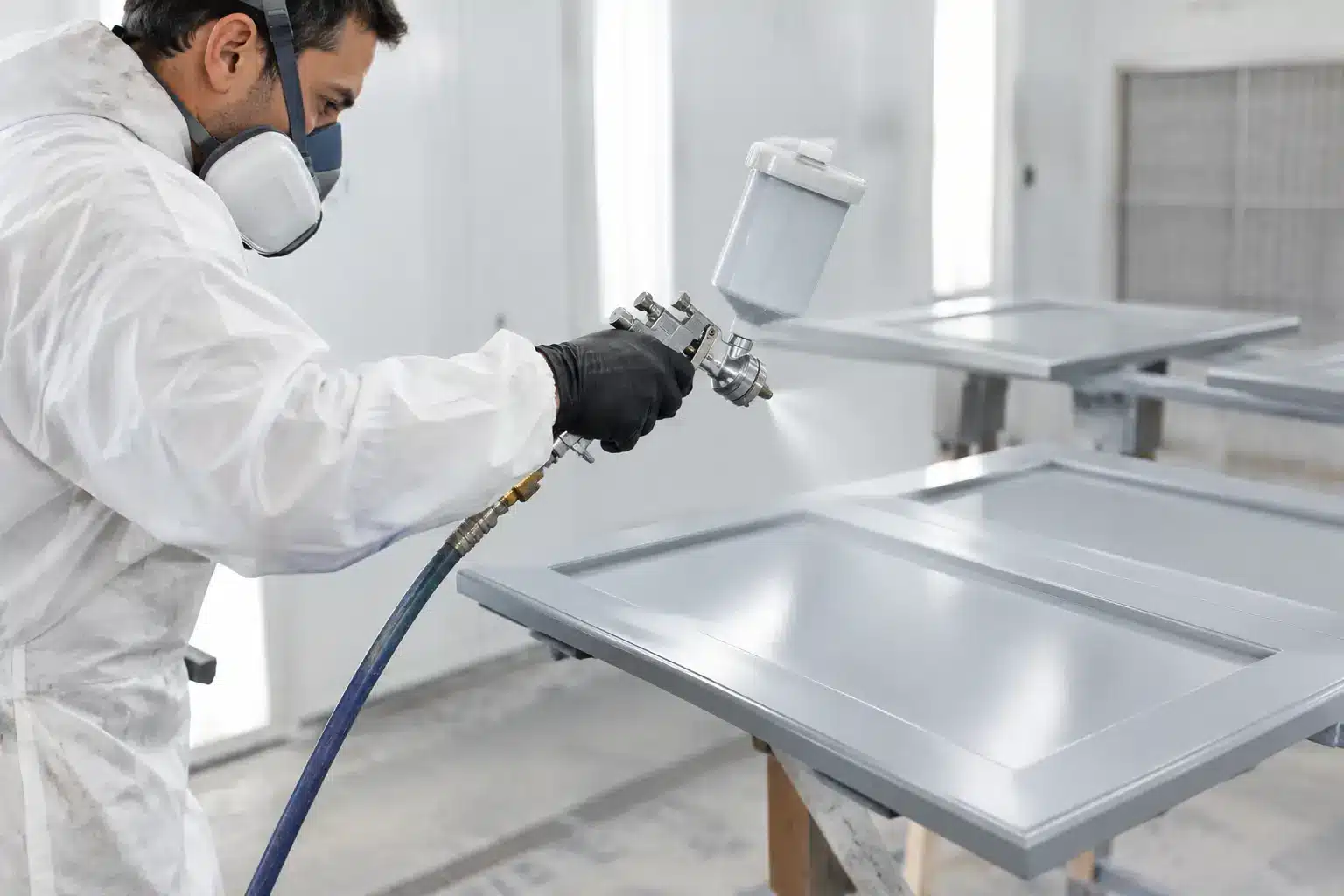
Refinishing gives homeowners the opportunity to correct that inconsistency across doors, drawer fronts, and visible cabinet surfaces. Controlled spraying of doors and drawer fronts is particularly valuable here because it creates an even coat and a smooth, factory-finish appearance that brushes and rollers struggle to match.
3. Grease and grime no longer clean away
Kitchen cabinets work hard. Even with routine cleaning, airborne cooking oils settle on surfaces near the range and on cabinet doors opened with busy hands. Over time, that residue can become embedded in a worn finish. The result is a sticky, yellowed, or shadowy appearance that returns soon after cleaning.
The issue is not always housekeeping. Older coatings can become porous or break down, allowing grease and soil to cling to the surface more easily. Aggressive cleaners may then make matters worse by dulling the remaining finish or causing discoloration.
When cleaning no longer restores a fresh appearance, refinishing can reset the surface properly. Meticulous degreasing is a critical part of the process, not an optional shortcut. The cabinet surface must be clean and properly prepared before primer and finish coatings are applied. Once refinished with durable cabinet-grade coatings, the cabinetry is easier to maintain with appropriate gentle cleaning methods.
4. Your cabinet color dates the entire room
Some cabinets are physically sound but visually anchored to another decade. Deep orange-toned wood, yellowed cream finishes, heavy espresso colors, or a once-popular paint shade can dominate the room and make everything feel less current. If you find yourself avoiding photos of your kitchen or wishing the cabinetry would simply recede into a cleaner, more intentional design, color may be the real issue.
Cabinet refinishing is not limited to repairing damage. It can be a high-impact color transformation that changes how the entire space feels without changing the cabinet structure. Crisp whites, soft warm neutrals, sophisticated greiges, muted greens, and rich modern tones can all create a more tailored look when selected thoughtfully.
Color selection does involve trade-offs. A very bright white can feel fresh and classic, but it may show marks more readily in a high-traffic household. Darker colors can add depth and contrast, though they may reveal dust or scratches more easily depending on the sheen. A cabinet refinishing specialist can help you weigh the look you want against how your household uses the space every day.
5. The doors and drawer fronts feel rough or worn
Run your hand across the cabinet surfaces in natural light. Do they feel smooth, or can you feel roughness, raised grain, scratches, dents, and worn edges? A finish that feels uneven often looks uneven as well, particularly once light hits it at an angle.
Small surface defects are normal over time, but widespread roughness signals that the protective coating has reached the end of its useful life. Repainting directly over that texture can lock the flaws in place. It may cover the color, yet still leave a finish that looks and feels ordinary.
Professional refinishing addresses the surface before the color goes on. Sanding and detailed preparation reduce imperfections, while primer creates a stable base for the finish system. Doors and drawer fronts sprayed in a controlled environment receive the kind of smooth, even application that helps create a refined result. The goal is not merely a different color. It is cabinetry that feels finished with care every time you open a door or drawer.
When Refinishing Is the Right Next Step
The best candidates for refinishing are cabinets with solid boxes, functioning doors and drawers, and a layout that still serves the household well. Cosmetic wear, outdated color, minor finish damage, and an uneven appearance are all issues that a specialized cabinet painting process can address effectively.
There are circumstances that call for a closer evaluation. Water damage that has caused swelling, persistent warping, major structural failure, or loose cabinet components may need repair before a finish project can move forward. A reputable specialist should inspect these conditions honestly rather than treating every surface concern as a simple paint job.
For homeowners in the Charlotte area, a professional estimate is a useful starting point. It clarifies the condition of your cabinetry, the preparation needed, and the finish approach most likely to produce a durable, high-end result.
Why Professional Preparation Changes the Result
Cabinetry is not like a broad, flat surface that can tolerate quick prep and a casual coat of paint. Cabinet doors have profiles, edges, joints, hardware areas, and frequently touched surfaces. Each of those details affects adhesion, smoothness, and long-term durability.
A quality refinishing process starts with protecting the surrounding work area and removing hardware as needed. Cabinet surfaces are cleaned and degreased, then sanded to promote adhesion and improve the surface. Primer is applied where appropriate, followed by carefully selected finish coatings. Doors and drawer fronts are typically sprayed in a controlled environment, allowing for better consistency and a smoother final appearance than on-site brushing alone.
This process takes more care than a weekend DIY project, but that care is visible. Proper prep helps prevent peeling. Controlled spraying minimizes brush texture. Durable coatings help the finish stand up to the real conditions of kitchens and bathrooms: moisture, fingerprints, frequent cleaning, and daily use.
A Better Way to Read the Warning Signs
You do not need to wait until every cabinet door is peeling to consider refinishing. Often, the right time is when the cabinets begin taking attention away from a room you otherwise enjoy. A finish that is dull, damaged, difficult to clean, rough to the touch, or simply out of step with your style is worth a professional conversation.
The most satisfying transformations begin with cabinetry that has good bones and a finish that no longer reflects the home around it. With meticulous preparation and a smooth factory-quality finish, those cabinets can feel intentional, current, and ready for many more years of use.