Cabinet Painting vs Replacement Cost in Charlotte
A dated oak kitchen can make an otherwise well-kept Charlotte home feel stuck in another decade. When homeowners compare cabinet painting vs replacement cost, the difference is often much larger than expected – especially once demolition, installation, countertops, and weeks of disruption enter the picture. If your cabinet boxes are solid, professional painting can provide the visual transformation you want while preserving the structure you already own.
The right choice is not simply the least expensive one. It depends on cabinet condition, layout, storage needs, and how far you want the renovation to go. The goal is to spend wisely on an upgrade that looks intentional, performs well, and fits your home.
Cabinet Painting vs Replacement Cost: The Real Difference
Professional cabinet painting is typically a fraction of the cost of full cabinet replacement because the existing cabinet boxes, doors, and drawer fronts remain in place. For many kitchens in the Charlotte area, a professionally refinished cabinet project may fall in the range of several thousand dollars, with pricing shaped by the number of doors and drawers, cabinet condition, design details, color choice, and the amount of on-site preparation required.
Replacement costs rise quickly. New cabinets must be designed, ordered, delivered, installed, and finished with new hardware. Depending on the size of the kitchen and cabinet grade selected, installed cabinet replacement can commonly reach $15,000 to $35,000 or more. A larger kitchen with custom cabinetry can go well beyond that range.
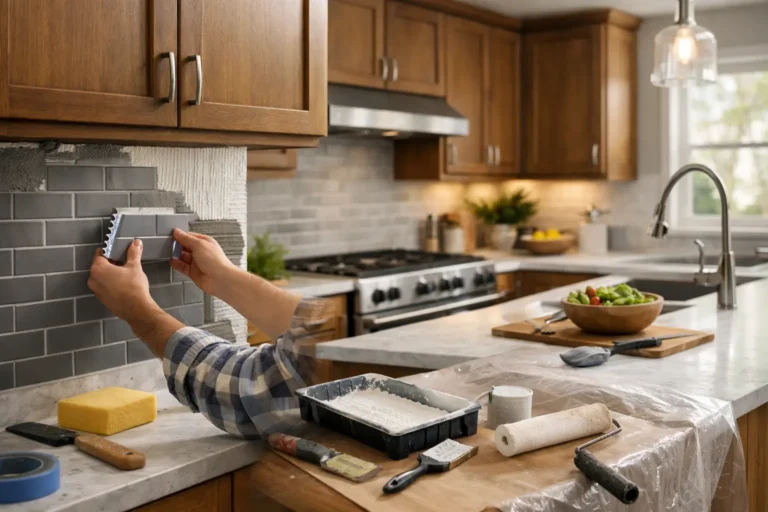
Those numbers also do not always reflect the full renovation cost. Removing cabinets can affect countertops, backsplashes, flooring, plumbing connections, electrical work, and drywall. A project that begins as a cabinet update can become a complete kitchen renovation once the old cabinetry comes out.
Painting is not a shortcut when it is done correctly. It is a focused investment in the most visible surfaces of your kitchen or bath: the doors, drawer fronts, face frames, and exposed cabinet ends. The cabinetry keeps its function, while the room receives a fresh, cohesive finish.
What You Are Actually Paying For With Cabinet Painting
A premium cabinet finish is built long before the final coat is sprayed. Cabinet surfaces collect cooking residue, hand oils, cleaning-product film, and years of daily wear. Applying paint over those contaminants is one reason DIY projects and general-painter jobs can chip, peel, or feel rough within a short time.
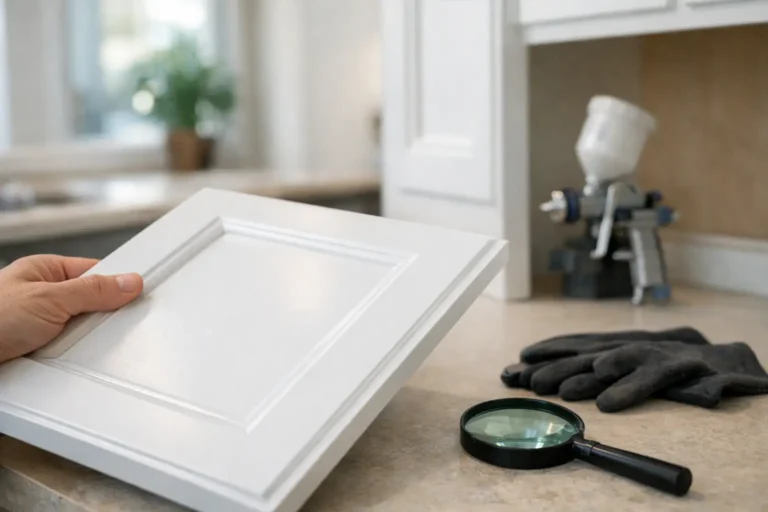
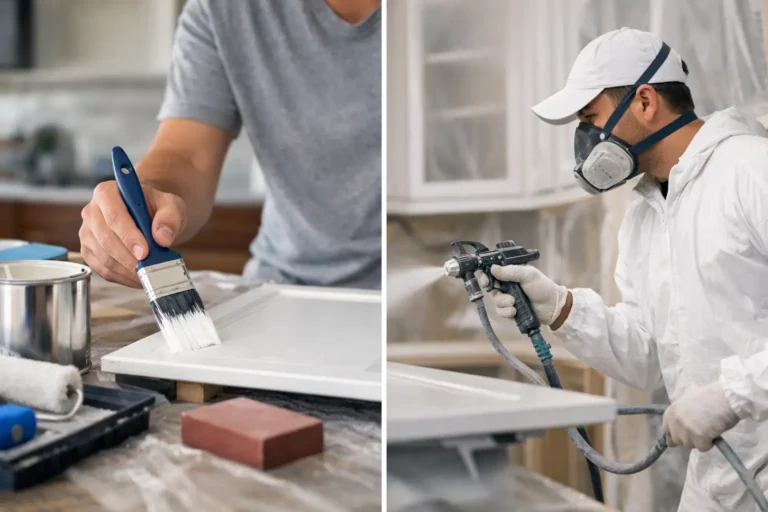
A professional refinishing process begins with detailed cleaning and degreasing. Surfaces are then sanded to create the proper profile for adhesion, repaired where needed, and primed with products selected for cabinetry. Doors and drawer fronts are typically removed and sprayed in a controlled environment, while the fixed cabinet components are carefully prepared and finished on site.
This process produces the smooth, even appearance homeowners associate with a factory-finish. It also protects the investment from common kitchen wear, including fingerprints near pulls, moisture around the sink, and repeated opening and closing.
The estimate for cabinet painting reflects more than paint and labor. It accounts for preparation, masking, protection of surrounding surfaces, material quality, spray application, drying time, reinstallation, and final adjustments. When comparing proposals, ask how doors and drawers will be finished and what preparation is included. A lower quote can become expensive if the finish fails early.
The value of keeping quality cabinet boxes
Many homes in Lake Norman, South Charlotte, Matthews, Waxhaw, and Cornelius have cabinets that are structurally sound but visually dated. Older cabinet boxes are often well-built, with solid frames and reliable drawer construction. Replacing them solely because the finish or color feels outdated can mean discarding cabinetry that still has years of useful life.
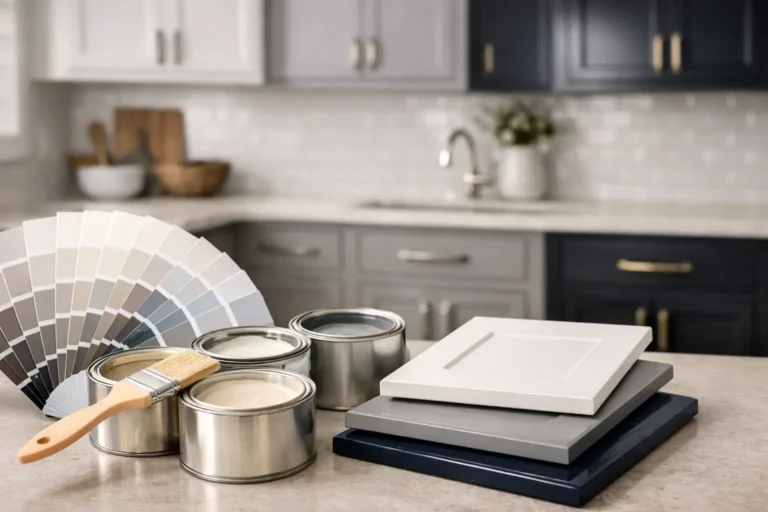
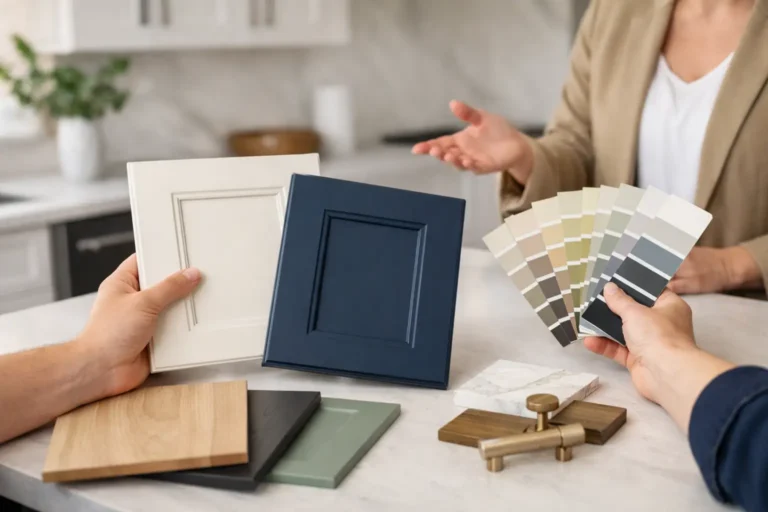
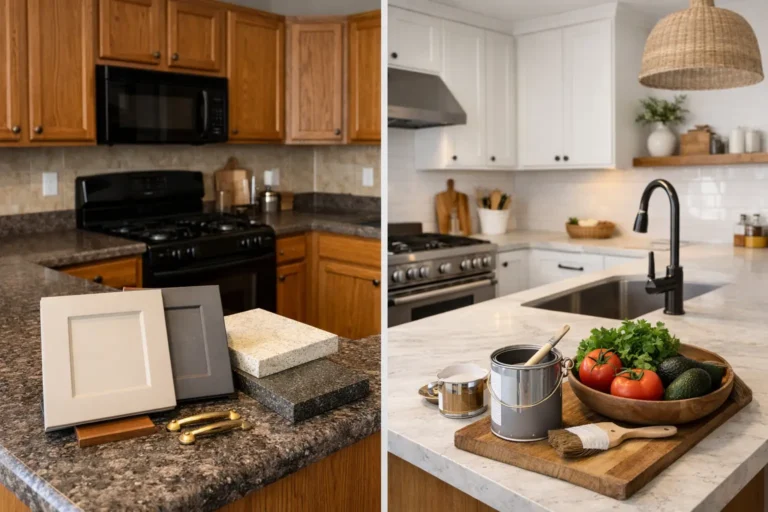
Painting lets homeowners retain those durable boxes while changing the room’s entire color story. Warm stained wood can become a refined soft white, a modern greige, a deep navy island, or a custom color that works with new flooring, counters, and lighting. New knobs or pulls can add another layer of transformation without forcing a full remodel.
When Replacement Is Worth the Higher Cost
Cabinet painting has clear limits, and a reputable specialist should be direct about them. Replacement is often the better investment when the existing cabinet boxes have significant water damage, swollen particleboard, major structural failure, or poor-quality construction that cannot support a lasting finish.
It also makes sense to replace cabinets when the layout no longer works for how you live. If you need to move walls, add an island, create more storage, change appliance locations, or correct a cramped workflow, painting alone cannot solve those functional problems. New cabinetry gives you the opportunity to redesign drawer depth, pantry storage, corner access, and the overall kitchen footprint.
Door style matters as well. Most traditional and contemporary door profiles can be painted beautifully, but homeowners who strongly prefer a completely different construction style may be better served by replacement or, in some cases, refacing. A flat slab door, for example, creates a different architectural look than an existing raised-panel door, even in the same color.
The most useful question is not, “Can these cabinets be painted?” It is, “Will painting give this kitchen the finished result we expect?” An in-home assessment should consider condition, construction, desired design changes, and the condition of nearby elements such as countertops and backsplash.
Disruption Has a Cost, Too
Price matters, but the project experience matters in a busy home. Full replacement usually involves demolition, cabinet delivery schedules, installation crews, possible countertop templating, and multiple trades. A kitchen may be partially or fully out of service for an extended period, especially if other elements are being replaced at the same time.
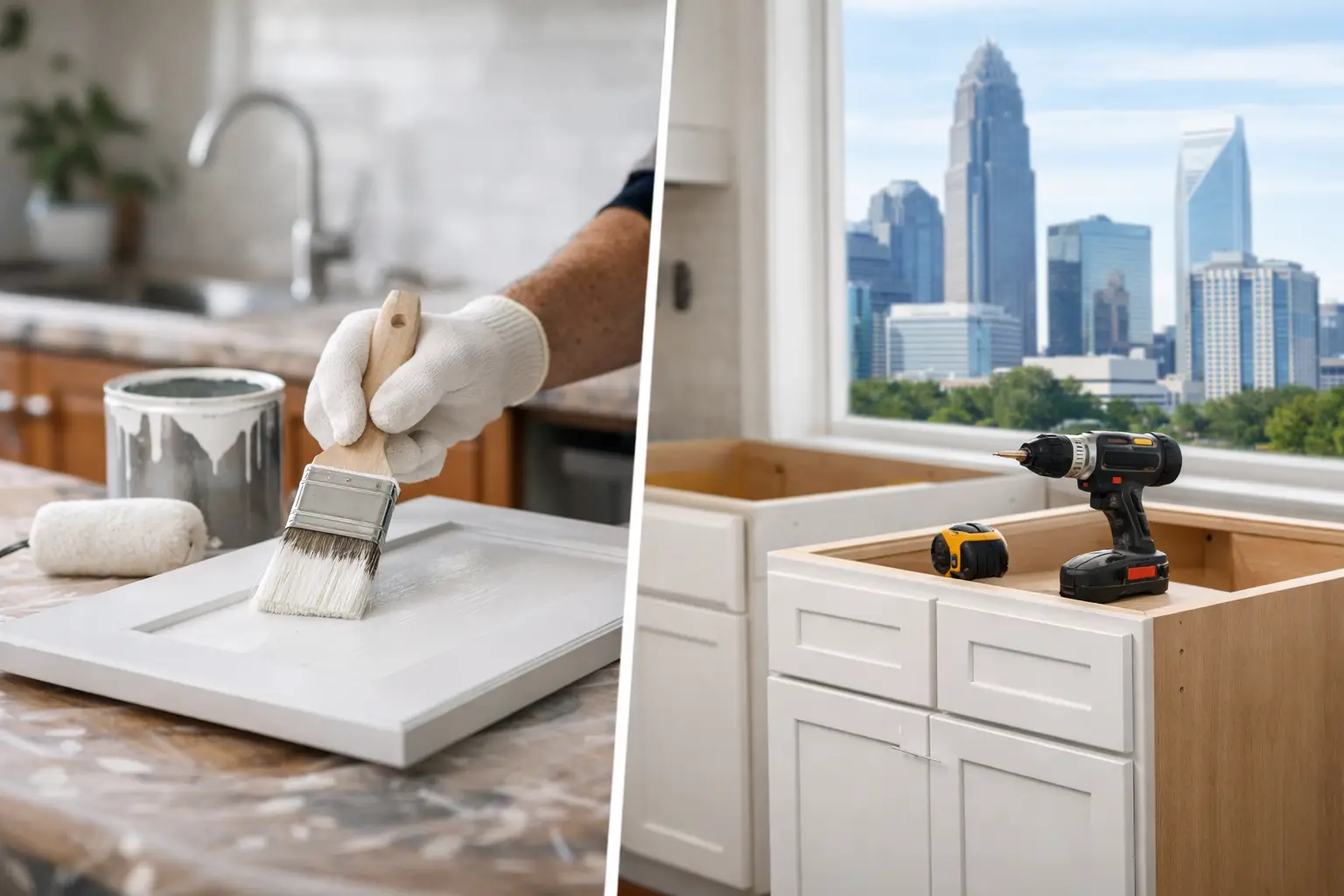
Cabinet painting is still detailed work, but it is generally far less invasive. Existing cabinet boxes stay in place. Doors and drawer fronts can be finished away from the kitchen, and the work area is carefully masked and protected during on-site preparation and spraying. Homeowners avoid the mess and material waste of tearing out usable cabinetry.
For bathroom vanities, the contrast can be just as meaningful. A dated vanity can often be refinished for a polished, updated look without disturbing the countertop, plumbing, or tile. That is especially valuable when the surrounding bath finishes are in good condition.
How to Make the Best Decision for Your Home
Start with the cabinet structure rather than the color. Open the doors, inspect the corners near the sink and dishwasher, check for loose hinges, and look for swelling or delamination. Cosmetic wear, faded stain, minor scratches, and an outdated finish are usually strong reasons to explore painting. Water damage and structural breakdown deserve a more careful conversation.
Next, separate your visual goals from your functional goals. If you want a brighter kitchen, a more current color palette, and a high-end finish, refinishing may deliver exactly what you need. If you need more drawers, a different layout, or cabinetry that reaches the ceiling, replacement may be the more honest path.
Finally, compare project scope, not just the first number on an estimate. Ask whether the painting proposal includes cleaning, degreasing, sanding, primer, controlled spraying, protection of your home, and a clear process for reinstalling doors and hardware. These details determine whether the result looks like painted cabinets or like cabinetry that was made to look new.
For homeowners with solid cabinetry, the strongest return often comes from preserving what works and refining what does not. A carefully prepared, professionally sprayed finish can make the kitchen you already have feel worthy of the rest of your home – without turning a focused update into a full-scale construction project.