![Text logo reads Simpli [house emoji][heart emoji] Painted. Preferred for a reason. The house and heart emojis replace the word love. Black text on a white background.](https://simplipainted.com/wp-content/uploads/2026/08/cropped-IMG_3593.jpg.webp)

How Much Does Cabinet Painting Cost in Charlotte?
A dated honey-oak kitchen can make an otherwise well-kept Charlotte home feel older than it is. Replacing cabinets may seem like the obvious answer, but if the boxes are structurally sound and the layout still works, professional refinishing can create a dramatic change for far less disruption. So, how much does cabinet painting cost? For most homeowners, the answer depends less on a simple per-cabinet number and more on the size, condition, construction, and finish requirements of the project.
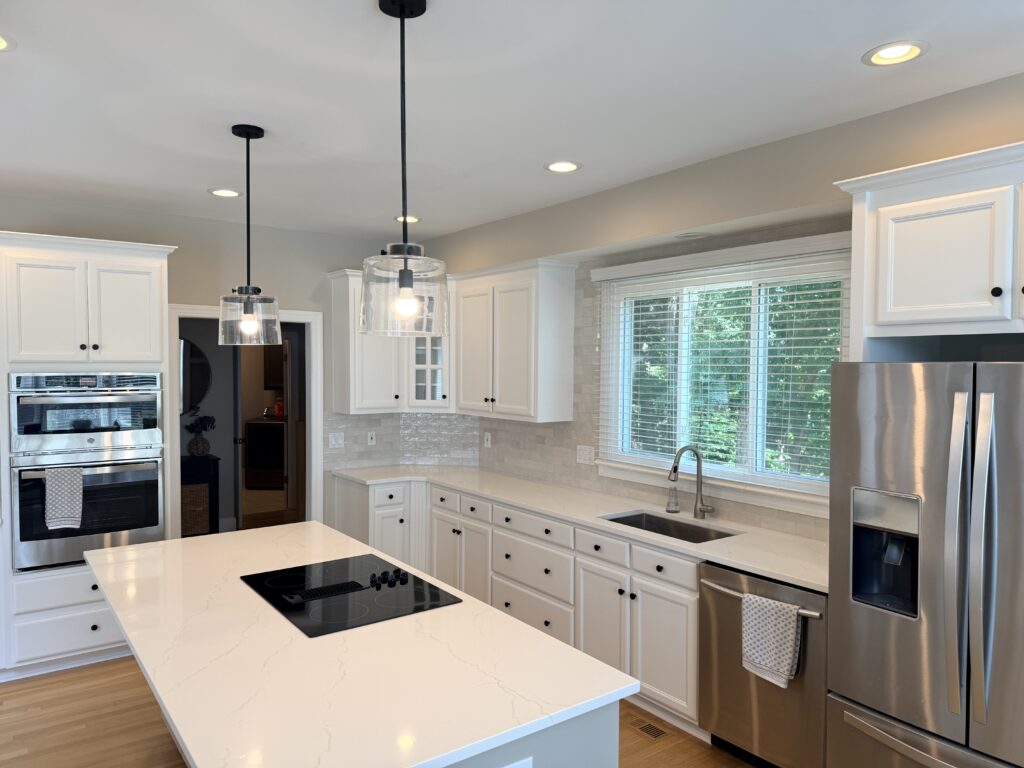
A professionally painted kitchen in the Charlotte area commonly falls in the range of $3,000 to $8,000 or more. Smaller bathroom vanity projects may begin around $800 to $2,500, while large kitchens with extensive cabinetry, detailed door profiles, repairs, glazing, or premium finish specifications can exceed the typical range. A precise estimate requires an in-home review because cabinetry is never truly one-size-fits-all.
How Much Does Cabinet Painting Cost for a Professional Finish?
The price of cabinet painting reflects the labor and materials required to turn an existing finish into a smooth, durable, factory-finish surface. Cabinetry is touched constantly, exposed to cooking residue and moisture, and viewed at close range. It needs a different level of preparation than walls, trim, or exterior siding.
A lower quote can be appealing, but it is worth asking what is included. Some painters brush or roll cabinet faces in place, complete minimal cleaning, and use paint not designed for frequent cabinet use. The initial cost may be lower, yet visible brush marks, peeling near handles, paint buildup in corners, and uneven sheen can make the project feel like a temporary fix.
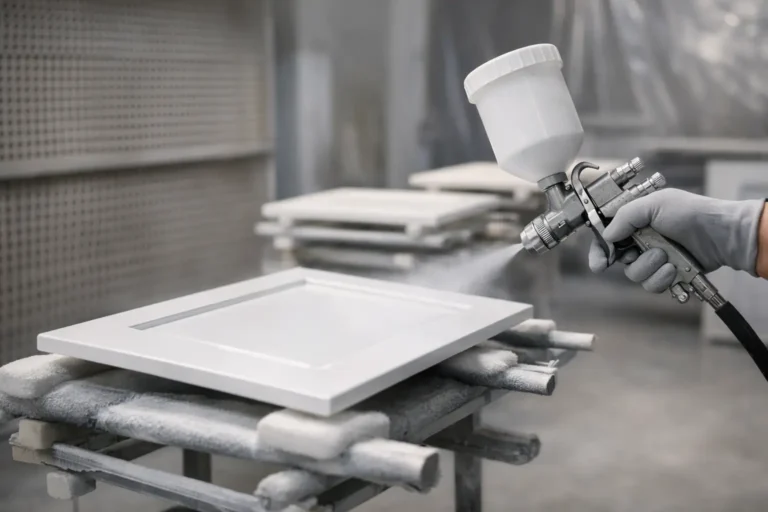
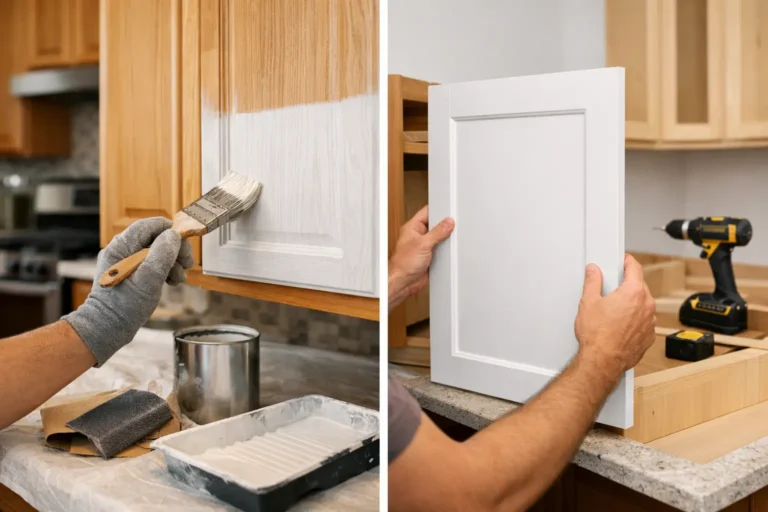
A specialized cabinet-painting process is more involved. Doors and drawer fronts are removed, labeled, cleaned and degreased, repaired as needed, sanded for adhesion, primed, and sprayed in a controlled environment. Cabinet boxes are carefully masked and prepared on site before receiving a compatible finish. The result is not merely a new color. It is a complete surface renewal designed to look intentional and hold up to daily life.
The Factors That Shape Your Cabinet Painting Estimate
Kitchen size and cabinet count
More doors, drawer fronts, end panels, and cabinet boxes require more preparation and finishing time. A compact galley kitchen with simple slab doors will generally cost less than a large Lake Norman kitchen with an island, double ovens, a built-in hutch, and ceiling-height cabinets.
The number of pieces matters, but so does access. Tall cabinets, furniture-style panels, appliance surrounds, and detailed trim all increase the amount of work required to achieve a consistent finish.
Door style and cabinet construction
Flat-panel doors are relatively straightforward to prep and spray. Raised-panel, shaker, beadboard, routed, or heavily detailed doors require more handwork. Every groove and profile must be cleaned, sanded, primed, and coated evenly without leaving drips or heavy paint edges.
Existing construction also matters. Solid wood cabinetry is often an excellent candidate for refinishing. Thermofoil, laminate, veneer, and previously painted cabinets can also be refinished in many cases, but they may require specialized adhesion methods, additional prep, or repairs. An experienced specialist should assess the substrate before promising a particular result.
Current condition and repair needs
Cabinets with grease buildup, failed finishes, water damage beneath sinks, chipped corners, open joints, or old hardware holes need more than paint. Preparation may include deep cleaning, filling, caulking, minor wood repair, and sanding back unstable coatings.
These steps are not optional extras when durability is the goal. Paint adheres to the surface beneath it. If that foundation is compromised, a beautiful topcoat will not perform as it should.
Color change and finish selection
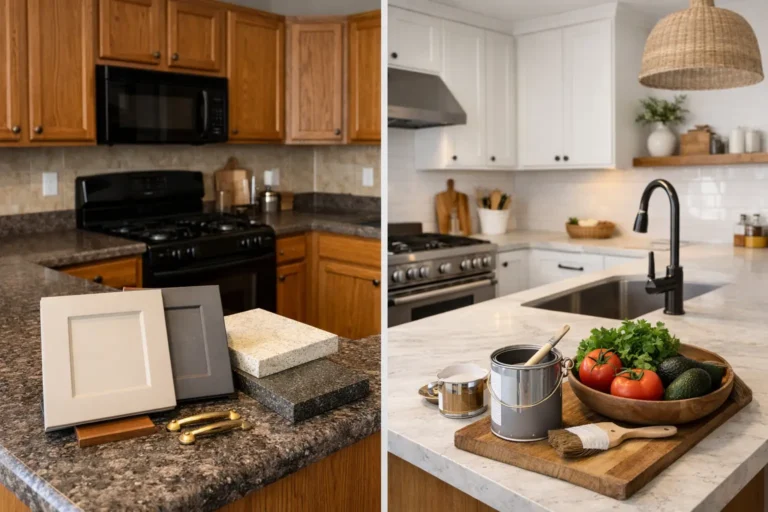
Moving from a medium wood tone to a soft white or pale greige is one of the most popular transformations, but it may require additional primer or coats to create full, even coverage. Dark colors can also demand careful application because they reveal dust, texture, and uneven sheen more readily.
Finish level influences appearance and maintenance as well. A lower-sheen finish can look refined, while satin finishes are popular for their balance of cleanability and understated luster. The best choice depends on the cabinet style, lighting, wall colors, countertops, and how the room is used.
On-site protection and spray workflow
A quality project includes more than coating doors. Floors, counters, appliances, backsplashes, and surrounding areas need careful protection. Homeowners should expect a professional team to plan for dust control, masking, ventilation, and a clean work area.
Controlled spraying of doors and drawer fronts is a major part of achieving a smooth finish. It takes dedicated equipment, a suitable spray environment, and time for proper curing. Those details contribute to cost, but they also separate a cabinet-specific finish from a quick repaint.
What Should Be Included in the Price?
When comparing cabinet painting proposals, compare the process, not just the bottom-line number. A thorough estimate should explain which components will be painted, whether doors and drawers will be removed, the preparation steps involved, how repairs are handled, and what finish system will be used.
It should also clarify whether the interior of cabinets is included. Many projects focus on exterior surfaces, cabinet boxes, doors, drawer fronts, and visible end panels. Painting interiors can be appropriate in certain situations, but it adds labor and may not be necessary when cabinet interiors are clean and in good condition.
Hardware is another consideration. If you are keeping existing knobs and pulls, the team can typically reinstall them after finishing. If you are changing hardware sizes or placement, old holes may need to be filled and new holes drilled. This is a small design decision that can affect both the scope and final appearance.
Cabinet Painting vs. Replacement: Where Is the Value?
Cabinet replacement often becomes expensive quickly. Beyond the cost of new cabinets, homeowners may need to account for demolition, disposal, countertop removal, plumbing adjustments, electrical work, backsplash repairs, flooring transitions, and weeks of kitchen disruption.
Professional cabinet painting preserves the cabinet boxes you already own. For homeowners in Matthews, Waxhaw, Cornelius, South Charlotte, and nearby communities, that can be a smart investment when the layout is functional and the cabinetry is well built. You get the visual impact of a new kitchen color palette without automatically triggering a full renovation.
That does not mean painting is right for every kitchen. Cabinets with extensive water damage, failing boxes, structural issues, poor layout, or insufficient storage may be better candidates for replacement. A reputable cabinet specialist should be comfortable saying so. The goal is not to paint every cabinet. It is to recommend the improvement that makes sense for the home.
Why DIY and General Painting Quotes Can Differ So Much
DIY cabinet painting can appear inexpensive because the immediate costs are largely paint, tools, and your time. Yet cabinets are one of the least forgiving surfaces to paint. Missed degreasing, inadequate sanding, the wrong primer, rushed recoating, or brush-and-roll application can lead to poor adhesion and a textured finish.
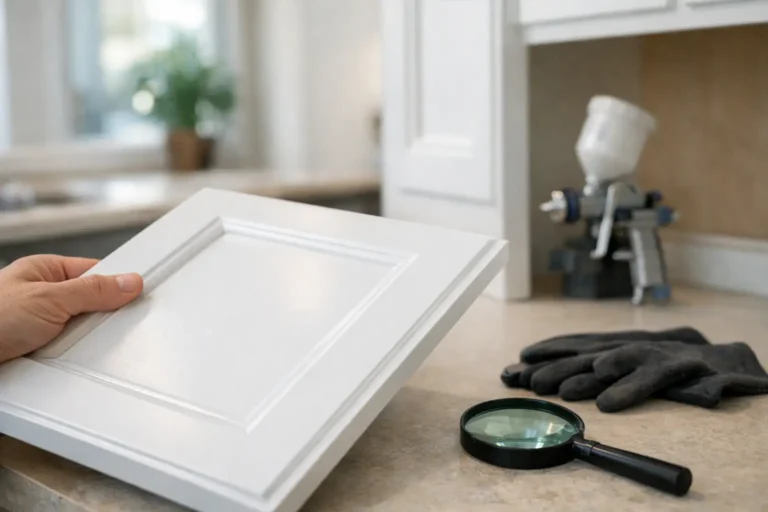
General painting contractors may offer cabinet work, but cabinet refinishing is a specialized discipline. The difference often comes down to systems and repetition: how surfaces are cleaned, how doors are handled, how dust is controlled, what coatings are used, and how the final finish is inspected. A premium quote should reflect a premium process, not simply a higher paint price.
How to Plan a Cabinet Painting Budget
Start by deciding what you want the project to accomplish. If the goal is a fresh, cohesive kitchen, cabinet color, hardware, updated lighting, and a new faucet can make a substantial difference without replacing the room. If countertops or backsplash are also changing, select those materials first so the cabinet color supports the larger design direction.
Then request an estimate based on your actual cabinets rather than relying only on online averages. Share photos in advance if requested, but expect the most reliable pricing after an on-site assessment. That visit allows the painter to inspect condition, count components, identify repair needs, and discuss color and finish expectations.
The best cabinet-painting investment is not always the least expensive quote. It is the one that gives your existing cabinetry the disciplined preparation, controlled application, and durable finish it needs to look at home in the rest of your space. If your cabinet boxes are worth keeping, they are worth finishing properly.
Thinking about your own cabinets?
Simpli Painted refinishes existing cabinets in the Carolinas and coastal Georgia. Doors and drawer fronts are sprayed in our shop, the boxes are finished in place, and every job carries a 2-year warranty against peeling, blistering and yellowing. 4,000+ kitchens, backed by five-star Google reviews.
Send 3–4 photos of your kitchen and we’ll quote it.